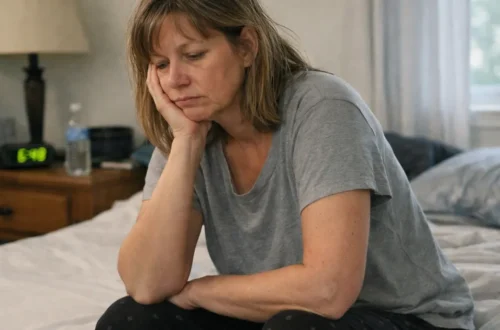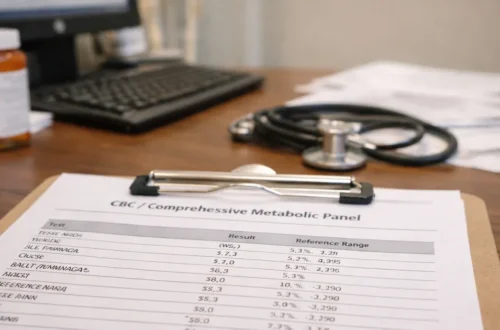
I want to start somewhere simple. Not with statistics or headlines, but with something we’ve all felt in one way or another. The slow realization that health care isn’t really about getting healthy anymore. It’s about managing conditions. Refilling prescriptions. Scheduling follow-ups. Adjusting doses. Adding new medications when the old ones stop working. Over time, you stop expecting to feel well. You just hope things don’t get worse.
I’ve watched this pattern play out across countless lives. People doing their best. Trying to eat better. Trying to move more. Trying to reduce stress. And yet somehow still collecting diagnoses like badges they never wanted. Diabetes. Autoimmune issues. Chronic pain. Digestive disorders. Fatigue that never quite lifts. The common thread isn’t weakness or bad choices. It’s a system that was never designed to restore health in the first place.
That realization led me to look deeper into chronic illness economics. And what I found was sobering. A health care system can quietly transform into an industry where illness is not just treated — it is financially depended upon. When conditions become long-term and predictable, entire business models grow around them. Pharmaceutical pipelines. Insurance negotiations. Specialist networks. Hospital systems. Imaging centers. Labs. Device manufacturers. All coordinated, all profitable, all built on the assumption that people will remain patients for life.
This connects directly to what I explored in The Soil Blueprint of Human Health. When soil is depleted, food loses vitality. When food loses vitality, bodies struggle. When bodies struggle, medical dependence rises. The pattern is steady and logical. Compromised inputs create compromised biology, and compromised biology fuels long-term intervention.
I extended that same reflection in When the Land Is Tired, So Are We. We’ve applied an extractive model to the earth and to human beings. Remove what sustains life. Ignore regeneration. Then build industries to manage the breakdown. It’s the same cycle wearing different clothes.
Treatment Pays. Prevention Does Not.
Here’s where the uncomfortable truth settles in. A system that truly prioritizes prevention doesn’t generate massive ongoing profit. Teaching people how to nourish their bodies, reduce toxin exposure, sleep well, move naturally, repair stress, and rebuild environments creates fewer lifelong customers. Genuine prevention is powerful — and economically inconvenient.
Treatment, on the other hand, scales beautifully. Once someone enters the chronic care pipeline, predictable revenue begins. Prescriptions refilled monthly. Appointments repeated quarterly. Procedures scheduled routinely. Additional drugs layered on to handle side effects. Over time, the original goal of healing quietly fades, replaced by long-term management.
In this structure, pain isn’t an accident. It becomes part of the operating model. The system doesn’t collapse when people stay sick — it thrives.
Incentives Shape Outcomes
None of this requires secret meetings or hidden agendas. It’s simply how incentives work. When financial reward is tied to disease management rather than health creation, institutions align accordingly. Food corporations profit from ultra-processed products that destabilize metabolism. Chemical industries profit from environments that burden the body’s detox systems. Pharmaceutical companies profit from treating the resulting conditions. Insurance companies profit from financing the entire chain.
Each link reinforces the next. And quietly, the individual inside the system becomes a long-term revenue source. Once you see this clearly, many confusing realities start to make sense: why prevention programs remain underfunded, why nutritional education is minimal, why environmental health reform moves slowly, and why symptom suppression dominates research budgets. The system is doing exactly what its incentives require.
The Human Cost Behind the Revenue
Meanwhile, real people live the consequences. Savings disappear into medical bills. Work hours shrink. Energy becomes precious. Family life reorganizes around symptoms. Plans stay tentative. Hope gets quieter. Over time, living with chronic illness becomes a full-time job layered on top of everything else.
Eventually, this becomes normalized. We’re told constant medication is just modern life. That fatigue is expected. That pain is ordinary. That autoimmune flares are manageable if you stay compliant with treatment. But normal isn’t the same as inevitable. It’s simply what we’ve grown used to inside a system that anticipates sickness.
A Different Model Is Possible
It doesn’t have to be this way. A health system can be designed to restore vitality rather than manage decline. It can prioritize food quality over pharmaceutical dependence. Environmental repair over chemical saturation. Lifestyle support over endless prescriptions. Human resilience over symptom control.
That kind of system would reduce chronic disease dramatically. It would lower medical spending. It would shrink long-term dependence. And it would quietly dismantle much of the Sickness Economy. Which is exactly why it’s difficult to build inside today’s financial structure.
Because when pain becomes profit, healing becomes disruptive.
The Question We Must Ask
So we arrive at a simple choice. Do we continue funding an economy built on illness? Or do we begin building one that supports health?
We cannot sustain both. And the first step is seeing clearly which one we’re living inside right now.
With love and truth,
—Donna 💚
Sources & Further Reading
Centers for Disease Control – Fast Facts: Health and Economic Costs of Chronic Conditions
National Institutes of Health (PubMed) – Economic Costs of Chronic Pain—United States, 2021
Commonwealth Fund – U.S. Health Care from a Global Perspective, 2022
World Health Organization – Commercial Determinants of Health
HealthCentral – The Cost of Chronic Care: A 2023 Special Report