Food used to be nourishment — now it’s strategy
There is something heartbreaking about food that no longer nourishes.
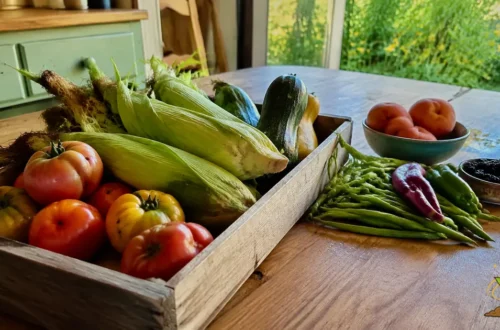
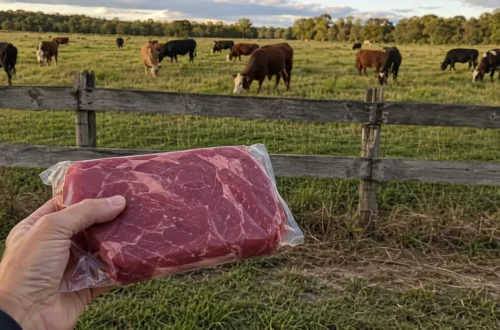
I remember a time when food came from gardens, farms, and kitchens. My grandmother cooked every meal from scratch. You could smell onions and garlic frying in a cast iron pan. You knew where dinner had come from because someone had grown it.
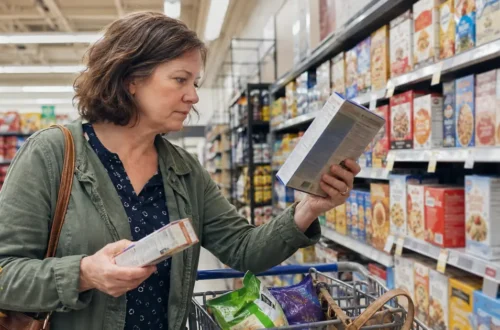
Today, much of what fills our shelves is made in factories, not kitchens. It’s shaped, colored, flavored, and packaged. It pretends to be food, but something essential is missing. These are products that have been engineered to make us want more. Not because we need more, but because someone wants to sell more.
That is a very different motive than nourishment.
The part we rarely talk about
No one wakes up in the morning thinking, “I hope I overeat today.”
We genuinely want to feel good in our bodies. We want energy, clarity, and health. But the food system we live in now is designed to undermine those desires. Scientists get paid to find the exact combination of sugar, salt, and fat that hits the “bliss point” in the brain. Food manufacturers test textures, crunch sounds, mouth-feel, color, smell — all with one goal: create something that overrides our ability to stop.
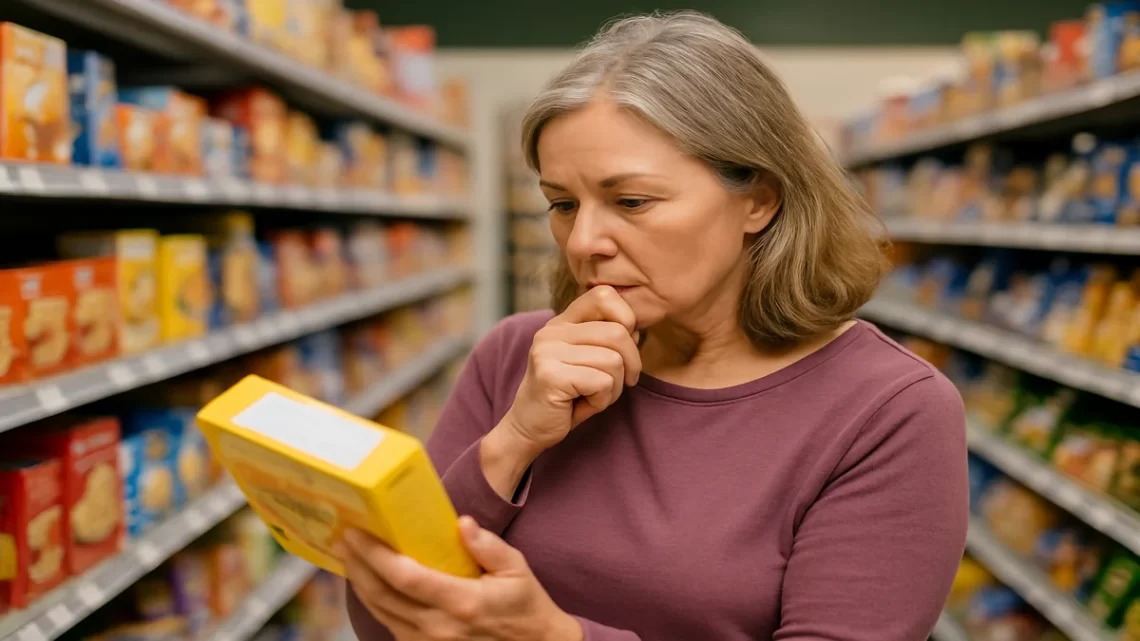
I’ve done it too. I’ve opened a bag just to have “a few.” I’ve looked down twenty minutes later, seeing the empty package, and wondered how it happened. That’s not weakness. It’s design.
The body knows the difference
We are incredibly wise creatures. We have hormones that tell us when we’re hungry and when we’re satisfied. We have a gut that speaks in signals and messages. But additives, artificial flavors, emulsifiers, and highly refined carbohydrates confuse that communication.
You can be full — and still hungry. Tired — yet still craving. Overfed — and undernourished.
That’s what breaks my heart.
People think it’s a personal failure. It isn’t. It’s the system.
When food is engineered for profit instead of nourishment, we lose a relationship that once sustained life itself.
Real food doesn’t manipulate you
Real food has no tricks.
A peach is a peach. An egg is an egg. A potato is a potato.
You don’t “accidentally” eat a dozen peaches. You don’t binge on boiled potatoes. Whole foods respect your biology. They whisper, “Enough now,” and your body listens.
Processed foods shout, “More. More. More.” Not because you need more, but because someone profits when you cannot stop.
We are not meant to blame ourselves
If you’ve ever struggled with eating, cravings, weight, energy, digestion — please hear this: you are not the problem.
The environment is.
Our homes are filled with food-like products. Our stores are designed to keep us impulsive. Our culture celebrates convenience over nourishment. If you are tired, it is because your biology is trying to do its job in a world that keeps interrupting it.
Awareness is the beginning of freedom. When you know the game, you stop playing it.
If you want more of this conversation
If this conversation is landing for you and you want to explore more, I’ve written about the way our fast lives collapse digestion, and why slowing down heals the gut from the inside out. You can read that here: Your Gut Wants You to Slow Down.
I also shared a personal story about land, farming, and government pressure in This Is How Communism Starts — a piece that opened many eyes about who controls our food supply, and why that matters.
Both are part of the same story. What we eat. Where it comes from. Who profits. Who pays the price.
Next week…
Next week on Why Wednesday, I’ll be writing Why We’re Getting Sicker Earlier — a look at how chemicals, agriculture, food manufacturing, and environmental exposures are affecting our children and grandchildren. They are getting symptoms earlier in life than we ever did. Not because they are weaker, but because they are being exposed to more. It’s time we start having honest conversations about that.
With love and truth,
—Donna 💚
Sources & Further Reading
Ultra-Processed Food: Five Things to Know — Stanford Medicine (2025)
Overview of what qualifies as ultra-processed foods and why their rise is linked to chronic health issues.
https://med.stanford.edu/news/insights/2025/07/ultra-processed-food–five-things-to-know.html
Ultra-Processed Foods Linked to Poor Health Outcomes — Harvard Health (2025)
Summary of research showing increased risk of obesity, hypertension, and metabolic disorders with regular UPF intake.
https://www.health.harvard.edu/nutrition/ultra-processed-foods-linked-to-poor-health-outcomes
Recognizing and Addressing the Addictive Nature of Ultra-Processed Foods — University of Michigan IHPI (2025)
Discusses the addictive characteristics of processed foods and implications for public health.
https://ihpi.umich.edu/news-events/news/recognizing-and-addressing-addictive-nature-ultra-processed-foods
Ultra-Processed Foods and Human Health: Systematic Review & Meta-Analysis (2023)
Findings from a large meta-analysis showing associations between UPFs and obesity, diabetes, and mortality.
https://pmc.ncbi.nlm.nih.gov/articles/PMC11150183/
Social, Clinical, and Policy Implications of Ultra-Processed Food Addiction — BMJ (2023)
Analysis describing UPF addiction as a population-level issue that requires systemic policy changes.
https://www.bmj.com/content/383/bmj-2023-075354
Ultra-Processed Foods and Organ Damage: Updated Meta-Analysis (2024)
Shows that high consumption of UPFs correlates with increased biomarkers for liver, gut, and cardiovascular damage.
https://www.sciencedirect.com/science/article/pii/S0261561424001225
Are Ultra-Processed Foods Truly Addictive? — ScienceNews (2025)
Popular-science overview of neurological research on reward pathways and compulsive eating.
https://www.sciencenews.org/article/ultraprocessed-foods-addictive
Ultra-Processed Foods Are a Threat to Public Health, Scientists Say — WUNC (2025)
Reports consensus among researchers that UPFs are driving a public health crisis across multiple age groups.
https://www.wunc.org/2025-11-19/ultra-processed-foods-are-a-threat-to-public-health-scientists-say