I have spent a great deal of time studying what has happened to our food system, and the deeper I look, the more convinced I become that something fundamental has been lost. We still call it food, but much of what fills grocery store shelves today is not grown within the same living systems that once produced truly nourishing crops. I cannot ignore the growing divide between industrial food production and the kind of food that actually sustains human health.
What concerns me most is that many people sense something is wrong but cannot quite name it. They feel tired despite eating regularly. They struggle with inflammation, digestive problems, and metabolic issues even when they try to eat “healthy.” At the same time, our agricultural system has become increasingly industrialized, centralized, and chemically dependent. I am convinced these trends are not unrelated.
When food stops coming from living soil and starts coming from an industrial production model, the consequences do not stay on the farm. They eventually show up in the human body.
When Agriculture Became Industrial
I respect the work of farmers deeply. Feeding a nation is no small task. But over the past century, agriculture has slowly shifted away from soil-centered stewardship and toward industrial scale production. Large corporations now influence enormous portions of the global food supply, and decisions about farming practices are often driven by efficiency, output, and distribution logistics rather than long-term soil health.
I refuse to ignore what that shift has done to the land.
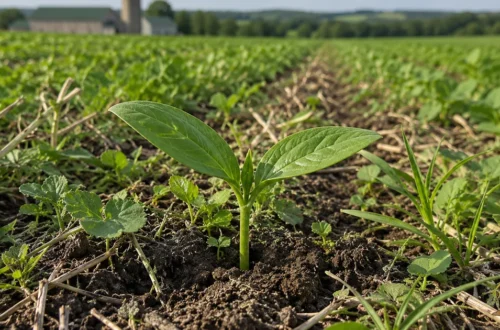
Healthy soil is a living ecosystem. Beneath the surface of a thriving field are billions of microorganisms, fungal networks, and mineral interactions that help plants absorb nutrients and develop the full biological complexity nature intended. When those systems are damaged through repeated chemical inputs, monocropping, and heavy soil disturbance, crops may still grow — but the deeper nutritional richness of those foods can decline.
The land continues producing, but it is producing under strain.
The Quiet Decline of Nutrient Density
One of the issues that deserves far more public attention is nutrient density. Over the past several decades, researchers have documented measurable declines in certain vitamins and minerals within common fruits and vegetables compared to earlier generations.
That does not mean farmers suddenly forgot how to grow food. What it reflects is a system that now prioritizes yield, uniformity, and shelf stability. Crops are bred to grow quickly, look perfect on store shelves, and survive long transportation routes.
Those priorities make sense within an industrial distribution model.
But I cannot ignore the biological tradeoffs that often accompany them.
Plants draw their nutrients from soil. When soil biology weakens, plants may still grow quickly with the help of synthetic fertilizers, but the full spectrum of trace minerals and plant compounds may not fully develop. The result is food that looks abundant while quietly carrying fewer of the building blocks the human body depends on.
This is one reason many people experience the strange paradox of modern nutrition: we are surrounded by food, yet so many people still feel depleted.
Soil Health and Human Health
The more I study the relationship between soil biology and plant nutrition, the more certain I become that soil health and human health are inseparable.
Food is not just calories. It carries minerals, antioxidants, enzymes, and countless biological compounds that influence digestion, metabolism, immune balance, and even mental clarity. When those compounds decline in our food supply, the human body inevitably feels the effects.
I cannot ignore that connection.
In earlier Farmland Friday discussions, I explored this relationship in more depth. In The Soil Speaks—Are We Listening?, I examined how environmental contamination and industrial practices quietly affect the land that produces our food. I also walked through the soil-to-plate connection in The Holiday Plate Begins in the Soil, where I explained how soil quality ultimately shapes the nourishment that reaches our tables.
Those conversations all lead back to the same reality: when the soil weakens, the food weakens.
Rebuilding the Foundation
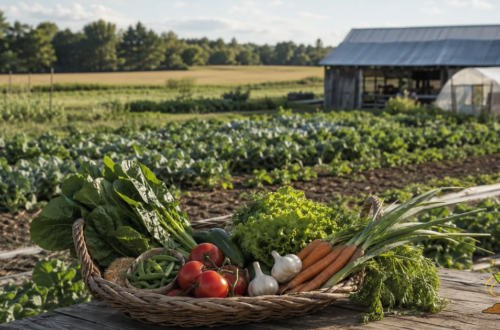
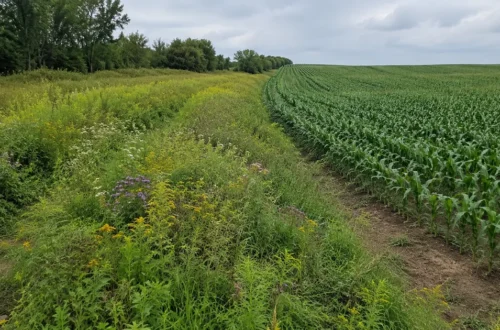
The encouraging news is that soil can recover when it is treated as a living system again. Farmers across the country are beginning to restore soil health through regenerative practices such as crop rotation, cover cropping, managed grazing, and compost-based fertility. These methods rebuild the microbial life that allows soil to cycle nutrients naturally and support stronger plant development.
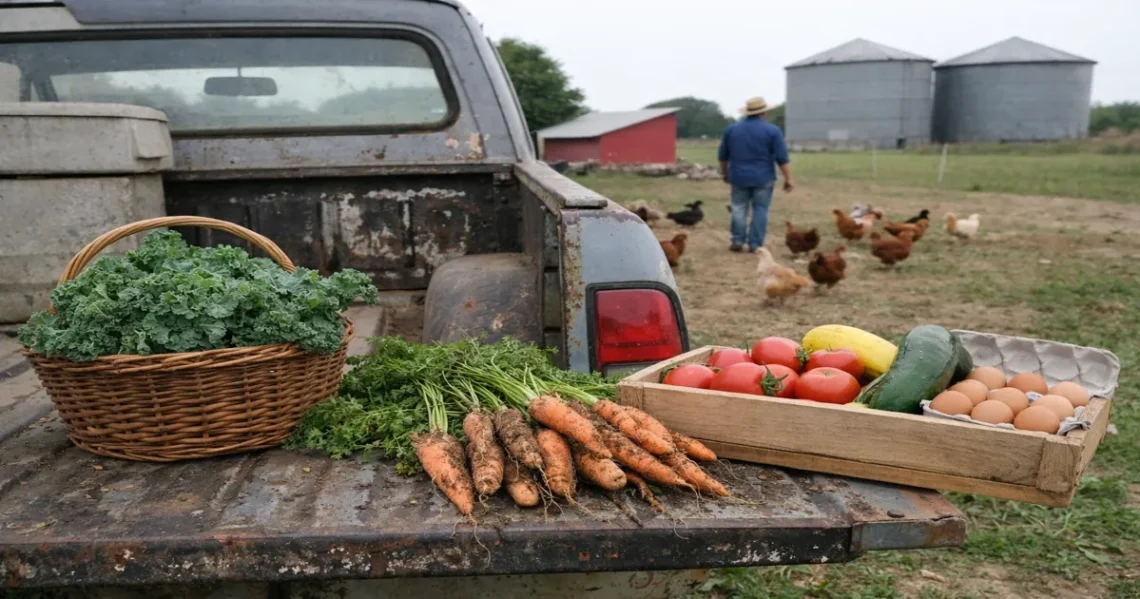
For individuals, the response does not require perfection or fear. It begins with awareness. Supporting farmers who prioritize soil health, buying locally when possible, growing even small amounts of food at home, and prioritizing whole foods over heavily processed products all help reinforce a healthier agricultural system.
The goal is not perfection. The goal is reconnection.
The Question We Must Face
When I step back and look at the direction our food system has taken, one question keeps rising to the surface.
What kind of food system do we actually want to support?
One designed primarily around industrial efficiency and global supply chains?
Or one rooted in living soil, thriving ecosystems, and nutrient-dense food that truly nourishes the people who eat it?
I am convinced the future of human health will depend heavily on how we answer that question.
Because when soil declines, food quality declines.
And when food quality declines… human health eventually follows.
That is why this conversation matters so much. Not just for farmers. Not just for policymakers. But for every person who sits down at a table and calls something on that plate “food.”
With love and truth,
—Donna 💚
Sources & Further Reading
Soil Health and Nutrient Density: Preliminary Comparison of Regenerative and Conventional Farming
https://pmc.ncbi.nlm.nih.gov/articles/PMC8801175/
An Alarming Decline in the Nutritional Quality of Foods
https://pmc.ncbi.nlm.nih.gov/articles/PMC10969708/
From Soil to Health: Advancing Regenerative Agriculture for Nutrient-Dense Food
https://www.frontiersin.org/journals/nutrition/articles/10.3389/fnut.2025.1638507/full
Exploring the Link Between Soil Health and Crop Productivity
https://www.sciencedirect.com/science/article/pii/S0147651325000399
Exploring Linkages Between Soil Health and Human Health
https://www.nationalacademies.org/projects/DELS-BANR-22-04