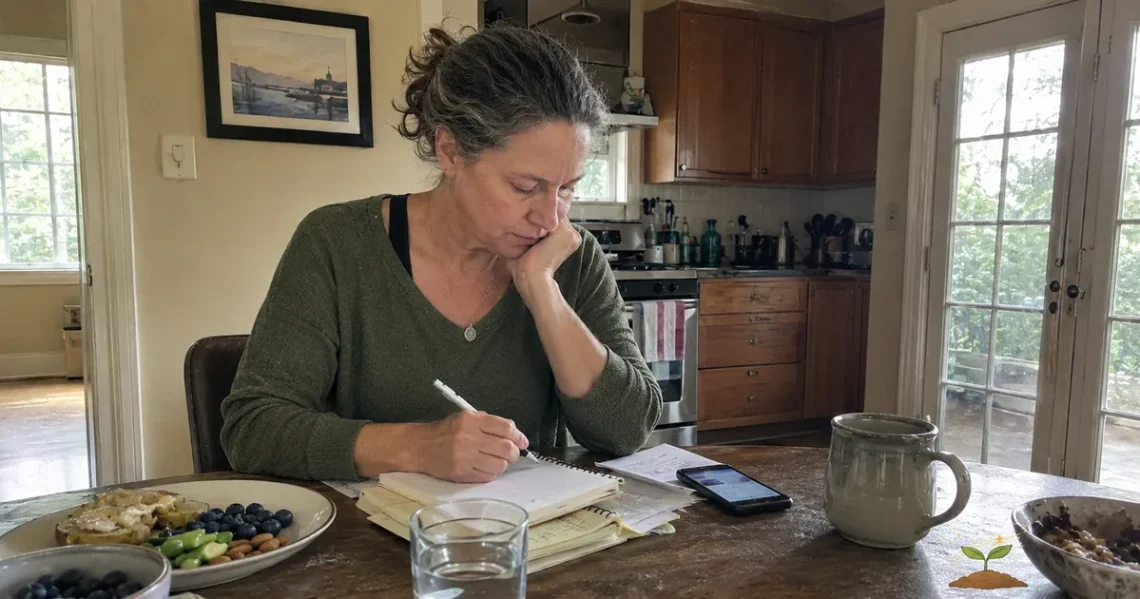
Most of us were never really taught how to listen to our own bodies. We were taught to push through, ignore it, take something for it, wait until it gets worse, or look outside ourselves for every answer. And I understand why people do that. Life is busy. People are tired. And when your body is giving you little signals here and there, it can be easy to write them off as “just stress,” “just aging,” “just hormones,” “just something I ate,” or “just one of those days.”
But I believe those little signals matter. Not because every symptom means something terrible is happening, and not because we should become afraid of our own bodies. They matter because your body is constantly communicating with you, long before it has to scream. A headache, a stomach issue, a skin flare, a crash in energy, a sudden craving, poor sleep, anxiety after a certain food, stiffness after a certain routine, or that strange “I just don’t feel right” feeling can all be information. The problem is, if we never slow down long enough to notice patterns, all of those signals stay scattered.
This is one of the places where health sovereignty begins in real life. It is not just about reading more articles or buying more supplements or following the next loud voice online. It is about learning how to pay attention to your own body with steadiness and common sense. I talked about this recently in Start Personalizing Your Health, because generic advice can only take you so far. At some point, you have to ask: what is actually happening in my body, in my daily life, with my routines, my stress, my food, my sleep, and my environment?
Your Body Is Giving You Information Before It Screams
One of the biggest mistakes we make is waiting until something becomes loud enough to disrupt our life before we take it seriously. A small signal feels inconvenient, so we ignore it. Then it comes back. Then it shows up in a different way. Then we start adapting our life around it without even realizing we are doing it. We stop eating certain things without knowing why, avoid certain activities because we “just don’t feel good after,” or accept exhaustion as normal because everyone around us seems tired too.
I do not believe your body is betraying you when it gives you signals. I believe your body is trying to get your attention. That does not mean we panic over every ache, every mood shift, or every bad night of sleep. It means we stop treating the body like a machine that should keep running no matter what we put it through. A symptom is not always the enemy. Sometimes it is the message. And when we only try to silence the message without asking what it might be connected to, we can miss the deeper pattern underneath.
This is especially important in a world where so many people feel confused about health advice. One person says one thing, another person says the opposite, and pretty soon people stop trusting themselves altogether. I wrote about that in Why You Feel Confused About Your Health, because confusion can disconnect you from your own common sense. But your body is still there. It is still giving you clues. And learning to notice those clues is not extreme. It is responsible.
Symptoms Can Look Random Until You Start Tracking Patterns
When something happens once, it may not tell you much. One rough night of sleep, one upset stomach, one headache, one low-energy afternoon, one anxious morning — those things can happen. Life happens. But when something keeps showing up, especially around the same foods, the same environments, the same stressors, the same time of day, the same part of your cycle, or the same habits, that is when you may be looking at a pattern instead of a random event.
This is where people often get stuck. They try to remember everything in their head, and that is almost impossible. By the time you sit down with a practitioner or try to explain what has been going on, the details get blurry. Was it Tuesday or Thursday? Was it after dairy or after gluten? Was it after a bad night of sleep? Did the headache come before the stress, or did the stress come first? Did the stomach issue happen right away, or hours later? Your memory is not meant to be a medical filing cabinet. Sometimes you need to write things down so your mind can stop carrying all of it.
Tracking does not have to be complicated. In fact, I think the simpler it is, the more likely people are to keep doing it. You are not trying to create a perfect chart of every second of your life. You are trying to gather enough information to see whether your body is repeating itself. When you begin to notice cause and effect, you move from guessing to observing. And that shift alone can bring a lot of calm, because now you are not just floating around in confusion. You are watching, learning, and responding.
What to Write Down When Something Feels Off
If you want to start reading your own health signals, begin with the basics. Write down what happened, when it happened, how strong it felt, how long it lasted, and what was going on around it. That might include what you ate, how you slept, how much water you drank, whether you were under stress, what your digestion was like, whether you moved your body, what your mood felt like, and whether you were exposed to anything unusual in your environment. Cleaning products, perfumes, moldy spaces, weather changes, medications, supplements, alcohol, caffeine, processed foods, emotional stress, and poor sleep can all matter.
I would keep it plain. A notebook, a phone note, a calendar, or a simple tracking sheet is enough. You might write: “Woke up tired, headache by 2 p.m., ate lunch late, high-stress morning, slept five hours.” Or: “Stomach bloating two hours after dinner, had dairy, felt anxious before bed.” That is not obsessive. That is just paying attention. The goal is not to control every bite and every feeling. The goal is to become awake to what your body may be trying to show you.
And please hear me on this: tracking your health signals should not become another source of fear. If writing every detail makes you anxious, then write less. If food tracking feels triggering or overwhelming, focus on symptoms, sleep, stress, energy, and general meals instead of numbers, calories, or measurements. This is not about punishment. This is not about perfection. This is about gently rebuilding a relationship with your body, one honest observation at a time.
How to Connect the Dots Without Making Yourself Crazy
One of the most important parts of this process is learning not to overreact to one piece of information. If you eat something once and feel bad, that does not automatically mean that food is “bad” forever. If you sleep poorly one night and feel anxious the next day, that does not mean something is deeply wrong with you. The body is complex, and we have to leave room for that complexity. A pattern is not one bad day. A pattern is something that repeats enough to deserve your attention.
I believe we need to bring common sense back into this conversation. Watch for repetition. Watch for timing. Watch for clusters. Maybe your energy crashes every time you skip breakfast and drink coffee on an empty stomach. Maybe your digestion flares every time stress builds for several days in a row. Maybe your sleep gets worse when you scroll late at night. Maybe your skin reacts after certain products. Maybe your headaches show up when hydration, tension, and poor sleep all stack together. The signal may not be one single cause. It may be a pileup.
That is why tracking can be so helpful. It gives you a little distance from the panic. Instead of “What is wrong with me?” you can ask, “What changed?” Instead of “Why is my body doing this?” you can ask, “What was happening before this showed up?” That is a much calmer question. It is also a much more useful one. You are not diagnosing yourself. You are gathering clues. And those clues can help you make wiser choices and have better conversations when you need support.
When Your Notes Need a Bigger Conversation
There is a time to observe, and there is a time to get help. If something is persistent, worsening, severe, unusual for you, interfering with daily life, or simply concerning, please do not ignore it. Tracking your health signals is not a replacement for medical care. It is a way to become a better witness to your own body so you can explain what is happening more clearly. A good practitioner cannot live inside your daily life, but your notes can help them see what you have been experiencing outside the appointment room.
I also think this is where we reclaim some dignity in health care. Too many people walk into appointments feeling rushed, dismissed, embarrassed, or unable to explain what they mean. But when you can say, “This has happened six times in the last three weeks, usually after poor sleep and high stress,” or “This symptom tends to show up two hours after certain meals,” you are no longer speaking in vague frustration. You are bringing information. That does not make you difficult. It makes you engaged in your own health.
At the end of the day, reading your own health signals is not about becoming suspicious of your body. It is about becoming connected to it again. It is about noticing the quiet messages before they become emergencies. It is about honoring the fact that your body has wisdom, patterns, limits, needs, and responses. And I believe that when people learn to listen with steadiness instead of fear, they begin to take back something very important: trust in themselves.
With love and truth,
—Donna 💚
New here? You can explore more MAHA Monday posts on health sovereignty, body awareness, and everyday wellness choices here.
Sources & Further Reading
- Food Journaling: What It Is, Benefits & Tips
https://health.clevelandclinic.org/how-to-keep-a-food-journal - Track Your Health Symptoms for Better Visits with Your Birmingham Primary Care Doctor
https://medhelpclinics.com/post/tracking-symptoms-2025-06-12 - How to Use a Symptom Journal to Track UC Flares
https://www.healthline.com/health/ulcerative-colitis/symptom-journal-track-uc-flares - IBD Journal: Benefits and How to Use It
https://www.healthline.com/health/ibd/ibd-journal - Listening to Your Body’s Signals: When to Visit Your Primary Care Doctor
https://medhelpclinics.com/post/listen-to-your-body-2025-02-27