I think one of the biggest lies we have been taught is that soil is just dirt. Just something brown under our feet. Something to wash off our hands, sweep off the porch, or keep out of the house. But soil is not just dirt. Soil is supposed to be alive. It is supposed to breathe, move, break things down, feed the roots, hold water, and support the food that eventually becomes part of us.
And that is the part I don’t think people talk about enough. We talk about calories. We talk about diets. We talk about protein, carbs, sugar, weight, labels, and all the little numbers on the back of a package. But how often do we stop and ask, “Was this food grown in living soil?” Because if the soil is depleted, sprayed, compacted, stripped, and treated like a lifeless production surface, then what kind of nourishment are we really expecting it to give back to us? You cannot keep taking life out of the land and expect the food to remain full of life.
Soil Is Not Alive Just Because Something Grows in It
This is where I think we have to be honest. Just because a plant grows does not mean the soil is healthy. A plant can be pushed to grow. It can be forced along with synthetic inputs, sprayed, managed, manipulated, and made to look good enough for the grocery store shelf. But that does not mean the ground underneath it is truly alive. It may be producing a crop, but that is not the same thing as producing deep nourishment.
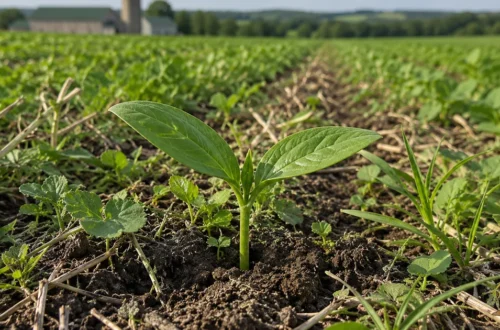
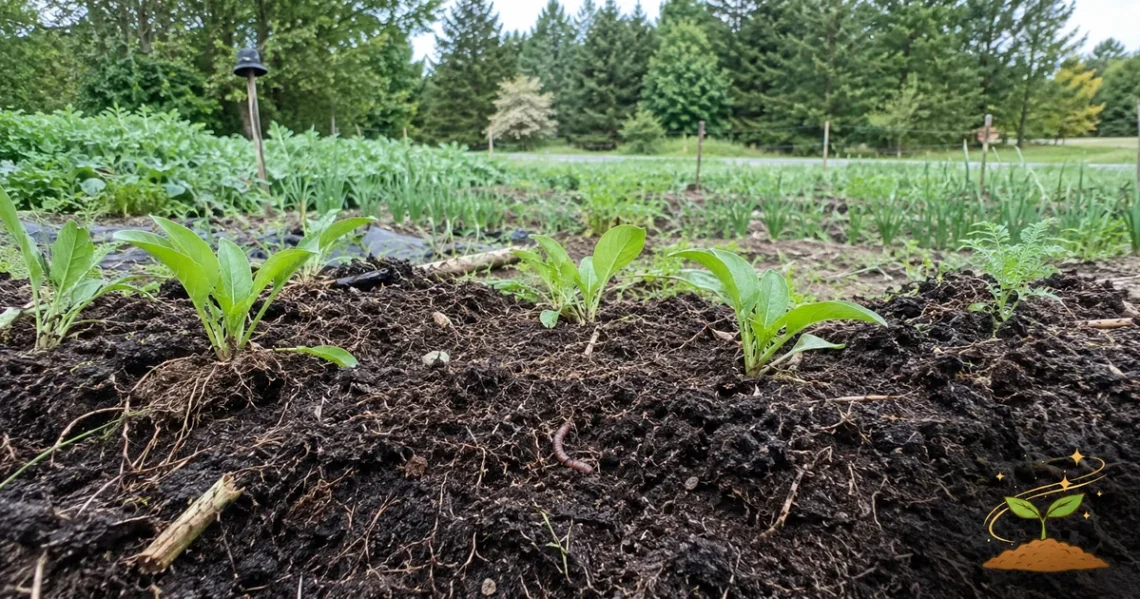
Living soil is full of activity that most of us never see. There are bacteria, fungi, tiny organisms, earthworms, roots, minerals, decaying plant matter, moisture, and air all working together in a way that is far more intelligent than we give it credit for. It is not just a pile of ground-up minerals. It is a whole underground community. That hidden life is what helps turn the raw materials of the earth into food our bodies can actually use.
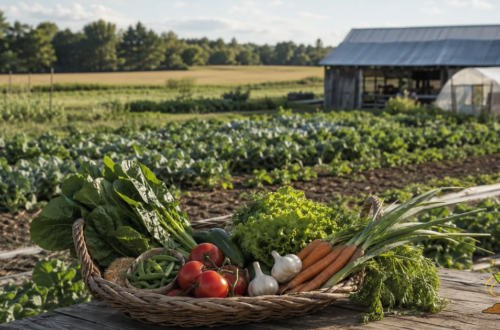
This is why I keep coming back to where our food comes from. It is not just a sentimental idea. It is not just about preferring a cute farm stand over a grocery store. It matters because food carries the condition of the place it came from. I talked about this in why where your food comes from matters, because once you start paying attention to the source, you realize food is never just food. It has a history. It has a beginning. And that beginning matters.
The Microbes Are the Workers We Never See
The microbes in soil are tiny, but they are not insignificant. They are doing quiet work every single day. They help break down organic matter, recycle nutrients, support plant roots, improve soil structure, and help plants become stronger and more resilient. I think of them like the workers behind the curtain. You may not see them, but when they are missing, the whole system starts to struggle.
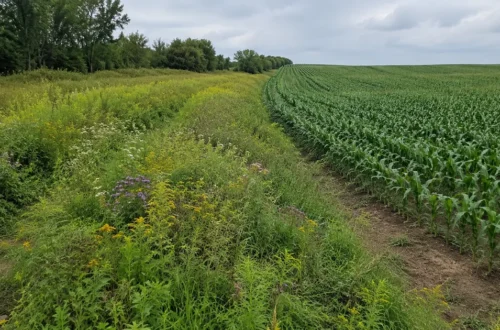
And that is what concerns me so much about the way modern agriculture has treated the land. We have gotten very good at making things grow fast and look uniform, but we have not always protected the living foundation underneath it all. We have sprayed the weeds, killed the pests, sterilized the ground, stripped the fields, and then acted surprised when the soil needs more and more outside help to keep producing. When the soil biology is damaged, the farm becomes dependent on rescue instead of relationship.
Doesn’t that sound familiar? Because I believe the same kind of pattern shows up in the human body. Your gut is also a living environment. Your body also depends on balance, diversity, nourishment, and the right conditions. When that internal terrain gets disrupted long enough, people start feeling it. Digestion changes. Energy changes. Inflammation shows up. Resilience drops. So when we talk about living soil, we are not just talking about farms. We are talking about the same principle of life repeating itself inside us.
Dead Soil Creates a Weaker Food Chain
When soil loses its life, the food chain begins in weakness. That may sound dramatic, but I don’t think it is. If the plant is growing in soil that no longer has rich microbial life, strong organic matter, and natural nutrient cycling, then the plant starts from a weaker place. It may still look like food. It may still fill a truck, sit in a store, and end up on your plate. But looking like food and nourishing like food are not always the same thing.
This is where so many people end up frustrated. They are trying. They are buying the vegetables. They are reading labels. They are avoiding the obvious junk and trying to do better for their families. But then they still feel tired, depleted, inflamed, foggy, or like something is missing. I am not saying soil explains everything, but I refuse to ignore the obvious connection. If the land is depleted, the food is affected. If the food is affected, the body is affected.
That is why this conversation matters so much. We cannot separate human health from the health of the land forever and expect no consequences. Soil that has been abused does not produce the same kind of food as soil that has been fed, protected, and rebuilt. In the farming practices that heal, I talked about this bigger picture, because healing the land is not just a farming issue. It is a food issue. It is a family issue. It is a health issue.
Living Soil Teaches Us How Healing Really Works
One of the things I love about soil is that it teaches us patience. You do not heal damaged soil by shouting at it to perform better. You do not fix it with one magic product and call it done. You restore it by changing the conditions. You add organic matter. You protect the microbes. You stop disturbing it so much. You bring back diversity. You give the land time to remember what it was designed to do.
And honestly, I think our bodies need that same kind of respect. We have been trained to look for quick fixes, fast results, and one-step answers. But living systems do not work that way. A body that has been overwhelmed, undernourished, stressed, and exposed to too many burdens does not need punishment. It needs support. Healing starts when we stop fighting the body and start changing the conditions around it.
That might mean choosing food grown with more care when you can. It might mean getting to know a farmer, shopping at a local market, growing herbs on your porch, planting a small garden, or simply asking better questions at the store. It might mean paying attention to how your body feels when you eat food that is fresher, closer to the source, and not so far removed from the land. None of this has to be perfect. I say that because I know people can get overwhelmed. But small shifts still matter when they move you closer to real food and farther away from a broken system.
How We Begin Supporting Life Again
Start with one thing. That is usually the best way. Pick one food you buy often and ask where it comes from. Eggs, greens, berries, meat, milk, tomatoes, carrots — whatever is part of your regular life. See if there is a better source nearby. Look for farmers who talk about compost, cover crops, rotational grazing, organic matter, biodiversity, soil health, and regenerative practices. Those words matter when they are attached to real action.
And then listen to your own body. Notice what happens when the food feels more alive. Notice your digestion, your energy, your cravings, your steadiness, your clarity. I am not promising some overnight miracle, and Donna would never want people chasing another promise in a pretty package. But I do believe the body recognizes real nourishment. Your body is not separate from the soil. It is downstream from it.
That is why living soil matters. Not because it is trendy. Not because it sounds nice. Not because everyone has to become a gardener or farmer tomorrow morning. It matters because the foundation matters. The food begins in the soil, and we begin with the food. When we rebuild respect for the land, we rebuild respect for the life that depends on it — including our own.
Next week, we’ll keep this Farmland Friday conversation going by looking at how farms that restore the land can grow more than food — they can grow resilience, connection, and a healthier future from the ground up.
With love and truth,
—Donna 💚
Sources & Further Reading
- Unlocking the Secrets of Soil: Exploring the Microbiome and Its Applications—Part 1
https://www.sciencesocieties.org/publications/csa-news/2024/april/unlocking-the-secrets-of-soil-exploring-the-microbiome-and-its - Unlocking the Secrets of Soil: Exploring the Microbiome and Its Applications—Part 2
https://www.sciencesocieties.org/publications/csa-news/2024/may/unlocking-the-secrets-of-soil-exploring-the-microbiome-and-its - Fostering Microbial Activity and Diversity in Agricultural Systems
https://www.sciencesocieties.org/publications/csa-news/2024/june/fostering-microbial-activity-and-diversity-in-agricultural-systems - Microbiomes and the Soil–Human Health Continuum
https://www.ncbi.nlm.nih.gov/books/NBK609362/ - From Soil to Health: Advancing Regenerative Agriculture for Improved Food Quality and Nutrition Security
https://www.frontiersin.org/journals/nutrition/articles/10.3389/fnut.2025.1638507/full