Health freedom should not feel like a radical idea.
It should feel simple. Normal. Human.
It should feel perfectly reasonable to ask questions about your own body. It should feel reasonable to read labels, pause before agreeing, learn what is being recommended, and make choices that fit your values, your family, and your lived experience.
But for many people, it does not feel that way anymore.
Somewhere along the way, health freedom started sounding like rebellion, when really, it is just the right to stay involved in your own care. It is the right to understand before you agree. It is the right to say, “Can you explain that to me in plain language?” It is the right to ask whether there are other options. It is the right to notice when something in your body is telling you to slow down and pay closer attention.
I do not believe that should be controversial.
I believe it should be part of being well.
Health Freedom Starts With Permission to Ask
Health freedom does not mean rejecting every doctor, every medication, every test, or every expert. That is not what I mean by freedom.
There are good doctors. There are good nurses. There are good practitioners who care deeply and work hard inside a system that often gives them too little time and too many limits. There are moments when medicine is necessary, helpful, and even lifesaving.
But none of that means you stop being a person in the room.
Health freedom means you are allowed to participate in the decisions that affect your body. You are allowed to ask why. You are allowed to ask what the risks are. You are allowed to ask what the benefits are. You are allowed to ask what happens if you wait, what happens if you try something else first, or what else could be contributing to the problem.
That is not being difficult.
That is being awake.
We have talked about this before in Stop Outsourcing Your Health, because this is one of the quiet ways people lose confidence in themselves. Little by little, they are taught that their questions are inconvenient, their instincts are unreliable, and their body’s signals are less important than whatever box the system wants to put them in.
But your body is not separate from you.
Your symptoms are not just interruptions.
Your questions are not a problem.
They are part of your discernment.
Why Choice Can Feel So Uncomfortable
Choice can feel uncomfortable when we have been trained to comply.
That may sound strong, but I believe many people feel it in their bones. They walk into an appointment already nervous. They do not want to seem rude. They do not want to challenge anyone. They do not want to be labeled as “one of those people.” So they nod, even when they are confused. They agree, even when they are unsure. They leave with more questions than answers.
I have no doubt that many people have had that experience.
And I want to say this gently: you are allowed to slow the conversation down.
You are allowed to say, “I need a minute.” You are allowed to say, “I want to read more about this.” You are allowed to say, “Can you write that down for me?” You are allowed to say, “What would you do next if this were not working?” You are allowed to say, “I want to understand the root cause, not only manage the symptom.”
That does not mean you know more than the person helping you.
It means you know that your body matters enough to ask.
The reason health freedom can feel radical is because it interrupts the automatic path. The quick answer. The standard script. The “this is just what we do” approach.
But real care should have room for your voice.
Independence Does Not Mean Doing Everything Alone
One thing I never want people to misunderstand is this: independence is not isolation.
Health freedom does not mean you are supposed to figure everything out by yourself. That would be exhausting, and it would not be wise. We all need support. We need people who know things we do not know. We need testing when it is useful. We need skilled hands, clear minds, emergency care, research, experience, and guidance.
But support should not require surrender.
The best kind of care helps you feel more connected to your own body, not less. The best practitioner does not make you feel foolish for asking questions. The best conversation leaves you with more clarity, not more fear.
That is where health freedom becomes very practical.
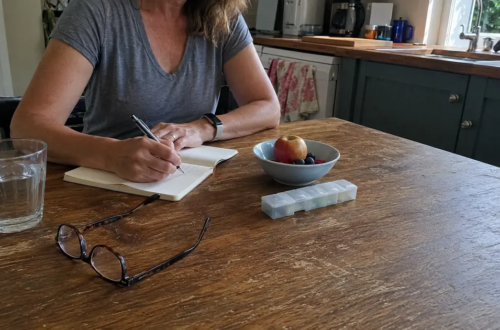
It may look like keeping your own notes. It may look like tracking symptoms, sleep, food, stress, and reactions so you can see patterns more clearly. It may look like asking for copies of your labs. It may look like learning what certain markers mean so you are not completely dependent on a five-minute explanation.
It may look like bringing someone with you to an appointment when you feel overwhelmed.
It may look like saying, “I am not ready to decide today.”
There is nothing radical about that.
That is just a person trying to take good care of themselves.
The Body Was Never Meant to Be Managed Forever
One of the saddest things about modern health is how normal it has become to manage symptoms for years without ever feeling truly well.
The symptom gets named. The code gets entered. The medication gets added. The follow-up gets scheduled. And sometimes that is necessary. Sometimes symptom relief matters very much.
But symptom management is not the same thing as understanding why the body is struggling.
A person can be told everything looks fine and still feel exhausted. A person can have “normal” labs and still know something is off. A person can be given one answer after another and still feel like nobody is looking at the whole picture.
This is why health freedom matters.
Because without it, people can spend years being managed instead of heard.
We touched this same thread in Health Independence Starts Here, because independence is not only a political word. It is a daily word. It shows up in the food we buy, the questions we ask, the boundaries we keep, the information we trust, and the way we respond when our bodies are trying to get our attention.
Your body was not designed to be a permanent customer of a sickness economy.
It was designed to communicate. It was designed to adapt. It was designed to repair when given the right support. It was designed to ask for rest, nourishment, movement, sunlight, connection, minerals, clean water, and less overwhelm.
That does not mean healing is always simple.
It means the body deserves to be listened to, not just managed.
Freedom Also Asks Something From Us
This is the part of health freedom that matters just as much as the right to choose.
Freedom asks for responsibility.
It asks us to pay attention. It asks us to stop living on autopilot. It asks us to be honest about what we are eating, how we are sleeping, what we are tolerating, what we are exposed to, and what keeps pulling us away from our own common sense.
It also asks us not to replace one form of blind trust with another.
Blindly following a doctor is not freedom. Blindly following an influencer is not freedom. Blindly following a trend is not freedom. Freedom requires discernment.
That discernment does not have to be harsh or suspicious. It can be calm. It can be steady. It can sound like, “Let me look at this more carefully.” It can sound like, “I want to understand both sides.” It can sound like, “This may be right for someone else, but I need to know if it is right for me.”
That is a very grounded kind of freedom.
And it takes practice.
Small Ways to Practice Health Freedom
Health freedom does not have to begin with a big dramatic stand.
It can begin quietly, in the little places where you start trusting yourself again.
You can begin by writing down your questions before an appointment so you do not forget them when you are sitting under fluorescent lights feeling rushed. You can ask what a medication is meant to do, what side effects to watch for, and whether there are other options. You can ask what lifestyle, nutritional, environmental, or stress-related factors may be connected.
You can ask, “What would tell us this is working?”
You can ask, “What would tell us we need to change course?”
You can read ingredient labels. You can notice how your body feels after certain foods. You can reduce what you can reduce without becoming afraid of everything. You can choose real food more often. You can go outside. You can protect your sleep. You can stop treating exhaustion like a badge of honor.
You can also give yourself permission to change your mind when you learn more.
That is not weakness.
That is wisdom.
A healthy person is not someone who never needs help. A healthy person is someone who is learning how to stay connected to their own body, their own values, and their own responsibility.
Health Freedom Should Belong to Everyone
Health freedom should not belong only to people with money, time, education, or access to alternative care.
Every person deserves clear information. Every person deserves to understand what is being recommended. Every person deserves informed consent. Every person deserves to be spoken to with respect. Every person deserves the dignity of being heard.
That is why this conversation matters so much.
Because when health freedom is framed as extreme, people get quiet. They stop asking. They accept what does not sit right. They apologize for wanting clarity. They begin to believe obedience is safer than awareness.
I do not believe we were meant to live that way.
Real health asks us to wake up gently, not fearfully. It asks us to become participants again. It asks us to stop treating our bodies like machines and start treating them like living systems with wisdom, limits, needs, and signals.
This Independence Day, I hope we remember that freedom is not only something written into history.
It is something we practice.
In the grocery aisle. In the doctor’s office. Around the dinner table. In the quiet moment when something inside says, “Pause. Ask one more question.”
That voice matters.
Do not hand it away.
If this message speaks to something you have felt but could not quite name, share it with someone who needs permission to ask questions again. And if you want more grounded conversations about health freedom, body awareness, and reclaiming your role in your own well-being, I would love to have you stay connected with A Voice For Change.
With love and truth,
—Donna 💚
Sources & Further Reading
- Informed Consent | AMA Code of Medical Ethics
https://code-medical-ethics.ama-assn.org/ethics-opinions/informed-consent - The SHARE Approach | Agency for Healthcare Research and Quality
https://www.ahrq.gov/sdm/share-approach/index.html - Health Literacy in Healthy People 2030
https://odphp.health.gov/healthypeople/priority-areas/health-literacy-healthy-people-2030 - Informed Consent | NCBI Bookshelf
https://www.ncbi.nlm.nih.gov/books/NBK430827/ - Improving Diagnosis in Health Care | National Academies
https://www.nationalacademies.org/projects/IOM-HCS-13-03/publication/21794