We can reach almost anyone in seconds now, yet people have never seemed more separated from one another. We have more information than we could ever read, more experts than we could ever follow, and more ways to stay “connected” than any generation before us. Still, so many people feel alone, overwhelmed, unsure whom to trust, and disconnected from their own common sense.
I do not believe that happened by accident.
Our lives have been broken into pieces. Health is separated from food. Food is separated from farming. Symptoms are separated from the whole body. Families are pulled in different directions, neighbors barely know one another, and online conversations divide people before they ever have a chance to understand each other.
The system keeps you disconnected because disconnected people have a much harder time seeing the whole picture. When we cannot connect the pieces, we are easier to confuse. When we are confused, we are more likely to doubt ourselves, follow whatever voice sounds the most confident, and accept answers that may never solve the real problem.
We Were Never Meant to Live This Far Apart
Human beings need one another. We need real conversations, shared meals, familiar faces, trusted relationships, and the comfort of knowing someone will notice when we are struggling. That is not weakness. That is part of being human.
But look at how most people are expected to live now. Work follows them home. Phones interrupt nearly every quiet moment. Families may live hours apart. Small farms and local businesses disappear while larger systems become more distant and impersonal. Medical appointments are rushed. Food arrives in packages with ingredients most people cannot pronounce. People can spend an entire day responding to messages and still never have one honest conversation.
There are good people inside these systems. I have no doubt there are doctors who want more time with their patients, farmers who want to protect their soil, teachers who want to truly reach their students, and parents who are doing everything they can to hold their families together. But good people are being asked to work inside systems that value speed, numbers, profit, and efficiency more than human connection.
That takes a toll on everyone.
When Everything Is Separated, We Lose Clarity
The body does not operate in separate little boxes. Sleep affects hormones. Stress affects digestion. Food affects energy. Movement affects mood. Relationships affect the nervous system. The health of the soil affects the food, and the quality of the food affects the people eating it.
It all connects.
Yet a person can be sent from one office to another, with each person looking at one small part of the problem. One symptom is treated here. Another is managed somewhere else. A new medication is added, another appointment is scheduled, and the person in the middle may still have no clear understanding of why they do not feel well.
The same thing happens with health information. One person says to avoid a food. Another says it is essential. One headline warns about a toxin. Another promises a miracle cure. There are videos, podcasts, studies, advertisements, testimonials, warnings, protocols, and products coming at people all day long.
I wrote about this in When Information Becomes Overload, because having more information does not always make us wiser. Sometimes it leaves us so overwhelmed that we no longer trust ourselves to make even a simple decision.
That is what fragmentation does. It gives us hundreds of pieces but never helps us understand how they fit together.
Connected Online, but Alone in Real Life
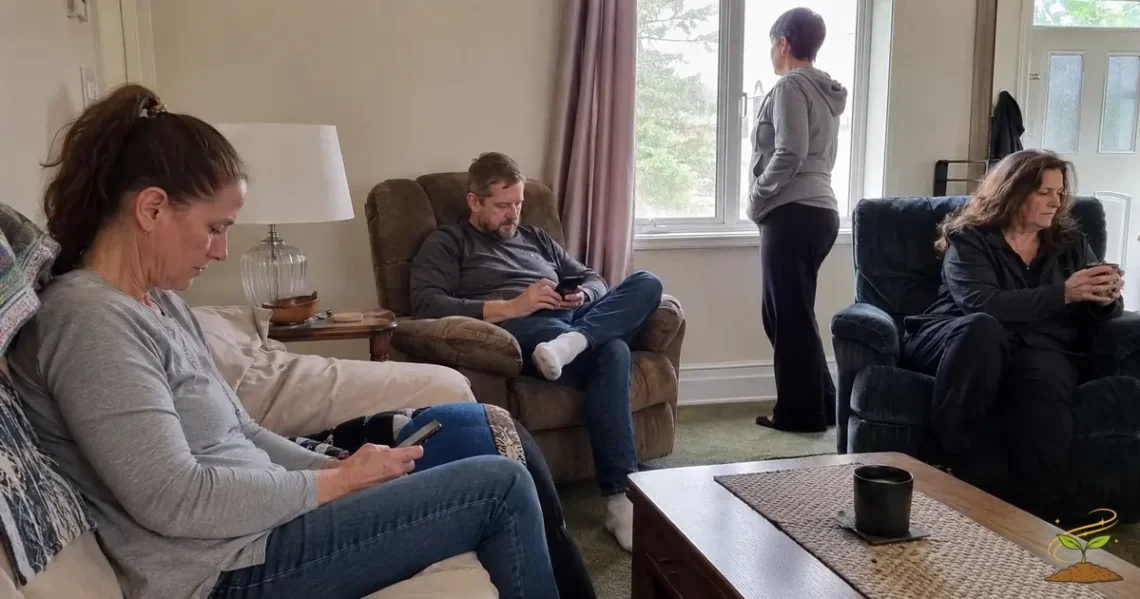
Technology can be a wonderful tool. It allows families to stay in touch, gives people access to information, and helps us find others who share our concerns. But it can also create the appearance of connection without giving us the real thing.
A follower is not necessarily a friend. A comment is not the same as a conversation. Knowing what someone posted for the world to see is not the same as knowing what is happening in that person’s heart, home, health, or family.
Research continues to show that loneliness and social isolation affect both physical and emotional health. People need to belong somewhere. They need to feel seen, needed, and valued. They need relationships that are not based on an algorithm deciding what will keep everyone clicking.
I cannot ignore how often fear, anger, and division are rewarded online. Calm conversations do not spread as quickly as outrage. A thoughtful explanation does not always receive the attention that a frightening headline receives. People are constantly being pushed to choose a side, defend a label, and react before they have had time to ask whether what they are seeing is even true.
We may be communicating more, but we are not always understanding one another better.
Division Makes Us Doubt Each Other—and Ourselves
When people stop talking directly to one another, they begin relying on strangers, headlines, institutions, and online personalities to tell them what everyone else believes. Neighbors become categories. Questions become threats. Disagreement becomes a reason to shut someone out completely.
That is dangerous because people who do not trust one another cannot easily compare experiences, share what they have learned, or stand together when something is wrong.
If you believe you are the only person asking questions, you may remain quiet. If nobody around you is talking about what you have noticed, you may begin to doubt your own eyes. If every concern is immediately turned into a political argument, families and communities lose the ability to work together on the things that affect all of us.
Disconnected people are easier to silence because each person believes they are standing alone.
This is why connection matters far beyond loneliness. Connection helps us find our courage. It allows us to compare notes, recognize patterns, help one another, and remember that we do not need permission to care about what is happening to our families, our food, our health, or our country.
WE THE PEOPLE cannot mean millions of isolated individuals waiting for someone else to tell us what is true. It must mean people who are willing to pay attention, speak honestly, listen carefully, and protect one another even when we do not agree on every detail.
Reconnection Is How We Find Our Way Back
The answer is not to throw away every phone, reject every institution, distrust every expert, or try to live without help. We need good information. We need skilled professionals. We need technology that serves people instead of controlling their attention.
But we also need to become more intentional about what we allow between us.
Reconnection can begin with something as simple as sharing a meal without a phone on the table. It can mean checking on a neighbor, calling someone instead of only liking their post, supporting a local farmer, shopping at a small business, or joining a group where people still sit together and talk face to face.
It can also mean reconnecting with your own body. Keep your records. Notice patterns. Ask how one symptom may be connected to another. Learn where your food comes from. Pay attention to how certain foods, environments, relationships, and daily habits make you feel. Look for people who will listen to your questions instead of treating them like an inconvenience.
This is part of why health freedom should not feel radical. Health freedom is not about pretending we know everything. It is about staying involved. It is about refusing to hand over our judgment simply because the system has made everything feel too complicated.
We Can Put the Pieces Back Together
The system keeps you disconnected when it convinces you that your health has nothing to do with your food, your food has nothing to do with the land, and your well-being has nothing to do with the strength of your family and community.
I do not accept that separation.
Health, food, land, family, community, freedom, and personal responsibility belong in the same conversation. They affect one another every single day, whether the system acknowledges it or not.
We may not be able to change every broken system overnight, but we can begin rebuilding what has been pulled apart. We can have honest conversations. We can share what we know. We can support people doing good work. We can listen without immediately attacking. We can protect our attention and stop allowing every frightening headline to control our emotions.
Most importantly, we can remind one another that we are not alone.
Clarity returns when we reconnect the pieces—and our strength returns when we reconnect with one another.
If this speaks to something you have been feeling, share it with someone you care about. Subscribe to A Voice For Change for more honest conversations about health, food, freedom, and the connections we must protect.
With love and truth,
—Donna 💚
Sources & Further Reading
- Our Epidemic of Loneliness and Isolation
https://www.hhs.gov/sites/default/files/surgeon-general-social-connection-advisory.pdf - Loneliness in America: Just the Tip of the Iceberg?
https://mcc.gse.harvard.edu/reports/loneliness-in-america-2024 - The Six Points of Connection We All Need
https://greatergood.berkeley.edu/article/item/the_six_points_of_connection_we_all_need - Bit by Bit, Small U.S. Groups Chip Away at Historic Levels of Social Isolation
https://apnews.com/article/fd824e3daa93594e5f0d448afac45aa2 - Two Ways to Avoid the Development of “Popcorn Brain”
https://www.psychologytoday.com/us/blog/social-instincts/202404/2-ways-to-avoid-the-development-of-popcorn-brain