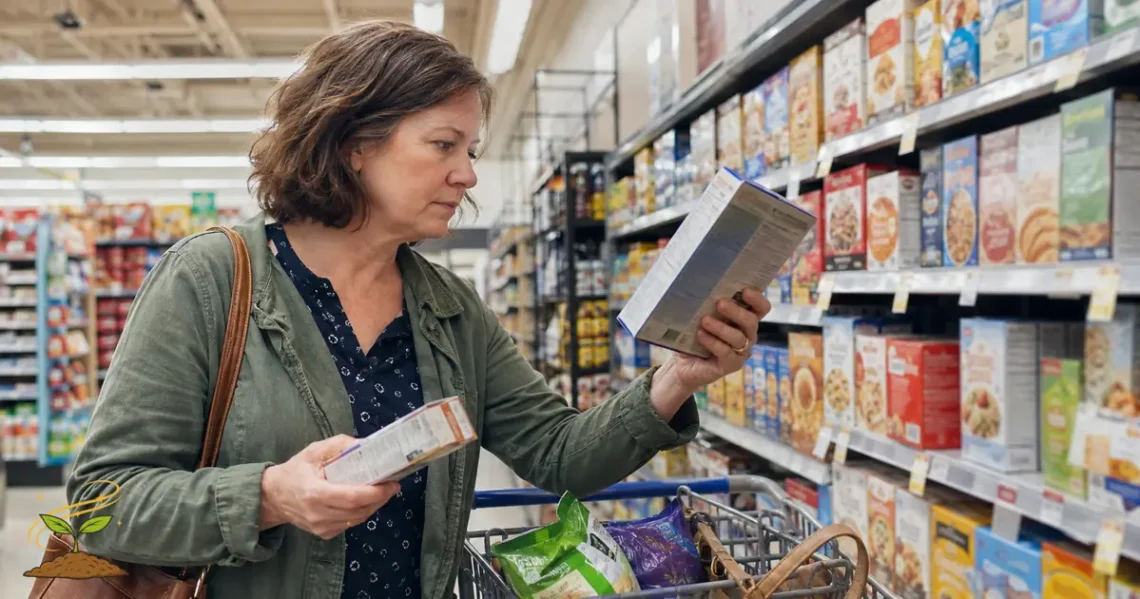
You are standing in the grocery aisle trying to make a good choice for yourself or your family. One package says “natural.” Another says “made with whole grains.” A third has a beautiful picture of a farm, a green field, or fruit that looks like it was picked that morning. You reach for the one that appears healthier, cleaner, or more responsibly made.
But what if that is exactly what the company expected you to do?
Misleading food labels are designed to influence what you believe before you ever turn the package around. The colors, pictures, claims, and comforting words are not there by accident. They are there because food companies know that most people are busy, grocery prices are painful, and families are trying to make the best decisions they can without spending twenty minutes investigating every item in the cart.
I believe that is what makes this so wrong. People should not need a degree in nutrition, law, and marketing to understand what they are feeding their families. A label should inform us. It should not lead us toward an assumption that the actual food cannot support.
The Front of the Package Is Not the Whole Truth
The front of a package is not where a company tells you everything it believes you should know. It is where the company places whatever it believes will help sell the product.
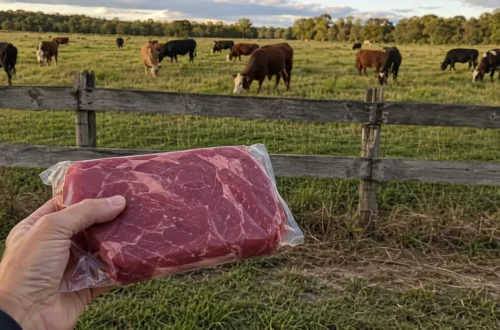
That may be the word “wholesome” printed across the box. It may be “no artificial flavors” displayed in large letters while the rest of the ingredient list remains filled with things you never expected. It may be fruit pictured prominently on a product that contains very little actual fruit. It may be a barn, a pasture, or a smiling farmer used to create a feeling of trust without telling you anything meaningful about where the food came from.
They are not merely selling food. They are selling the feeling that you have already asked the important questions.
That is the part I want people to recognize. If the front of the package can make us feel healthy, responsible, or reassured, we may never look any deeper. We may never ask how much sugar is inside, what the first ingredients are, how heavily the food was processed, how the animals were raised, or whether the pastoral scene on the package has any connection to reality.
Who benefits when we stop asking why? The company trying to get that product into our cart does.
“Natural” Does Not Promise What Most People Believe
Few words have been used more effectively than “natural.” Most of us see it and imagine food that is simple, clean, minimally processed, and produced closer to the way nature intended.
But the FDA has never established a formal definition that covers everything consumers commonly assume “natural” means. Its longstanding policy mainly concerns whether something artificial or synthetic was added that would not normally be expected in the food. It does not automatically tell you how the ingredients were grown, whether pesticides were used, how much processing occurred, how animals were raised, or whether the product provides a health benefit.
Read that again. A product can use one of the most reassuring words in food marketing without that word promising many of the things families believe they are buying.
That gap between what a word legally means and what people emotionally believe it means is where manipulation thrives.
The same concern applies to phrases such as “farm fresh,” “made with real fruit,” “multigrain,” “lightly sweetened,” and “a good source of.” Some claims have specific standards. Others are vague enough to leave us with a much stronger impression than the facts justify.
A little truth printed in large letters can still hide a much bigger truth written in small ones.
Even a True Claim Can Distract You
Not every claim on a food package is false. That is important to understand because the most effective marketing does not always need to lie. It only needs to direct your attention toward one favorable detail while keeping you from examining the rest.
A product labeled “low fat” may still contain a large amount of sugar or sodium. “Sugar-free” does not automatically mean nourishing. “Multigrain” means more than one type of grain is present, but it does not promise those grains are whole. “Made with whole grains” does not tell you how much whole grain the product contains unless you continue reading.
Even the word “healthy” has required updated federal standards because the earlier definition no longer reflected current nutrition guidance. That alone should show us why one attractive word cannot tell the whole story of a food.
We have been conditioned to scan for a few approved-sounding phrases and treat them as proof. But one regulated claim addresses one piece of information. It does not turn the entire product into something good for your body.
A claim may be accurate and still be used as a distraction. That is why misleading food labels can remain technically within the rules while leaving families with an impression that is far from complete.
The Truth Is Usually on the Back
I know people are tired. I know grocery shopping has become expensive and overwhelming. This is not about blaming families for being fooled by an industry that spends enormous amounts of money learning how to influence them. It is about helping all of us become harder to fool.
Turn the package around before it goes into your cart. Start with the ingredient list. Ingredients are generally listed by weight, so the first several ingredients tell you a great deal about what you are actually buying. Look at the serving size before trusting the numbers for sugar, sodium, or calories. Check added sugars. Compare similar products instead of accepting the loudest claim on the shelf.
You do not have to panic over every unfamiliar word, and you do not need to make every grocery purchase perfectly. You simply need to stop allowing the front of the package to make the decision for you.
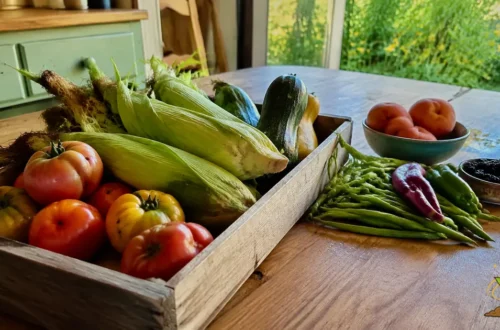
When possible, shorten the distance between yourself and the source of your food. Learning what to look for at a farmers market gives you the chance to ask real questions about how food was grown or raised. A direct answer from the person who produced your food can tell you far more than an idyllic picture printed on plastic.
This Is Bigger Than One Box of Food
Misleading food labels do more than affect one grocery purchase. They allow large food companies to borrow the language, appearance, and reputation of honest farming while keeping shoppers disconnected from the people and practices behind their food.
A corporation can print a barn on a package much more easily than it can build a transparent food system. It can use earthy colors more cheaply than it can pay farmers fairly. It can create a fictional feeling of simplicity while selling a product that has traveled through a long industrial chain.
Meanwhile, farmers and smaller food producers who are genuinely trying to care for their soil, raise animals responsibly, and tell customers the truth must compete against companies with massive marketing budgets.
That matters because our food choices help shape which kind of farming survives. Every purchase sends a message about what we will support. If marketing can control that message by keeping us confused, the largest companies keep the power.
Confused consumers are easier to control. Informed consumers are much harder to manipulate.
WE THE PEOPLE Have a Right to the Truth
I am not asking you to fear food or carry more guilt through the grocery store. I am asking you to question what you are being shown. There is a tremendous difference between being afraid of everything and refusing to be misled.
Read the label. Compare the claim with the ingredients. Ask what a word truly guarantees. Question pictures that suggest a farming practice without proving one. Support companies and farmers who answer questions clearly instead of hiding behind carefully chosen language.
WE THE PEOPLE have a right to know what we are buying, what we are eating, and what we are feeding our children. We should not have to decode vague promises while corporations profit from the assumptions those promises were created to produce.
The label is not the whole truth. Question more. Read more carefully. Trust your own ability to learn. Most importantly, never hand your power to a package simply because someone printed the right words in the right colors.
If this helped you recognize how misleading food labels work, please share it with someone who is trying to make better choices for their family. The more people who understand the manipulation, the less power it has over us.
With love and truth,
—Donna 💚
Sources & Further Reading
- Are Food Labels Misleading? Why Proper Labeling Is Important — Meyers
https://meyers.com/meyers-blog/are-food-labels-misleading-why-proper-labeling-is-important/ - The Fine Line Between Fact and Fiction: Marketing Claims on Food Products — University of New Hampshire Extension
https://extension.unh.edu/blog/2024/02/fine-line-between-fact-fiction-marketing-claims-food-products - How Food Labels Can Be Misleading — University Hospitals
https://www.uhhospitals.org/blog/articles/2025/09/how-food-labels-can-be-misleading - Use of the Term “Natural” on Food Labeling — U.S. Food and Drug Administration
https://www.fda.gov/food/nutrition-food-labeling-and-critical-foods/use-term-natural-food-labeling - Use of the “Healthy” Claim on Food Labeling — U.S. Food and Drug Administration
https://www.fda.gov/food/nutrition-food-labeling-and-critical-foods/use-healthy-claim-food-labeling