I think this is one of the most dangerous misunderstandings we’ve normalized… and it hides in plain sight every single day.
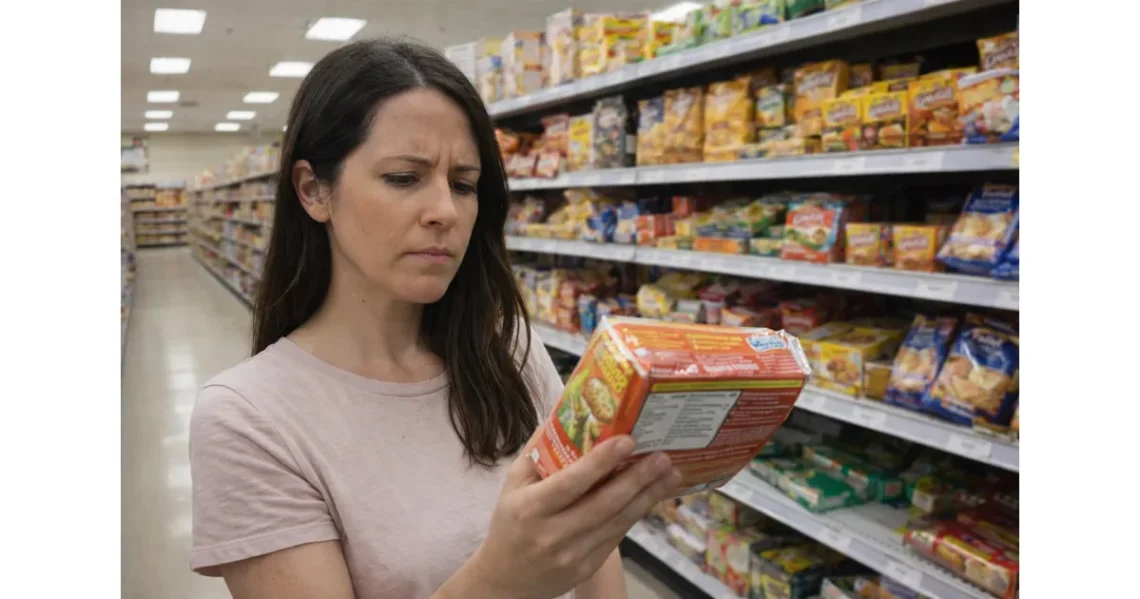
We walk into a store, we see low prices, and we feel like we’re doing something right. Like we’re being responsible. Like we’ve found a way to make things work in a system that already feels expensive enough. I understand that instinct. But the longer I pay attention to how our food is actually produced, the harder it is for me to accept what those prices really represent.
Because cheap food is not actually cheap. It is simply cost-shifted, pushed into places we don’t see, absorbed by systems and people that most of us never think about. And whether we realize it or not, we are still paying for it—just not at the checkout line.
Why Cheap Food Isn’t Actually Cheap
There is no version of reality where real, nutrient-dense food can be produced faster, cheaper, and in higher volumes without something breaking underneath it. That’s not how natural systems work. So when we see food getting cheaper and cheaper, I believe we should be asking a different question—not “How is this such a good deal?” but “What had to be compromised to make it this cheap?”
Because something always is.
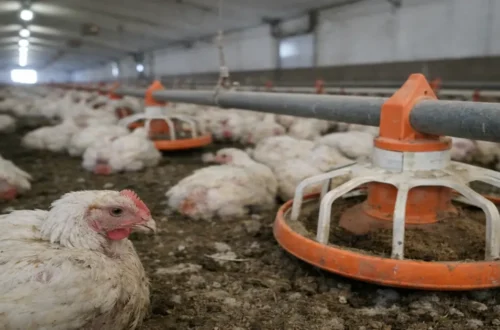
Inputs are reduced. Soil is overworked. Animals are pushed beyond natural limits. Processing replaces nourishment. And over time, what we are left with still looks like food… but it does not function like food in the body.
If you’ve already seen how modern systems distort what we eat, you’ll recognize the same pattern in how real food has been systematically replaced by industrial alternatives that prioritize shelf life and scale over nourishment.
Who Really Pays the Price for Low-Cost Food
When food is priced below what it actually costs to produce it responsibly, someone has to absorb that gap. And I refuse to believe it’s accidental that the burden almost always falls on the same places.
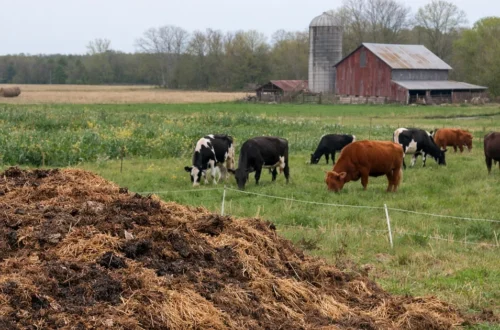
It’s the farmers being forced into a cycle of producing more for less, often at the expense of their own land and long-term viability. It’s the workers in environments most people would never tolerate for themselves. It’s rural communities that slowly hollow out as small, sustainable operations disappear and are replaced by scaled systems that prioritize output over health.
I have seen enough to know that when a system demands cheapness at all costs, it eventually costs everything.
And that pressure doesn’t stay contained—it spreads into the food itself. You can see the long-term consequences of this in how regenerative farming practices are now being used to repair what industrial agriculture has depleted.
What Cheap Food Does to the Land—and to Your Body
The soil is where this story really begins, even if most people never think about it.
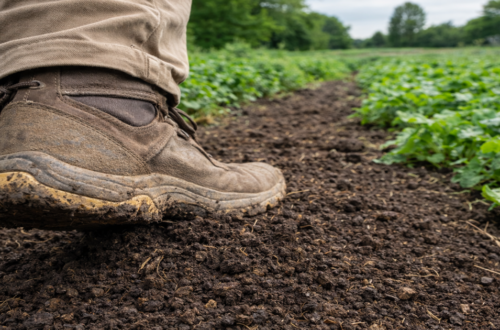
When soil is treated as a tool instead of a living system, it loses its ability to regenerate. Microbial life declines. Nutrient density drops. Resilience weakens. And I believe this is where the connection becomes impossible to ignore, because what happens in the soil does not stay in the soil.
Food grown in depleted ground cannot fully nourish a human body.
So we end up eating more while getting less. We crave more, we supplement more, we search for answers… and rarely are we told to look back at the source. What looks like a personal health issue is often part of a much larger environmental breakdown.
This is not separate from you. This is happening inside you.
How to Step Out of the Cheap Food Trap
I’m not saying this to overwhelm you, and I’m not saying everything has to change overnight. Most people are doing the best they can within a system that has made real food harder to access and harder to understand.
But I do believe awareness changes behavior.
Start by asking better questions about your food. Pay attention to where it comes from. Support local farmers when you can. Choose quality over quantity in even one area of your shopping, even if it’s small.
You don’t have to do everything—but you do have to stop believing that cheap food comes without consequences.
Because every purchase reinforces a system. And the more we understand what we’re actually supporting, the more intentional we become about where we place our trust, our money, and ultimately… our health.
With love and truth,
—Donna 💚
Sources & Further Reading
1. The Hidden Cost of the American Food System – Arizona State University
https://news.asu.edu/20240701-environment-and-sustainability-hidden-cost-american-food-system
2. Unveiling Hidden Costs in Agrifood Systems – ScienceDirect (2026)
https://www.sciencedirect.com/science/article/pii/S0924224426001056
3. Soil Health and Nutrient Density – Frontiers in Nutrition (2025)
https://www.frontiersin.org/journals/nutrition/articles/10.3389/fnut.2025.1638507/full
4. CO₂ Rise and Declining Crop Nutrition – National Institutes of Health (2025)
https://pmc.ncbi.nlm.nih.gov/articles/PMC12616468/
5. Study of 30,000 Shoppers Reveals Hidden Environmental Cost of Food – SciTechDaily (2026)
https://scitechdaily.com/study-of-30000-shoppers-reveals-hidden-environmental-cost-of-treat-foods/
The information shared here is meant to educate and empower, not to replace personalized medical guidance. Your health decisions deserve thoughtful, informed support.