For a long time, I thought inflammation was something that showed up after something went wrong. A reaction. A flare. A symptom that meant my body was responding to stress, illness, or injury. That’s how most of us are taught to think about it — like inflammation is a switch that flips when the body is under attack.
What I’ve come to understand is that for many people, inflammation isn’t an event. It’s a setting. Something quietly turned on and left running in the background of daily life. It builds slowly, reinforced by routines, products, environments, and pressures we rarely question because they’ve become normal.
That realization changes how you look at health. Because once inflammation becomes the baseline, the question isn’t “what’s wrong with my body?” It’s “what is my body constantly being asked to tolerate?”
Inflammation Is Often Built In, Not Chosen
Most people don’t wake up intending to live in a pro-inflammatory way. They’re not choosing stress on purpose. They’re not choosing chemical exposure, poor sleep, or nervous system overload. They’re moving through systems that quietly stack the deck against regulation and recovery.
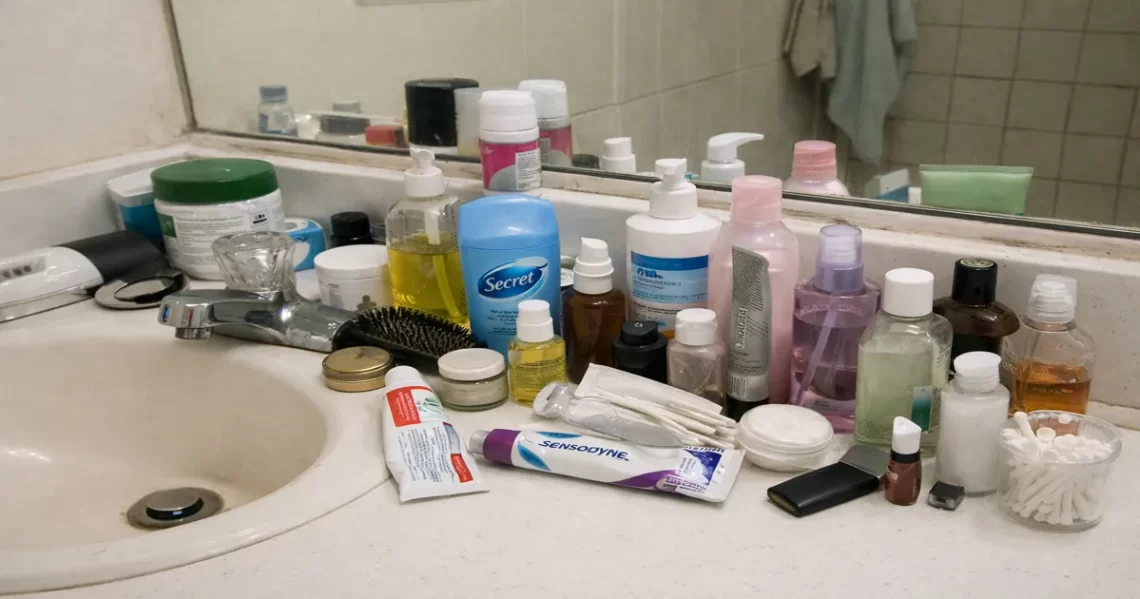
Indoor air filled with fragrances, cleaners, and off-gassing materials. Food environments dominated by ultra-processed convenience. Screens that never let the nervous system fully power down. Work rhythms that reward constant urgency. Homes that look clean but disrupt breathing and hormones in subtle ways. These things don’t announce themselves as threats — they present as modern life.
I explored this more deeply in Why “Healthy” Homes Make Us Sick, where I break down how indoor air quality, everyday household products, and invisible chemical exposures can quietly keep the body in a state of irritation and immune activation. When those exposures are constant, inflammation doesn’t need a dramatic trigger — it simply never gets a chance to turn off.
The Body Keeps Score — Even When We Don’t
The human body is remarkably adaptive. It will compensate long before it complains. That’s why inflammation can simmer for years before it becomes obvious. Fatigue becomes normal. Brain fog is brushed off. Joint stiffness is blamed on age. Digestive issues are managed instead of questioned.
But inflammation is not passive. It changes how cells communicate. It affects hormone signaling, immune balance, and energy production. Over time, it creates the conditions for chronic illness to take hold — not because the body failed, but because it was overwhelmed.
This pattern shows up clearly when we look at hormone disruption, where inflammation often appears long before labs flag a problem. In Breaking the Hormone Hijack, I explain how chronic, low-grade inflammation quietly interferes with endocrine signaling and metabolic balance — creating symptoms that are treated individually instead of traced back to their shared root.
An Anti-Inflammatory Life Is Bigger Than a Diet
When people hear “anti-inflammatory,” they often think of food lists. What to avoid. What to add. Diet matters, but it’s only one piece of the picture. An anti-inflammatory lifestyle is really about reducing unnecessary load on the body — physical, chemical, emotional, and neurological.
That can mean quieter mornings instead of rushed ones. Fewer synthetic fragrances and more clean air. Eating in a way that supports blood sugar stability rather than spikes. Letting the nervous system downshift instead of staying braced all day. Questioning whether convenience is actually costing the body more than it gives.
None of this requires perfection. It requires awareness. Once you start seeing where inflammation is being invited in — through habits, products, or pace — you gain the ability to gently undo it.
Counteracting Inflammation Without Fighting the Body
Counteracting inflammation doesn’t mean waging war on your body. In most cases, it means removing the steady pressures that keep it on edge. The body already knows how to regulate and repair — it just needs fewer obstacles in the way.
One of the most overlooked pressures is chemical load. Fragrances, cleaners, and everyday products quietly ask the immune system to stay alert. When those inputs are reduced — not perfectly, just meaningfully — inflammation often eases because the body is no longer reacting all day long. The absence of irritants can be more powerful than adding another “support.”
Another major driver is nervous system overactivation. When life is rushed, loud, and constantly demanding, the body stays in a braced state. Creating calmer edges around the day — slower mornings, fewer notifications, predictable routines — signals safety. And safety is anti-inflammatory.
Blood sugar instability plays a quieter but significant role. Long stretches without food followed by sharp spikes keep stress hormones elevated, which directly feeds inflammation. Gentle consistency creates metabolic steadiness.
Sleep may be the most underestimated anti-inflammatory tool we have. Protecting rest allows inflammation to settle instead of compound.
Modern life creates constant exposure without recovery. Counteracting inflammation means intentionally building in recovery — pauses, quiet, and completion of stress cycles.
Over-intervention can backfire. Sometimes doing less is more anti-inflammatory than adding another protocol.
Reconnecting with bodily feedback matters. Ease, clarity, and calm are signals worth listening to.
An anti-inflammatory life isn’t about control. It’s about creating conditions where the body no longer has to stay on guard.
This Is Not About Fear. It’s About Choice.
The goal isn’t to be afraid of everything. It’s to create conditions where the body doesn’t have to fight so hard.
With love and truth,
—Donna 💚
Sources & Further Reading
1. National Institute of Environmental Health Sciences (NIEHS)
https://www.niehs.nih.gov/health/topics/conditions/inflammation/index.cfm
2. National Cancer Institute — NIH
https://www.cancer.gov/publications/dictionaries/cancer-terms/def/inflammation
3. U.S. Environmental Protection Agency (EPA)
https://www.epa.gov/indoor-air-quality-iaq