For a long time, most of us were taught to think about farming in terms of production. Bigger harvests. Higher yields. Systems that promised efficiency and control.
But the longer I watch what has happened to our farmland over the past several decades, the harder it is to ignore something deeper that has been unfolding beneath the surface.
The soil itself has been getting sicker.
Not all at once. Not dramatically enough to make headlines. But slowly… year after year… the biological life that once made soil rich and resilient has been fading.
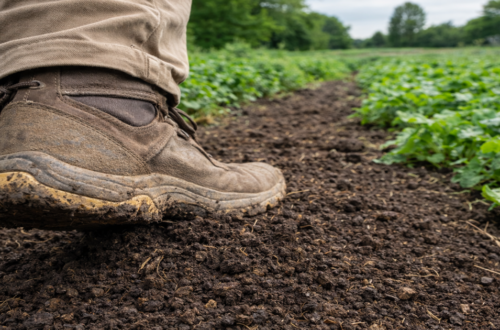
Organic matter declines. Microbial diversity weakens. Fields that once supported vibrant underground ecosystems now depend heavily on fertilizers and chemical inputs simply to keep crops growing.
And what strikes me again and again is how rarely we talk about the life beneath our feet.
Because soil is not just dirt.
It is an entire living world. Bacteria. Fungi. Tiny organisms. Root systems weaving through the ground in quiet cooperation. A biological network that has supported plant life for millions of years.
When that living system is healthy, everything above it benefits.
When it breaks down… everything above it struggles.
Which is why I keep coming back to the same question.
If modern agriculture has weakened the life of the soil… what actually helps the land recover?
The Damage We Rarely See
Modern agriculture didn’t begin with bad intentions. Many of the changes were introduced to make farming easier and more productive.
But somewhere along the way, something important was forgotten.
Soil was no longer treated as a living ecosystem.
It was treated like a growing medium.
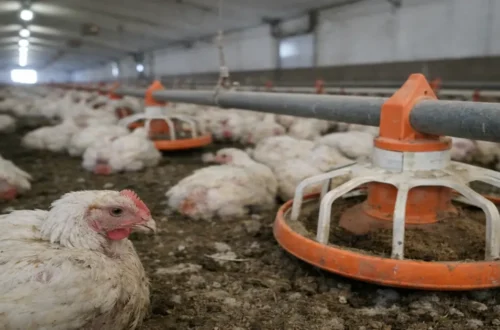
Heavy tilling breaks apart fungal networks that help plants exchange nutrients. Chemical inputs can disrupt delicate microbial communities. Long stretches of bare soil leave that underground ecosystem with nothing to feed on.
Little by little, the biological life of the soil begins to fade.
And once that living system weakens, farmers often find themselves trapped in a difficult cycle — relying on more inputs just to maintain the same yields.
We touched on this reality in The War on Real Food, because the health of our soil and the health of our food supply are inseparable.
When the soil system begins to fail, the effects ripple outward.
Plants lose resilience. Nutritional quality declines. Farms become increasingly dependent on chemical support.
And yet beneath all of this, the soil is still trying to function the way nature designed it to.
Compost: Letting Life Return
One of the things I find most encouraging about regenerative agriculture is how simple some of the solutions really are.
Compost is one of them.
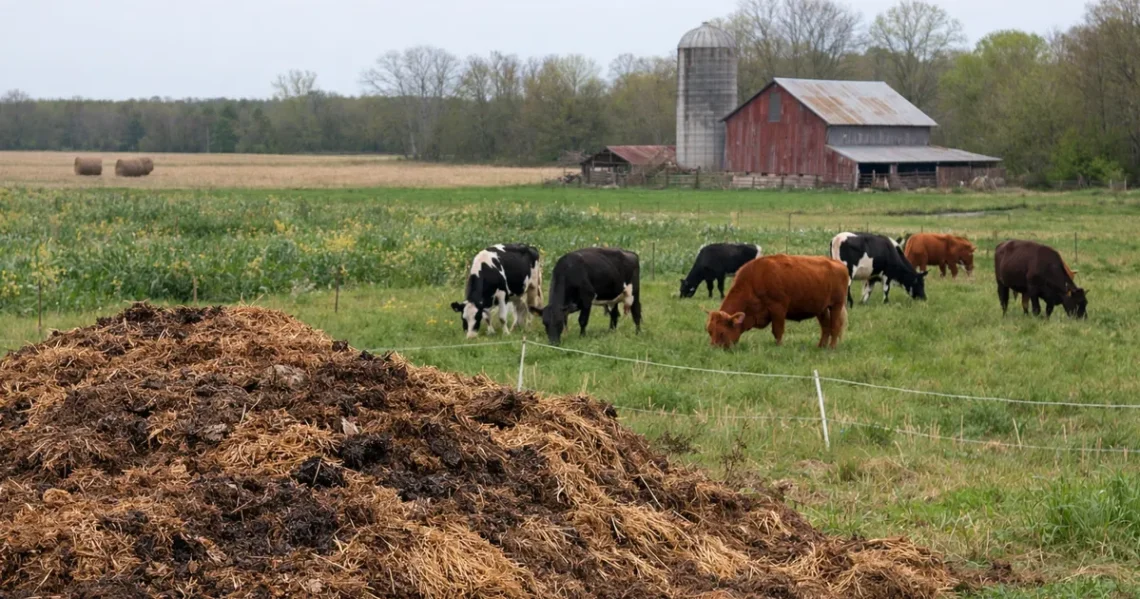
Instead of discarding organic waste, composting allows plant and animal material to break down naturally, creating a rich mixture full of beneficial microbes.
When compost is returned to the soil, it begins restoring something modern farming has steadily lost.
Biological life.
Healthy soil is not built by adding chemicals. Healthy soil is built by rebuilding the living system underground.
Compost introduces microbial diversity back into the soil food web — the network of bacteria, fungi, insects, and organisms that quietly cycle nutrients and support plant growth.
And once that biological community begins recovering, the soil starts behaving differently.
It holds water better. Plants grow more resilient. Nutrients circulate naturally through the ecosystem.
Nature begins doing what it has always known how to do.
Cover Crops: Keeping Soil Alive
Another practice regenerative farmers rely on is something called cover cropping.
Instead of leaving fields empty between growing seasons, farmers plant crops specifically designed to protect and nourish the soil.
What many people don’t realize is that plants are constantly feeding the underground world through their roots.
Those roots release sugars that nourish soil microbes. In return, those microbes help plants access nutrients from the soil.
It is one of the most remarkable partnerships in nature.
When soil is left bare, that entire system begins to shut down.
Cover crops keep it active.
They protect the land from erosion, increase organic matter, and help rebuild microbial diversity underground.
They keep the soil alive instead of dormant.
This idea connects closely to what we explored in The Microbiome We Share With the Land, where the relationship between soil microbes and human health becomes impossible to ignore.
Healthy soil supports healthier plants.
Healthier plants produce more nourishing food.
And that nourishment ultimately reaches us.
Animals Can Help Restore the Land
There is another piece of the puzzle that often surprises people.
Animals.
Livestock are frequently blamed for environmental damage, and in poorly managed industrial systems that criticism can certainly be justified.
But when animals are integrated into farmland in natural grazing patterns, something very different can happen.
Rotational grazing allows animals to move across pasture the way wild herds once did. They graze briefly, fertilize the land naturally, and then move on while the vegetation recovers.
This movement stimulates plant growth and encourages deeper root systems.
Those deeper roots feed microbial communities in the soil and help stabilize the land.
Over time, the soil begins holding more water, storing more carbon, and supporting a wider diversity of life.
In these systems, animals are not damaging the ecosystem.
They are helping restore it.
Working With the Biology of the Land
The more I learn about regenerative farming, the more one pattern becomes clear.
The goal isn’t to force productivity out of the land.
The goal is to restore the living systems that make healthy land possible in the first place.
Farmers who follow regenerative principles tend to focus on a few simple ideas: keeping soil covered, maintaining living roots in the ground, increasing biodiversity, and minimizing disturbance.
These practices protect the microbial communities that quietly run the soil ecosystem.
And when those communities begin to recover, the land becomes more resilient.
Water stays in the soil longer. Plants grow stronger. Nutrients circulate naturally through the system again.
Nature begins doing the work it was always designed to do.
And every time I come back to this topic, I find myself thinking the same thing.
The land already knows how to heal.
Sometimes the most important thing we can do is step back… and allow those living systems to begin recovering.
With love and truth,
—Donna 💚
Sources & Further Reading
1. Soil Health – USDA Natural Resources Conservation Service
https://www.nrcs.usda.gov/conservation-basics/natural-resource-concerns/soil/soil-health
2. 10 Ways Cover Crops Enhance Soil Health – Sustainable Agriculture Research & Education
https://www.sare.org/publications/cover-crops-ecosystem-services/10-ways-cover-crops-enhance-soil-health/
3. Compost Helps Create a Circular Soil Economy
https://gevo.com/agriculture/compost-helps-create-a-soil-circular-economy/
4. Managing Soil Health for Climate Resilience and Crop Productivity
https://www.sciencedirect.com/science/article/pii/S004896972502100X
5. Regenerative Agriculture and Soil Microbial Diversity
https://pmc.ncbi.nlm.nih.gov/articles/PMC12576041/