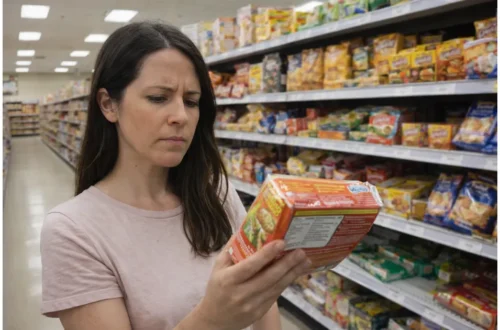
Most nutrition conversations start at the plate. What to eat. What to avoid. Which supplement might help. Which diet everyone’s talking about this week.
But nutrition doesn’t really begin there. It begins long before the kitchen, long before the grocery store, long before we even think about food. It begins underground, in the soil, before a seed ever breaks open.
If soil is depleted, the food grown in it carries less of what the body needs. If soil is alive, diverse, mineral-rich, the food grown in it becomes something entirely different. Not just something that fills you up, but something that actually nourishes. And you can eat what looks like a very healthy diet and still feel like something’s missing if the soil underneath that food was exhausted.
That quiet missing piece is part of what I’ve written about in the sickness economy — how we spend so much time chasing treatments while rarely looking upstream at what set the stage in the first place: https://avoiceforchange.com/the-sickness-economy/
Once you understand that food is the final chapter of a much longer story, the whole conversation about health starts to shift.
Soil Is Alive
Soil isn’t just dirt. Healthy soil is busy. It’s full of microorganisms, fungi, bacteria, minerals, and organic matter all working together beneath the surface. These tiny life forms break things down, unlock minerals, and move nutrients into plant roots. That’s how plants get access to the trace minerals and phytonutrients we depend on.
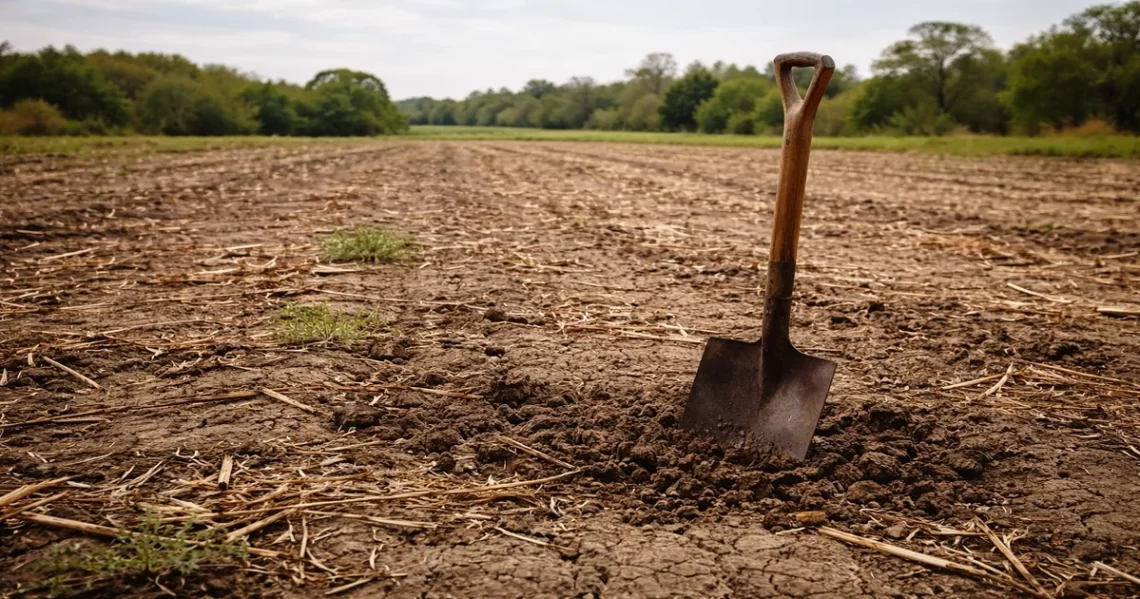
When that underground life is thriving, plants grow stronger and more nutrient-dense. When that life is disrupted by chemical fertilizers, pesticides, monocropping, and heavy tilling, plants still grow — but with less depth, less resilience, less nourishment. The produce can look beautiful. The yield can be high. But something quiet has been lost along the way.
Over the last century, farming shifted toward speed, uniformity, and shelf life. Synthetic fertilizers replaced soil regeneration. Herbicides replaced biodiversity. Tilling broke up fungal networks that once shared nutrients across root systems. The result is soil that’s more compacted, more depleted, and less biologically alive than it used to be. And food that simply isn’t carrying what it once did.
It helps explain why so many people feel like they’re doing everything “right” with food and still not feeling well. The soil story started long before the food reached the plate.
If you’ve been reading along with Farmland Friday, you’ve already seen how often soil quietly sits at the center of food, farming, and human vitality: https://avoiceforchange.com/category/farmland-friday/
The Reflection Beneath Our Feet
Here’s the part that always makes me pause.
Your digestive system is also an ecosystem. A living microbiome. A community of organisms that help process food, shape immunity, and influence metabolism. When soil ecosystems collapse, plant health weakens. When human microbial ecosystems collapse, human health weakens.
Diversity matters in the soil. Diversity matters in us.
Food grown in living soil carries microbial signals and plant compounds that speak to our own internal ecosystem. Food grown in sterile, chemically-driven soil doesn’t offer the same conversation to the body. You won’t see that difference clearly on a nutrition label. But the body feels it.
This is why “eat healthy” isn’t quite enough anymore. It’s not only what we eat. It’s how that food was grown. And if we only focus on the plate while ignoring what’s happening in the soil beneath it, we keep circling the same problems.
A Different Way Forward
The encouraging part is that soil can be rebuilt.
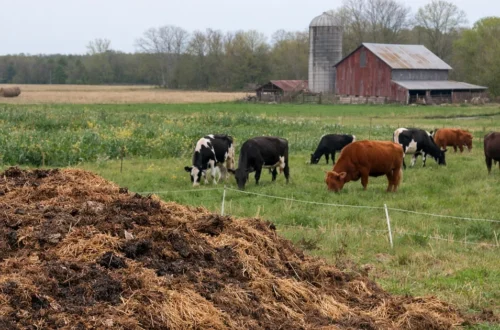
Cover crops, composting, rotational grazing, reduced tilling, biodiversity in planting — these practices bring soil back to life. When farmers focus on rebuilding soil, nutrient density rises. Flavor returns. Plant resilience strengthens. And human nourishment follows quietly behind.
Supporting farms that prioritize soil health isn’t just an environmental choice. It’s a long-term health choice. Every meal becomes a small vote for the kind of food system we want feeding the future.
Every plate is the final step in a chain that started underground. When we care for soil, we care for food. When we care for food, we care for health.
And the future of health may depend as much on farmers as it does on doctors.
With love and truth,
—Donna 💚
Sources & Further Reading
USDA NRCS Soil Health Overview
https://www.nrcs.usda.gov/conservation-basics/natural-resource-concerns/soil/soil-health
Soil Health Fact Sheets (NRCS)
https://www.nrcs.usda.gov/resources/guides-and-instructions/soil-health-fact-sheets
Soil Health 101 (Soil Health Nexus)
https://soilhealthnexus.org/soil-health/
USDA Cover Crops Overview
https://www.usda.gov/about-usda/general-information/initiatives-and-highlighted-programs/peoples-garden/soil-health/cover-crops-and-crop-rotation
10 Ways Cover Crops Enhance Soil Health (SARE)
https://www.sare.org/resources/cover-crops/