I think Memorial Day has a way of making us pause, even if just for a little while. We remember people who gave more than most of us can even imagine. We remember sacrifice, family, freedom, and the kind of responsibility that doesn’t always make a lot of noise. It just gets carried. And when I think about that, I cannot help but think about the land too, because the land has carried so much. It has carried our families, our food, our work, our mistakes, and our hope for the next generation.
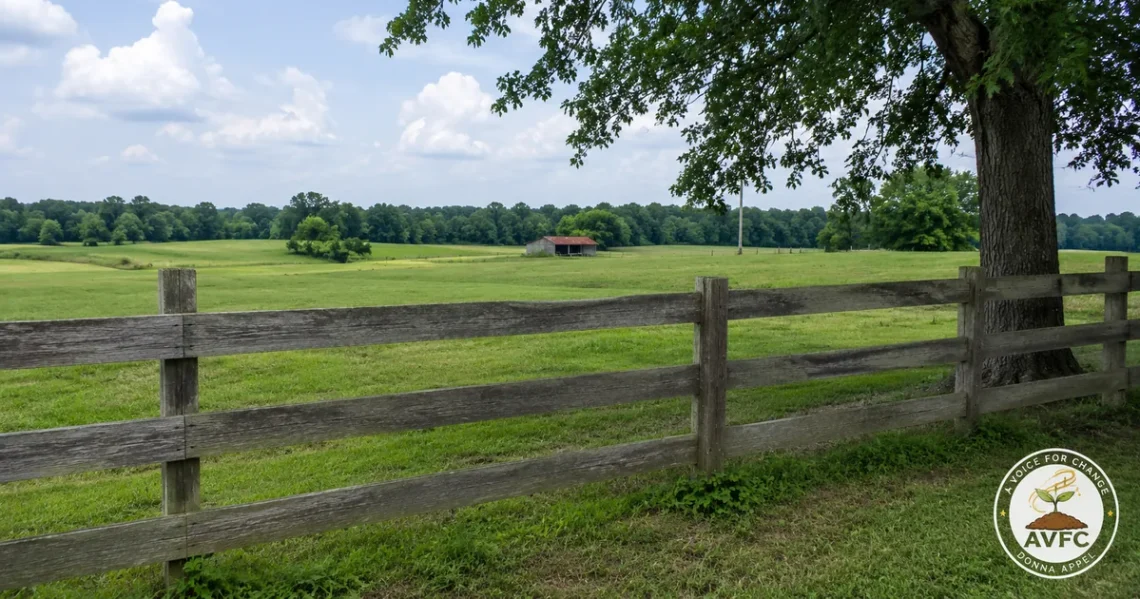
The land is not just scenery. It is not just property. It is not just something we drive past on the way to somewhere else. The land holds memory in a very real way. It remembers how it has been treated. It remembers whether it was cared for, stripped, rested, poisoned, protected, or pushed too hard for too long. And maybe that sounds poetic, but I don’t mean it only in a poetic way. I mean it in the practical, living-systems way. Soil tells the truth eventually.
The Land Keeps a Record
We like to think history is something we keep in books, photographs, cemeteries, old letters, and family stories. And it is. But history is also held in the ground beneath us. You can see it in fields that do not hold water the way they once did. You can see it in soil that has lost its softness and structure. You can see it when land needs more and more outside help just to produce what it used to produce naturally. That is not random. That is the record showing itself.
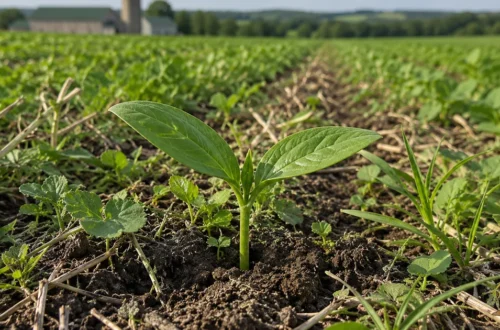
Healthy soil is alive. It has movement, microbes, roots, fungi, minerals, insects, moisture, and all kinds of relationships happening quietly under the surface. Most of us do not see that part, so it is easy to forget it is there. But just because something is hidden does not mean it is unimportant. Some of the most important work in both soil and the body happens where we cannot see it. That is why I think we need to be careful about judging health only by what looks good on the outside.
When land is cared for, it can become more resilient. It can hold more water, support more life, grow stronger plants, and recover better from stress. But when it is treated like a machine instead of a living system, it starts to wear down. And I think that is a lesson we should take seriously, because we do the same thing to our bodies. We push, rush, override, and demand output, and then act surprised when the system finally starts asking for repair.
Soil History Becomes Food History
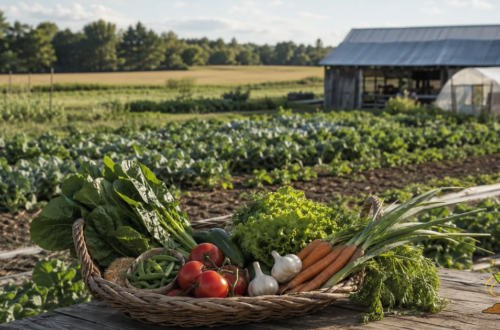
Food does not begin at the grocery store. It begins somewhere real. It begins in a field, in soil, in weather, in water, in the hands of people who grow it, and in the practices used long before that food reaches our kitchens. I think we forget that because modern food has become so disconnected from place. Everything is packaged and polished until it barely feels connected to the ground anymore. But it is. Every bite comes from somewhere.
That matters because food carries the story of the land it came from. If the soil is rich and alive, that is part of the food’s story. If the soil is depleted, overworked, or dependent on chemicals to keep going, that is part of the story too. We may not see it on the label, but that does not mean it is not there. I talked about this same hidden cost in The Real Cost of Cheap Food, because cheap food often looks like a bargain only because the real cost has been pushed somewhere else.
And eventually, that cost reaches us. It reaches the farmer. It reaches the soil. It reaches the water. It reaches the food supply. And yes, I believe it reaches the body. We cannot keep pretending our health is separate from the environment that feeds us. We can talk about nutrients, calories, supplements, and diets all day long, but if we never ask what kind of land grew the food, we are skipping over the beginning of the conversation.
Stewardship Is Not Just a Nice Idea
I know “stewardship” can sound like one of those soft words people use when they want something to feel meaningful. But real stewardship is not soft. It is practical. It is disciplined. It asks us to care about what happens after us. Stewardship means taking responsibility for what has been placed in our hands, even when we may not be the ones who benefit first.
That is not how our culture usually thinks anymore. We are trained to want the fastest result, the easiest shortcut, the cheapest option, and the biggest output. But land does not work well that way. Neither does the body. Living systems need time, rest, nourishment, diversity, and protection from constant assault. If all we ever do is take, eventually there is less left to give.
This is where I think Memorial Day gives us something deeper to reflect on. We remember sacrifice, but do we carry responsibility forward? We honor those who protected this country, but are we protecting the soil, the food, the health, and the local communities that make life here possible? I do not ask that as a political question. I ask it as a human one. What we care for today becomes part of what someone else inherits tomorrow.
What This Means for Our Own Health
This is why I keep seeing the connection between soil health and human health. When soil is depleted, the food system suffers. When the food system suffers, families suffer. And when families are trying to stay healthy in a world full of confusing labels, cheap ingredients, processed shortcuts, and disconnected advice, it can start to feel like everything is working against them. You are not crazy if you feel that. A lot has been disconnected.
But I do not want this to feel hopeless, because it is not. We can start paying attention again. We can ask better questions about where our food comes from. We can support farmers who are trying to rebuild the soil instead of just extract from it. We can buy local when possible, choose real food more often, waste less, compost if we can, grow something small, or simply teach our children that food does not come from a store first. It comes from the land.
And we can bring that same awareness back to our own bodies. The body keeps a record too. It remembers what it has been fed, exposed to, deprived of, and asked to carry. That does not mean we blame ourselves. It means we listen with more respect. If you are trying to understand your own patterns instead of just following every outside voice, Start Personalizing Your Health is a good place to begin that conversation.
I believe healing starts when we stop treating living systems like machines. Soil is not a machine. The body is not a machine. A family is not a machine. A country is not a machine. These are living things that require care, memory, humility, and protection. This Memorial Day, maybe one way we honor what came before us is by becoming more careful with what comes after us. The land remembers. Our bodies remember. And someday, the next generation will know what we chose to care for.
With love and truth,
—Donna 💚
New here? You can explore more of Donna’s Farmland Friday reflections on soil, food, farming, and stewardship here: https://avoiceforchange.com/farmland-friday/
Sources & Further Reading
- The legacy of intensive agricultural history on the soil health of restored tallgrass prairies
https://www.frontiersin.org/journals/environmental-science/articles/10.3389/fenvs.2022.991262/full - Impacts of Agricultural Management Practices on Soil Health
https://www.ncbi.nlm.nih.gov/books/NBK609370/ - From soil to health: advancing regenerative agriculture for human and environmental resilience
https://pmc.ncbi.nlm.nih.gov/articles/PMC12576041/ - Improving Soil Health Yields Unexpected Benefits for Farmers
https://home.dartmouth.edu/news/2024/06/improving-soil-health-yields-unexpected-benefits-farmers - Regenerative Organic Agriculture and Human Health
https://www.mdpi.com/2076-3921/14/5/530