There’s a reason miners used to bring a canary underground with them. It wasn’t sentimental. It was practical. The bird’s small body reacted faster to toxic air, giving a warning before the danger reached the grown men swinging pickaxes.
Lately, I keep thinking about that image when I look at what’s happening to children.
Kids are not suddenly weaker. Parents are not suddenly careless. And this isn’t about one diagnosis, one chemical, or one bad habit. What we’re seeing in children’s bodies is an early warning signal — a message from the environment we all share.
Children feel the breakdown first
Children’s bodies are still forming. Their detox systems are immature. Their brains are wiring rapidly. Their immune systems are learning what’s safe and what’s not. That makes them exquisitely sensitive — not fragile, but responsive.
When the air is compromised, they breathe more per pound of body weight. When food is depleted, they need more nutrients to grow. When chemicals interfere with hormones, their developing systems feel it faster and louder.
So when we see rising rates of behavioral struggles, metabolic issues, immune problems, and chronic symptoms in kids, it isn’t random. It’s not a coincidence. It’s feedback.
Adults may compensate for years. Children don’t get that luxury.
This isn’t about blame — it’s about exposure
We’ve been taught to look for someone to blame. The parent. The school. The screen time. The kid.
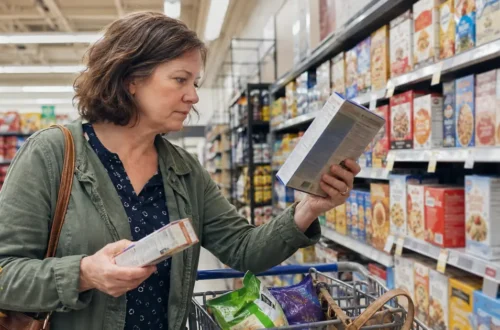
But most families are doing what they’ve been told is right. They buy “safe” products. They choose foods with health claims. They trust that if something is sold openly, it must be reasonably harmless.
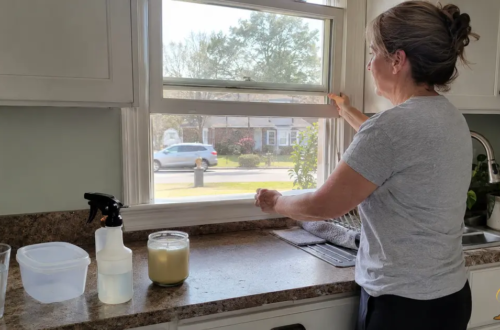
The problem is that modern exposure is layered. A little here, a little there, all day long. Food grown in depleted soil. Indoor air filled with off-gassing and fragrances. Water carrying residues. Household products marketed as gentle but never tested together.
I wrote more about how our living spaces quietly contribute to this burden in Why “Healthy” Homes Make Us Sick. Kids spend more time indoors than ever, and their bodies are absorbing what adults may barely notice.
Nutrition isn’t what it used to be
Even when families try to “eat well,” the nutritional math has changed. Soil depletion means food often contains fewer minerals than it did a generation ago. Processing strips what little remains. Fortification replaces complexity with isolated nutrients that don’t behave the same way in the body.
Children need dense, bioavailable nutrition to build systems that last a lifetime. Instead, many are growing up undernourished at the cellular level — full but not fed.
I explored how this affects energy and resilience in The Mitochondria Map of Cellular Energy. When cells can’t produce energy efficiently, everything downstream struggles — especially in growing bodies.
Hormones don’t wait until adulthood
Endocrine disruption is often framed as an adult problem. Fertility. Weight. Mood. Fatigue.
But hormone signaling starts early. Interference during childhood doesn’t just cause short-term symptoms — it can alter developmental trajectories. Attention, metabolism, stress response, immune balance. These systems don’t operate in isolation.
When kids show signs that once belonged to middle age, it’s not because childhood is failing. It’s because the environment has changed faster than biology can adapt.
What the canary is telling us
Children are not the problem to be fixed. They are the signal asking us to pay attention.
They are showing us where the system breaks first — where food, air, water, and chemical load intersect with developing biology. Ignoring that signal doesn’t make it go away. It just means adults will feel the consequences later, often more quietly and with fewer options.
How we begin to reverse the trend
This doesn’t require perfection, panic, or fear. It starts with awareness and small, steady shifts.
Focus on real food with fewer ingredients, even if it isn’t labeled trendy or expensive. Improve indoor air where possible — ventilation, fewer synthetic fragrances, simpler cleaning products. Prioritize nutrient density over calories. Reduce cumulative chemical exposure rather than chasing single villains.
Most importantly, trust what children’s bodies are telling us. They are not exaggerating. They are not imagining things. They are responding honestly to the world we’ve built.
If we listen now, we still have room to change course — not just for kids, but for all of us.
With love and truth,
—Donna 💚
Sources & Further Reading
1. Understanding Exposures in Children’s Environments — EPA
https://www.epa.gov/healthresearch/understanding-exposures-childrens-environments
2. Children’s Environmental Health — NIEHS
https://www.niehs.nih.gov/health/topics/population/children
3. The Impact of Ultra-Processed Foods on Pediatric Health — PMC
https://pmc.ncbi.nlm.nih.gov/articles/PMC12685501/
4. Unhealthy Ultra-Processed Food, Diet Quality and Health Outcomes — MDPI
https://www.mdpi.com/2304-8158/14/15/2648
5. How Ultra-Processed Foods Harm Kids and What to Do — EWG
https://www.ewg.org/news-insights/news/2025/07/how-ultra-processed-foods-harm-kids-and-what-do-about-it