There’s a hard truth about soil that most people don’t really think about until they start paying attention: it doesn’t “reset” just because a season ends. Soil is a living system, and living systems keep score. They don’t just hold seeds and water — they hold patterns. They hold what’s been repeated. They hold what’s been introduced, what’s been stripped away, what’s been stressed, and what’s been ignored. Soil remembers.
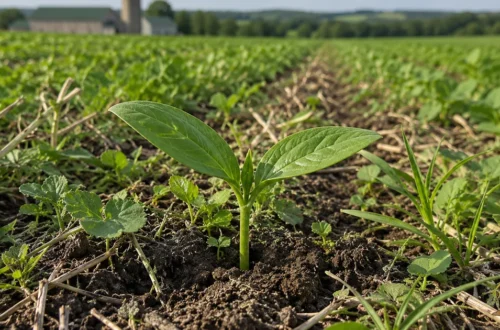
I believe we’ve been trained to see land as background scenery — like it’s simply there to perform. Grow the crop. Produce the yield. Do it faster, do it cheaper, do it again next year. And when the soil starts failing, the answer is usually the same answer: add more inputs, push harder, override the system. But soil doesn’t respond to being overridden for long. It responds the way any living environment responds when it’s repeatedly disrupted — it becomes less diverse, less stable, and less resilient.
Soil Memory Is Microbial Memory
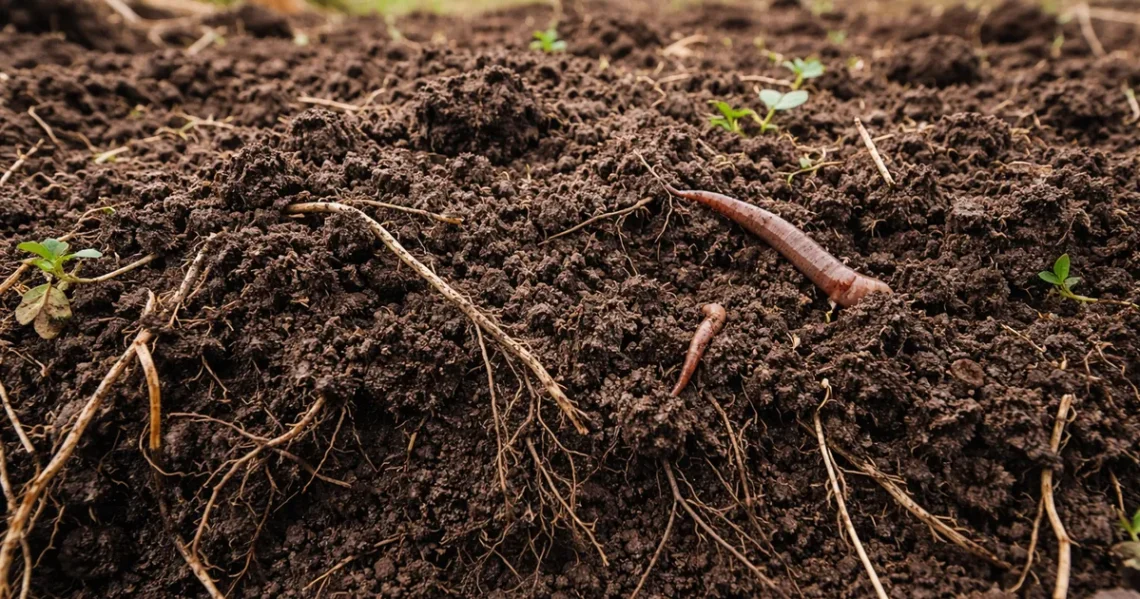
When people hear “soil health,” they often picture compost or worms or something earthy and quaint. But what we’re really talking about is biology — an underground network of bacteria, fungi, protozoa, and microbial relationships that build structure, cycle nutrients, and protect plants in ways chemicals can’t replicate. When those microbial communities are supported, the soil becomes richer over time. When they’re disrupted — by heavy tillage, monocropping, chemical saturation, erosion, compaction, drought stress — the soil adapts… but not in a good way. It becomes more fragile. It holds less water. It cycles less nutrition. It loses the buffering power that keeps a system stable.
And here’s the part I can’t ignore: your body works the same way. You have an internal ecosystem too. Your gut microbiome, your detox pathways, your inflammation response, your nervous system — they all reflect what they’ve been exposed to repeatedly. If the environment you live in is overloaded, if the food you eat is depleted, if stress is constant, if exposures keep piling up, your body adapts… but it often adapts by becoming more reactive, more inflamed, and more easily thrown off balance.
If you want a related read that connects soil contamination to what ends up in the human body, this fits beautifully here: The Soil Speaks—Are We Listening?.
When the Land Is Depleted, Food Can Still Look “Fine”
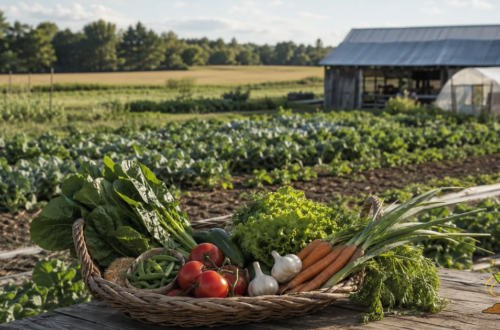
One of the most deceptive parts of modern food is that it can look perfect and still arrive with less to offer. You can buy a tomato that looks like a tomato and still find that it doesn’t taste like one — and your body doesn’t respond to it the same way either. That isn’t your imagination. When soil is depleted, nutrient density tends to fall, and the plant’s natural mineral and phytochemical profile can shift. Food becomes more about calories and less about real nourishment.
That’s one reason so many people feel “full but not satisfied.” You can eat a normal amount and still feel like something is missing. You can snack all day and still feel tired. You can crave sugar, crash, crave again, and never feel grounded. Yes, processed food plays a role — but I believe the deeper layer is this: we are trying to run human bodies on food grown in exhausted systems.
This is why I wrote The Holiday Plate Begins in the Soil — because people blame themselves for how they feel after eating, when a big piece of the story is what the land was able (or unable) to provide in the first place.
What Soil Restoration Teaches Us About Human Restoration
Here’s what I love about the idea of soil memory: it doesn’t just explain decline. It also explains recovery. Because soil can remember health again — but not through force. Through care. Through consistency. Through rebuilding the conditions that allow life to return.
That’s the same shift I want for you. If your internal environment feels reactive, inflamed, depleted, anxious, foggy, or “off,” the goal isn’t to bully your body into behaving. The goal is to restore your terrain — to rebuild what chronic stress, toxic load, and modern food have chipped away at over time.
Practical ways to support your internal “soil” starting this week:
Choose one daily meal built from real, simple ingredients — not perfection, just cleaner inputs that your body recognizes.
Add fiber that actually feeds your microbiome (berries, chia, lentils if tolerated, vegetables, fermented foods if tolerated) instead of “food-like” products that inflame and spike cravings.
Reduce one exposure you can control (a cleaner water choice, fewer fragranced products, fewer ultra-processed snacks) because tiny reductions add up in a living system.
Prioritize mineral support through food first (greens, seafood, quality salt, broth, nutrient-dense basics) because depleted land tends to create depleted plates.
And don’t skip the nervous system side of this — because chronic stress is like tillage on the body. It breaks structure. It disrupts regulation. Rest is biological repair.
I believe we’re at a point where people are starving for something deeper than “eat less and move more.” They want to understand why their bodies feel like they’re struggling. And sometimes the clearest mirror is right under our feet: when the earth is pushed past its limit, it shows up everywhere — in the plants, in the food, and eventually in us.
With love and truth,
—Donna 💚
Sources & Further Reading
1. Farms following soil-friendly practices grow healthier food, study suggests (University of Washington, 2022)
https://www.washington.edu/news/2022/02/24/farms-following-soil-friendly-practices-grow-healthier-food-study-suggests/
2. Soil Health (USDA NRCS)
https://www.nrcs.usda.gov/conservation-basics/natural-resource-concerns/soil/soil-health
3. Stress, depression, diet, and the gut microbiota (open-access, PMC)
https://pmc.ncbi.nlm.nih.gov/articles/PMC7213601/
4. Soil Biodiversity (FAO Soils Portal)
https://www.fao.org/soils-portal/soil-biodiversity/en/
5. Unearthing the Soil Microbiome, Climate Change, Carbon Storage Nexus (American Society for Microbiology, 2021)
https://asm.org/articles/2021/may/unearthing-the-soil-microbiome%2C-climate-change%2C-ca