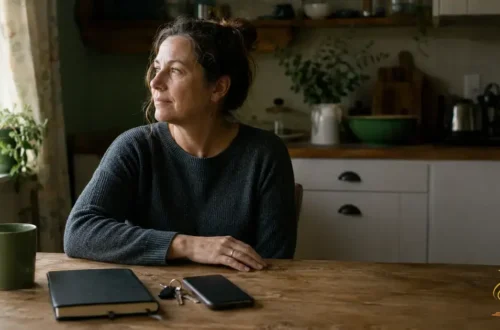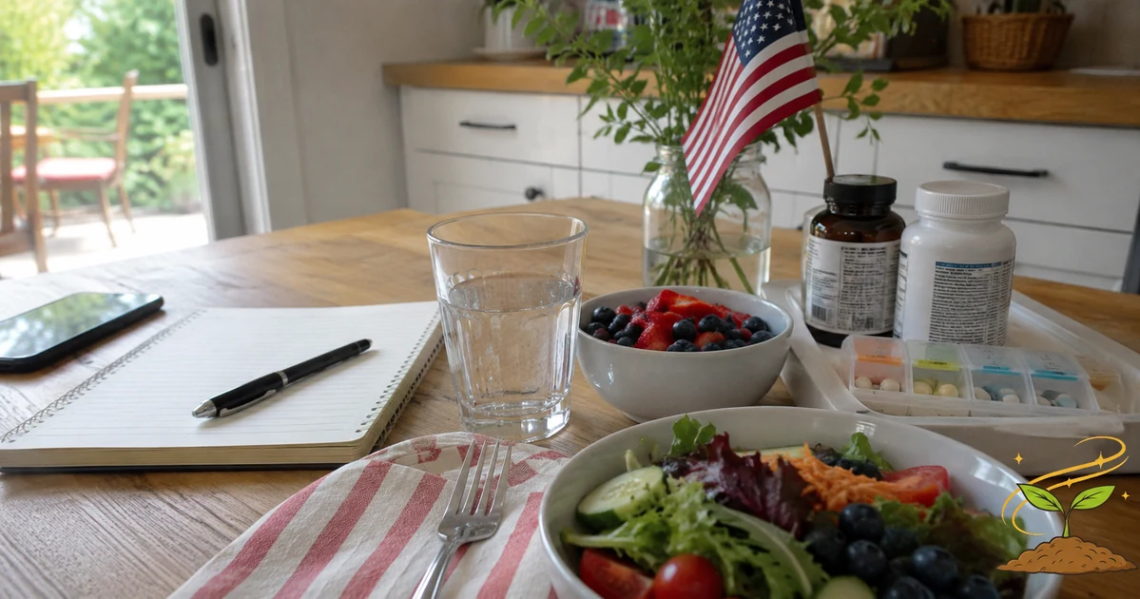
Health independence starts here, not with a dramatic overhaul or a perfect plan, but with a quiet decision.
At some point, we have to stop handing our whole body, our whole judgment, and our whole future over to systems that do not have to live inside our skin.
I believe this is a hard shift for a lot of people, because dependency does not always feel like dependency. Sometimes it feels like being responsible. Sometimes it feels like being respectful. Sometimes it feels like not wanting to make trouble. We wait for someone else to confirm what our body is already trying to tell us. We wait for a diagnosis before we trust the symptom. We wait for permission before we ask the question. We wait for the expert before we believe our own experience matters.
And I understand why people do that. Most of us were trained that way.
But waiting is not the same thing as wisdom.
There is a difference between receiving help and surrendering your authority. There is a difference between respecting a trained professional and believing you have no role in your own health. There is a difference between using the healthcare system when you need it and becoming so dependent on it that you forget how to listen, question, observe, and choose.
To me, health independence is not about doing everything alone.
It is about remembering that you are not helpless.
Health independence begins before crisis
Most people do not think about health independence until something has already gone wrong. The fatigue gets heavier. The symptoms get louder. The medication list grows. The appointments multiply. The test results come back “normal,” but the body still does not feel well.
By then, people are already tired. They are scared. They want answers. And when you are tired and scared, it is much easier to hand your power away because you just want someone to fix it.
That is why health independence has to begin before crisis.
It begins in the ordinary choices that do not look urgent yet. It begins with noticing what drains you and what restores you. It begins with paying attention to how food affects your energy, how sleep affects your mood, how stress affects your digestion, and how your environment affects your clarity. It begins with understanding that the body rarely goes silent before it breaks down. Most of the time, it whispers first.
I wrote about this in Your Body Is Talking. Are You Listening?, because I believe this is where so much healing gets missed. Your body is always giving you information. The problem is not that people have no signals. The problem is that they have been taught to ignore those signals until someone outside of them confirms they are real.
Your body does not need permission to matter.
You can respect medical care and still pay attention to your own patterns. You can ask for professional help and still bring your own observations to the table. You can follow a treatment plan and still ask whether the root problem is being addressed.
That is not rebellion.
That is responsible participation in your own life.
Dependency grows when we stop questioning
There are many systems around health that create dependency. Some are medical. Some are corporate. Some are cultural. Some are emotional. Some are built into the food supply, the insurance model, the pharmaceutical model, the convenience economy, and the constant flood of wellness trends that promise one more shortcut.
Not all help is bad. Not all systems are useless. Not every doctor is dismissive. Not every product is a trap. I do not believe in painting with that broad of a brush.
But I do believe we have to be honest about something.
A system can be useful without deserving your blind obedience.
Dependency grows when we stop questioning. It grows when we accept food that does not nourish us because it is cheap, fast, and everywhere. It grows when we accept exhaustion as normal because everyone else is tired too. It grows when symptoms are brushed aside as random inconveniences instead of messages. It grows when we accept vague answers because we do not want to be difficult.
And I cannot ignore how profitable that dependency has become.
When people are confused, they are easier to steer. When they are overwhelmed, they are easier to sell to. When they feel unqualified, they stop asking questions. When they are told everything is too complicated for them to understand, they begin to believe their own role is small.
But your role is not small.
You are the one living in your body every day. You are the one who knows when something changed. You are the one who notices the pattern that does not show up in a ten-minute appointment. You are the one who feels the difference between “I am fine” and “I am functioning, but something is off.”
That matters.
Health literacy gives you steadier ground
Health independence becomes much more practical when you begin building health literacy.
That does not mean you need to become a doctor. It does not mean you need to spend your life reading studies or arguing with everyone who has a different opinion. It simply means you become better able to understand what you are reading, hearing, buying, and being told.
You learn to ask better questions.
What is this test for? What does this result mean? What are the options? What are the risks? What happens if I wait? What can I do at home to support my body? Is this addressing the cause or only managing the symptom? Is this information meant to educate me, or is it trying to sell me something?
Those are fair questions.
They are not rude questions. They are not rebellious questions. They are not anti-doctor questions.
They are the questions of a person who is awake inside their own care.
And this matters outside the doctor’s office too. When something is advertised as “natural,” “science-backed,” “doctor recommended,” or “clinically proven,” you can slow down before you believe it. You can ask who benefits from the message. You can ask whether the claim applies to you. You can ask whether fear is being used to push you toward a decision.
Health independence is not about being suspicious of everything. It is about becoming harder to confuse.
That is a very different thing.
The goal is partnership, not isolation
One mistake people make is thinking health independence means rejecting help. I do not believe that.
We need good practitioners. We need honest research. We need emergency care. We need people with training and skill who can help us see what we cannot see. There are absolutely times when outside help is necessary, and sometimes it is life-saving.
But there is a difference between partnership and dependence.
Partnership says, “Here is what I am noticing. Help me understand it.”
Dependence says, “Tell me what to do because I do not trust myself.”
Partnership says, “What are my options?”
Dependence says, “Whatever you say.”
Partnership says, “How can I support my body while we figure this out?”
Dependence says, “I will wait until someone fixes me.”
That shift may sound small, but it changes the whole conversation.
The more independent you become in your health, the more useful good support becomes. You are no longer arriving empty-handed. You know your patterns. You know your questions. You know what has changed. You know what you have already tried. You know what feels off.
And a good practitioner should want that. A good practitioner should not be threatened by a person who is paying attention.
This is part of what I mean when I talk about health freedom. In Health Freedom Isn’t Optional — It’s Urgent, I wrote about the importance of choice and informed consent. But health freedom is not only about big public debates. It is also about the quiet, private practice of staying awake in your own decisions.
Start with one thing you can reclaim
Health independence does not require you to fix your whole life this week.
In fact, I believe it works better when you do not try to do everything at once.
Start with one area where you have been too dependent on outside direction or too disconnected from your own wisdom. Maybe it is food. Maybe it is sleep. Maybe it is stress. Maybe it is movement. Maybe it is the way you prepare for appointments. Maybe it is the way you research health information. Maybe it is the habit of ignoring symptoms until they are impossible to ignore.
Start there.
If it is food, begin by noticing how your meals affect your energy. Not with judgment. Just awareness.
If it is sleep, begin by protecting your evening rhythm a little more carefully.
If it is movement, begin with something simple enough to repeat.
If it is appointments, begin keeping a notebook with your questions, symptoms, medications, supplements, and changes you have noticed.
If it is information overload, choose fewer voices and listen more carefully.
The point is not perfection. The point is participation.
You are allowed to learn. You are allowed to ask. You are allowed to pause. You are allowed to say, “I need more information.” You are allowed to say, “That does not feel right for me.” You are allowed to take responsibility without taking blame.
That last part matters.
Responsibility is not blame. Responsibility is power. It means there is something you can notice, something you can learn, something you can change, something you can question, something you can support, something you can reclaim.
Health independence starts here.
It starts when you stop living like your body belongs to the system.
It starts when you remember your body belongs to you.
If this helped you pause, question, or reclaim even one small part of your health, share it with someone who needs the reminder. And if you want more slow, honest conversations like this, subscribe and walk with me each week.
With love and truth,
—Donna 💚
Sources & Further Reading
- What Is Health Literacy?
https://www.cdc.gov/health-literacy/php/about/index.html - Be More Engaged in Your Healthcare
https://www.ahrq.gov/questions/be-engaged/index.html - Know the Science
https://www.nccih.nih.gov/health/know-science - Self-care for health and well-being
https://www.who.int/health-topics/self-care - Adult Activity: An Overview
https://www.cdc.gov/physical-activity-basics/guidelines/adults.html