There is something happening in agriculture right now that most people will never see on the evening news. It is not flashy. It is not sponsored. It does not have corporate backing or billion-dollar ad campaigns behind it. But it matters. It matters deeply. I believe regenerative farmers are quietly pushing back against a system that has been extracting from the land for decades, and in doing so, they are protecting more than soil — they are protecting our future.
For years, agriculture has been driven by yield metrics, commodity markets, and chemical dependency cycles that were presented as progress. Bigger harvests. Faster growth. More uniform crops. On the surface, it looked efficient. But when you look beneath the surface — beneath the soil itself — you see what that efficiency cost us. Soil organic matter has declined. Microbial diversity has been damaged. Nutrient density in crops has shifted. And I cannot ignore the fact that as soil health has deteriorated, chronic disease has risen. That parallel deserves attention.
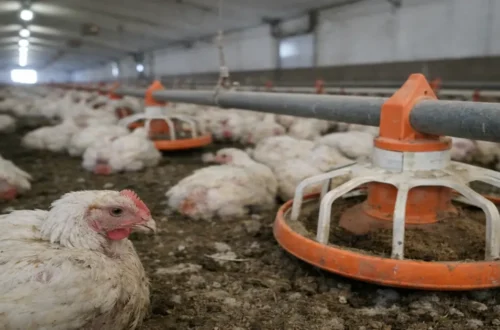
We explored part of this connection in How Chemical Farming Quietly Weakens Us, because the reality is that chemical farming doesn’t stop at the field’s edge. The same synthetic inputs used to force crop performance alter soil biology, and altered soil biology influences the food that ultimately reaches our kitchens. This is not abstract. It is structural. And when I say structural, I mean built into the incentives, subsidies, contracts, and financial pressures that shape how farmers operate.
Most farmers did not wake up one day and decide they wanted to degrade their land. Many are operating inside a system that rewards short-term output over long-term resilience. When crop insurance, commodity pricing, and seed contracts all lean in one direction, stepping away from that model is not simple. It carries risk. It carries uncertainty. It carries social pressure. Farming against the grain is not just a poetic phrase — it is economic reality.
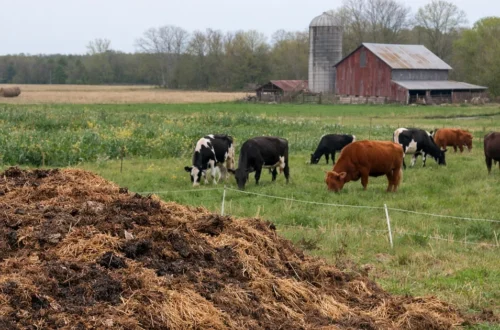
That is why I respect regenerative farmers. They are not chasing trends. They are rebuilding soil ecosystems. They are planting cover crops to protect bare ground. They are integrating livestock to restore nutrient cycles. They are focusing on carbon retention, microbial diversity, and long-term fertility rather than chemical dependence. They understand something foundational: soil is not dirt. Soil is alive. And when soil life collapses, so does the resilience of everything connected to it.
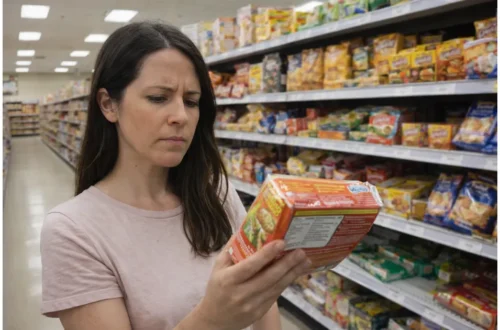
We discussed this deeper soil-human connection in Farm Soil, Human Soil: How Regenerative Agriculture Heals Both, because soil health and human health are inseparable. I believe this is one of the most overlooked truths in our food conversation. We debate labels and packaging and surface-level ingredients, but we rarely ask what kind of soil produced the food in the first place. And that is where the real story begins.
Why They Are Pushing Back
Regenerative farmers are pushing back because they see what happens when land is treated as a production unit instead of a living system. They see erosion. They see dependency cycles. They see input costs rising while soil vitality declines. And instead of accepting that trajectory as inevitable, they are choosing a harder path. It is slower at first. It requires observation. It requires trust in biological processes rather than chemical shortcuts. It requires patience. But it builds something durable.
Why They Need Us
I believe regenerative farmers cannot sustain this shift without community support. Markets respond to demand. Systems respond to purchasing behavior. If we say we want healthier food but continue to default to the cheapest, most industrial option every time, we reinforce the model we claim to question. Supporting regenerative agriculture does not require perfection. It requires awareness and gradual redirection.
Reversing soil degradation is possible. Land can recover. Microbial networks can rebuild. Carbon can return to the ground. Nutrient density can improve. But this does not happen automatically. It happens when farmers are supported in practices that prioritize regeneration over extraction.
How We Begin to Reverse This
If we want to be part of that reversal, we can start by asking questions about how food is grown. We can prioritize local producers using soil-building methods when possible. We can support community-supported agriculture programs. We can reduce dependence on heavily processed commodity foods that drive industrial monocropping. And we can educate ourselves about soil biology so that our food conversations move deeper than marketing language.
I refuse to accept that depleted soil is normal. I refuse to accept that rising chronic illness disconnected from agricultural change is coincidence. And I refuse to believe that farmers who want to restore their land should stand alone.
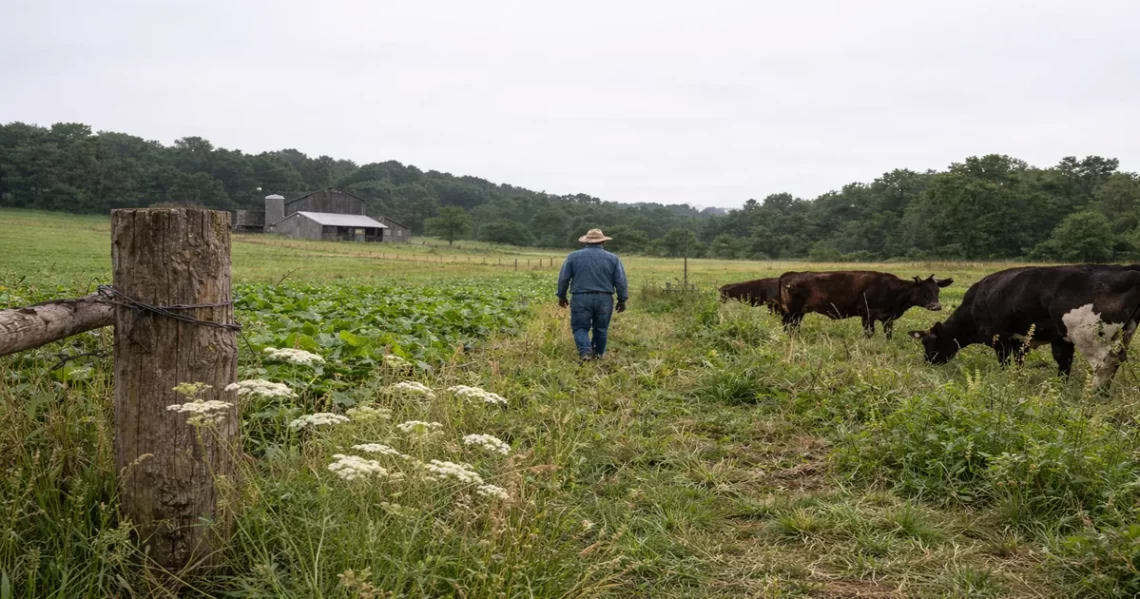
Regenerative farmers are pushing back. They are farming against the grain. And they need us to stand with them.
With love and truth,
—Donna 💚
Sources & Further Reading
USDA — Partnerships for Climate-Smart Commodities
https://www.usda.gov/about-usda/general-information/priorities/climate-solutions/partnerships-climate-smart-commodities
Farmers.gov — Climate-Smart Agriculture and Forestry Resources
https://www.farmers.gov/conservation/climate-smart
USDA NRCS — Climate-Smart Mitigation Activities
https://www.nrcs.usda.gov/conservation-basics/natural-resource-concerns/climate/climate-smart-mitigation-activities
Peer-Reviewed Study (2022) — Regenerative vs. Conventional Farming Nutrient Density Comparison
https://pmc.ncbi.nlm.nih.gov/articles/PMC8801175/