There is nothing mysterious about what happens when soil is overworked. You can measure it. You can test it. You can watch it unfold over time. The land continues to produce for a while, but the support systems underneath begin to fail. Crops may look the same, yields may hold, yet the foundation that makes food nourishing quietly erodes.
That erosion shows up as depleted soil and nutrient density. It is not a theory or a talking point. It is the predictable result of farming systems designed to extract rather than regenerate. The land is pushed to perform without being allowed to recover, and eventually it does what any system under constant pressure does. It gives less.
What Depleted Soil Actually Means
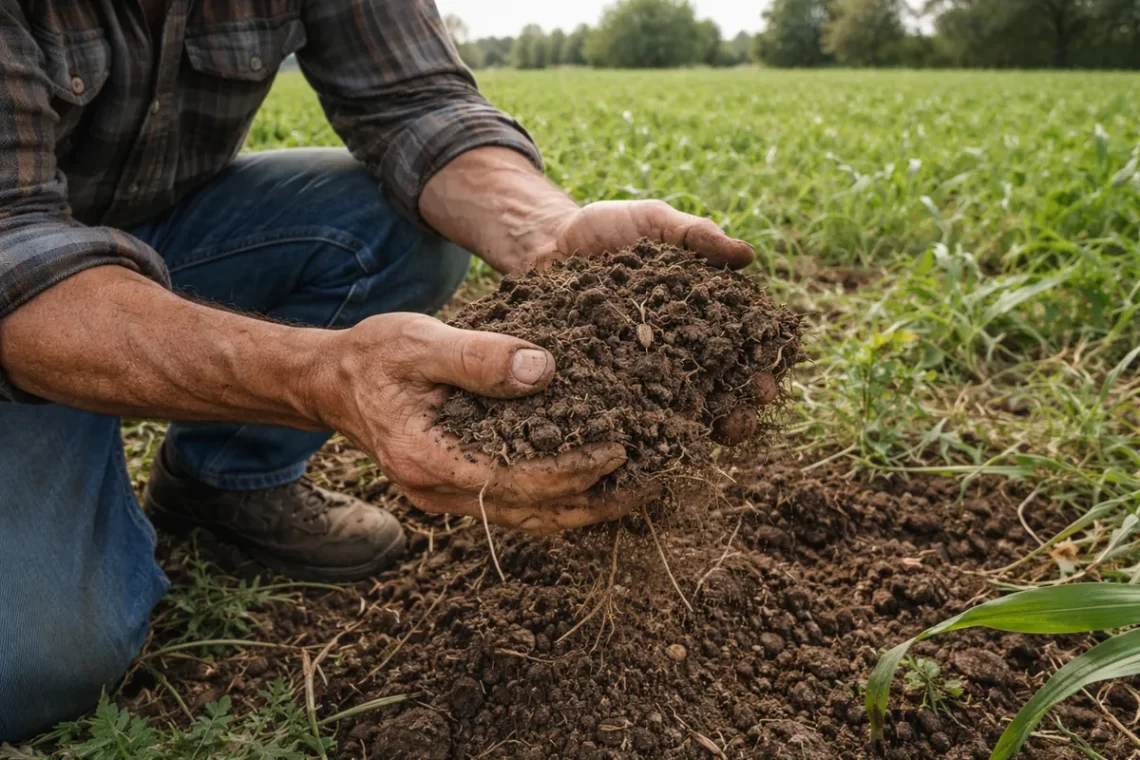
Soil is not dirt. It is a living system. Healthy soil contains bacteria, fungi, minerals, organic matter, and carbon working together to move nutrients into plants in usable forms. When that system is intact, plants are fed through biological relationships, not just chemical inputs.
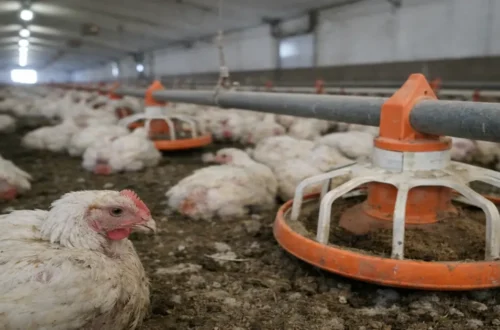
When soil biology is disrupted through repeated tillage, monocropping, or chemical dependency, those relationships break down. Nutrients may still be present, but plants cannot access them properly. Fertilizers can prop up growth, but they do not rebuild function. Over time, nutrient density declines even as production continues.
This is how food can look abundant while becoming less nourishing.
Why Depleted Soil and Nutrient Density Matter to People
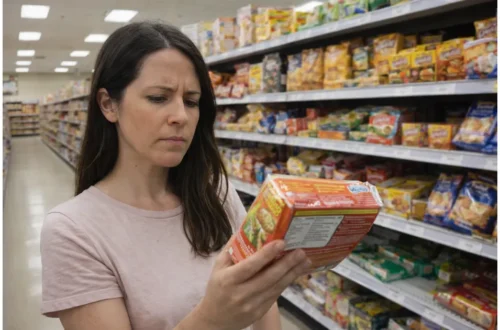
Depleted soil and nutrient density matter because food quality is inseparable from soil quality. Plants grown in biologically damaged soil tend to contain fewer micronutrients and altered mineral ratios. These are not dramatic deficiencies that appear overnight. They are small losses that accumulate quietly.
When people eat food that consistently provides less nutritional support, the body compensates. Cravings increase. Fatigue lingers. Systems work harder to maintain balance. This does not require blaming individuals or diets. It reflects how food systems function upstream.
This is why conversations about regenerative farming are not abstract environmental debates. They are discussions about whether food is being grown in a way that supports biological function or undermines it. Your own Farmland Friday post Farm Soil, Human Soil: How Regenerative Agriculture Heals Both explores this connection in depth.
What Regenerative Farming Changes
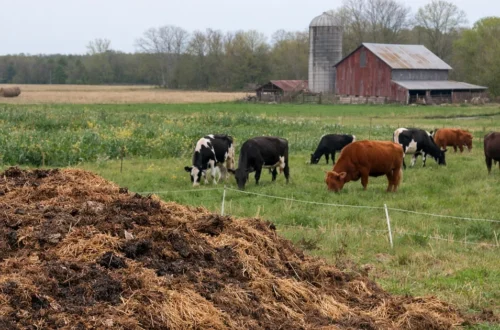
Regenerative farming shifts the goal from maximizing output to restoring function. Practices such as cover cropping, reduced tillage, diversified rotations, and managed grazing rebuild soil biology instead of bypassing it. When biological pathways are restored, nutrient cycling improves naturally.
As soil function returns, nutrient density increases without needing constant external correction. Food grown in living soil reflects that recovery. This is where agriculture connects directly to food sovereignty and health, not as a slogan, but as a structural reality. Another Farmland Friday piece on your site, The Soil Speaks: Are We Listening?, expands on that system-wide view.
Systems Designed for Recovery Perform Better
Systems that allow recovery are more stable over time. Regenerated soils retain water more effectively, resist erosion, and support crops with greater resilience to stress. Input dependence decreases as internal processes resume their role.
This pattern is consistent. Systems built for constant extraction eventually fail. Systems built for regeneration adapt. Agriculture is no exception.
Paying Attention to the Pattern
The evidence around depleted soil and nutrient density points in one direction. Productivity without regeneration is temporary. This applies to land, food systems, and biological health alike.
Farmland Friday is not about idealizing the past or rejecting modern tools. It is about recognizing which systems endure and which ones collapse under their own pressure. Living soil produces food that supports life more effectively. That relationship is functional, not ideological.
The land shows the results of our choices over time. The opportunity now is to choose differently.
With love and truth,
—Donna 💚
🌱 Sources & Further Reading
Harvard T.H. Chan – Soil Health and Human Health
https://www.hsph.harvard.edu/c-change/subtopics/soil-health/
FAO – Soil Biodiversity and Nutrition
https://www.fao.org/soils-portal/soil-biodiversity/en/
USDA NRCS – Soil Health
https://www.nrcs.usda.gov/conservation-basics/natural-resource-concerns/soils/soil-health