For a long time, we’ve been taught to think of health as something personal. What you eat. How you move. What supplements you take. Which diagnoses you collect over the years. But there’s a deeper layer to this conversation that doesn’t get nearly enough attention, and once you see it, it’s hard to unsee.
Health doesn’t begin in a doctor’s office. It doesn’t start in a gym or even in a kitchen. It starts much earlier than that, long before food reaches a plate or a body. It begins in the land.
When food lost its roots, health followed
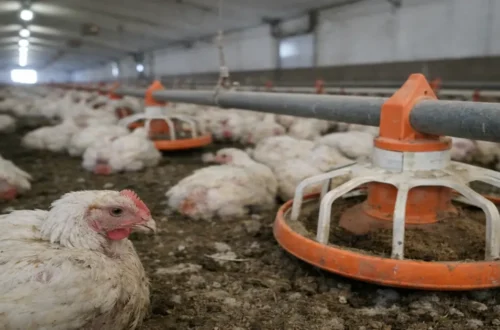
Modern farming taught us how to grow more food faster, cheaper, and with less human labor. On paper, that looked like progress. Fields became factories. Soil became a surface to hold plants upright. The goal shifted from nourishment to yield.
But food grown in depleted soil carries that depletion forward. Plants pull what the soil can offer. When the soil is stripped, compacted, chemically dependent, and biologically quiet, the food reflects that reality. Calories remain, but vitality fades. This pattern shows up again and again when we trace how modern systems disconnect us from the biological foundations of health, including the way soil quality shapes the nutrient density of everything we eat, as explored in The Soil Blueprint of Human Health.
We now live in a world where people can eat plenty and still be profoundly undernourished. That didn’t happen by accident. It followed decades of treating land as expendable and interchangeable, rather than alive.
Regenerative farming asks a different question
Regenerative farming doesn’t begin with “How much can we produce?” It begins with “How do we restore what’s been damaged?”
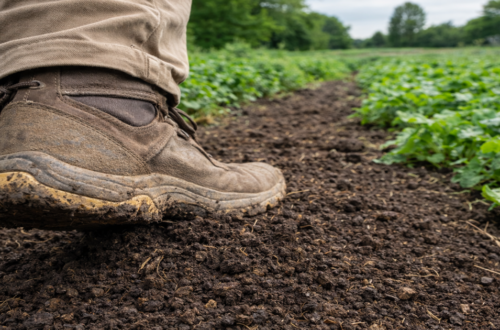
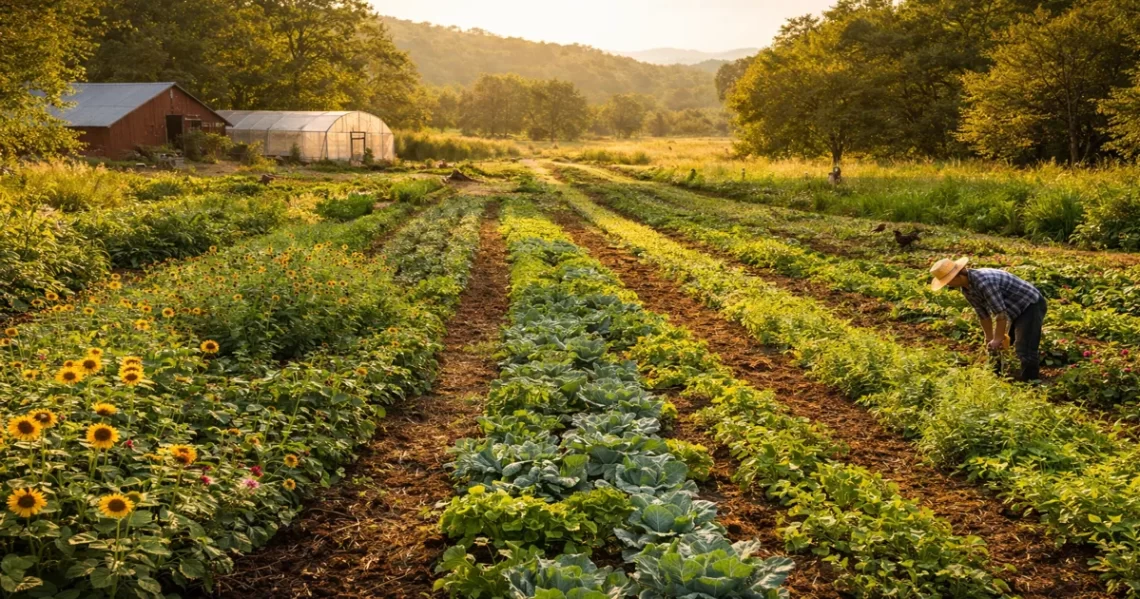
Instead of forcing crops to grow, regenerative systems rebuild soil biology. They focus on living roots, microbial diversity, organic matter, and natural cycles. The land isn’t mined for output; it’s supported so it can function again.
Healthy soil holds minerals, retains water, supports complex plant chemistry, and creates resilience instead of dependence. That resilience doesn’t stop at the fence line. It moves into the food, and then into the people eating it.
The quiet connection between soil and chronic illness
We talk endlessly about rising rates of autoimmune disease, metabolic dysfunction, hormone disruption, and digestive disorders. We argue about genetics, lifestyle, and compliance. What we rarely talk about is what changed upstream.
Soil depletion and chemical-intensive farming altered the nutritional profile of food over generations. Micronutrients declined. Plant diversity narrowed. The microbial exposure humans once had through food and land contact nearly disappeared. This upstream damage mirrors the same pattern seen throughout the modern Sickness Economy, where systems built for efficiency quietly undermine long-term health. Breaking the Hormone Hijack explores how these modern exposures accumulate and affect the body.
When the foundation erodes, everything built on top becomes unstable. Bodies struggle not because they are broken, but because they’re trying to operate without the inputs they evolved with.
This is not nostalgia. It’s biology.
Regenerative farming is often dismissed as idealistic or backward-looking, but it’s neither. It’s rooted in ecological reality. Biology requires relationships to function. Soil life feeds plants. Plants feed animals. Animals and humans depend on the integrity of that chain.
When we restore soil, we restore nutrient density. When we restore nutrient density, bodies receive clearer signals. Inflammation quiets. Systems regulate more easily. Health becomes more attainable, not because people tried harder, but because the environment stopped working against them.
Healing land is preventative care on a population level
Public health conversations usually focus on downstream interventions. Screening earlier. Prescribing faster. Managing symptoms longer. Regenerative farming offers something different: upstream prevention.
Food grown in healthy soil supports metabolic health, immune resilience, and long-term stability in ways no supplement can replicate. It reduces reliance on inputs that harm ecosystems and human biology alike.
This isn’t about perfection or purity. It’s about direction. Are we continuing to extract until nothing is left, or are we rebuilding systems that can sustain life without constant intervention?
What reversing this actually looks like
Regeneration doesn’t require everyone to own land or become a farmer. It begins with awareness and alignment.
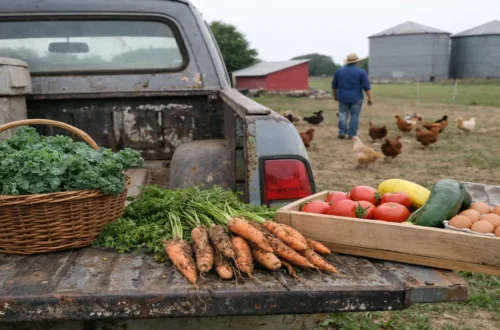
Supporting farmers who prioritize soil health is one step. Asking how food is grown, not just how it’s labeled, is another. Diversifying diets, choosing foods grown in living systems, and understanding that cheap food often carries hidden costs all matter.
At a broader level, regenerative farming deserves recognition as a public health strategy, not a niche agricultural trend. Policies, funding, and education that restore soil are investments in future health, not optional add-ons.
When land heals, food heals. When food heals, people have a fighting chance to heal too.
That’s not a metaphor. It’s cause and effect.
With love and truth,
—Donna 💚
Sources & Further Reading
1. Regenerative Agriculture and Enhanced Nutrient Density
A peer-reviewed study examining how regenerative farming practices improve soil health and increase the nutrient density of crops and livestock, with direct implications for human nutrition.
2. From Soil to Health: Regenerative Agriculture Benefits
A comprehensive review exploring how soil regeneration influences food quality, nutrient availability, and downstream human health outcomes.
3. Farms Following Soil-Friendly Practices Grow Healthier Food
University of Washington reporting on field research showing that soil-friendly and regenerative practices improve soil biology and the nutritional quality of food.
4. Regenerative Agriculture Literature Review
An academic overview of regenerative agriculture principles, focusing on soil biology, nutrient cycling, and long-term ecosystem resilience.