There’s a feeling you get when you step onto land that’s been cared for.
It’s subtle. Nothing dramatic. But your shoulders drop a little. Your breath slows. Something inside you recognizes that this place is alive and not fighting itself.
Regenerative farms don’t just grow food. They grow balance. And in a world that feels loud, rushed, and increasingly disconnected, that balance matters more than we realize.
When land is treated as a relationship, not a machine
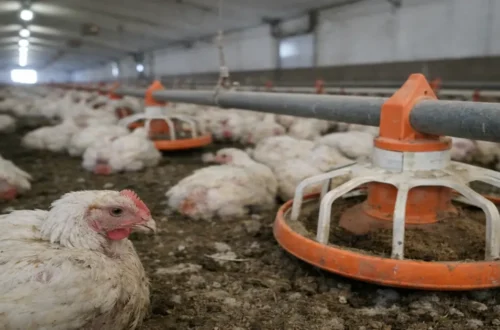
Modern industrial farming treats land like equipment. Something to be pushed harder, patched with chemicals, and replaced when it’s worn out. The goal is output. Speed. Efficiency. Even when the cost is exhausted soil, polluted water, and farmers stretched to the breaking point.
Regenerative farming starts from a very different place. The land isn’t a thing to dominate. It’s something to work with.
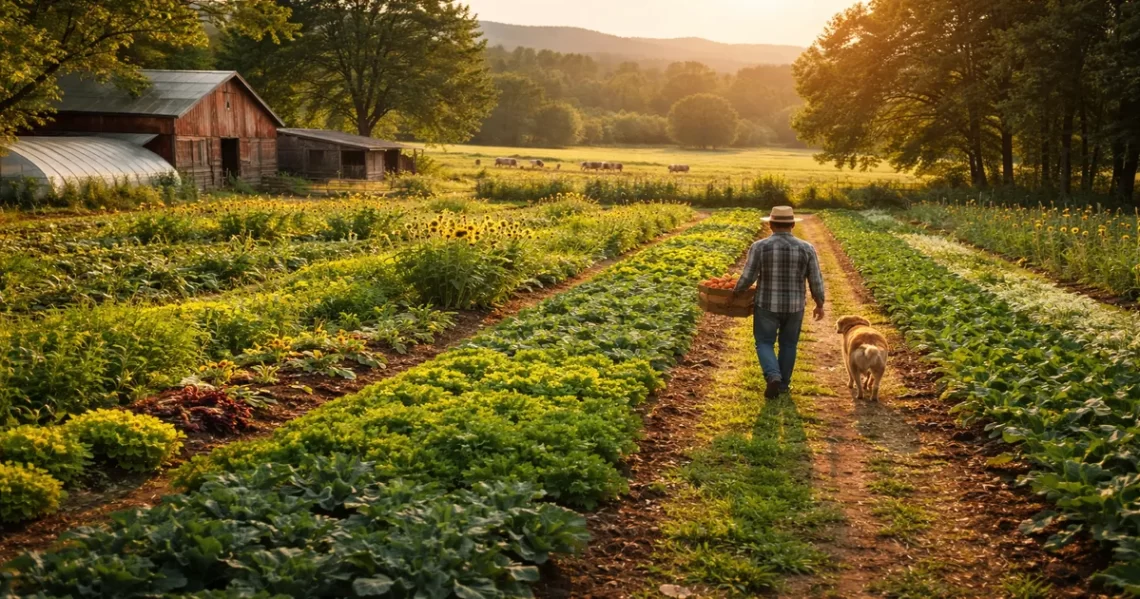
Farmers who practice regeneration pay attention. They rotate crops, keep living roots in the ground, cover bare soil, and reduce disturbance wherever they can. Over time, the soil begins to rebuild itself. Microbes return. Water stays where it belongs instead of running off. Crops grow stronger without being forced.
And often, so do the farmers.
Your body knows when food comes from living soil
People sometimes talk about regenerative food like it’s a trend. But your body doesn’t experience it that way.
Food grown in healthy soil carries more than calories. It carries minerals, microbial life, and complexity our bodies still recognize. This is food that nourishes instead of just filling space.
Many people notice they feel calmer, more satisfied, or simply better after eating food grown this way. That’s not imagination. When soil is depleted, nutrition suffers. When soil is alive, food supports the body’s natural rhythms.
This connects to what so many of us are waking up to right now: the body keeps score. It remembers what we ignore, what we push past, and what we’re being fed in the process. If that idea resonates, you may also appreciate Your Body Remembers What You Forget.
Healing doesn’t always begin with another supplement or protocol. Sometimes it begins with food that hasn’t been stripped of its intelligence.
Regenerative farms quietly rebuild community
Industrial agriculture centralizes everything. Power. Processing. Profit. Regenerative farming tends to do the opposite.
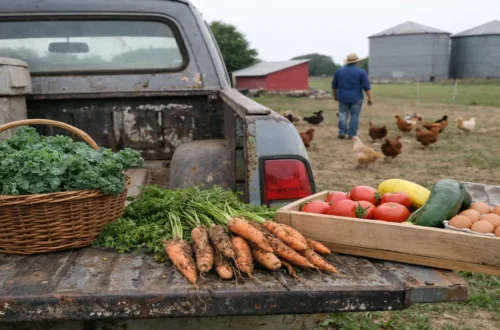
These farms are often rooted in place. They sell locally. They show up at markets. They feed neighbors. Food becomes personal again.
Farmers’ markets turn into gathering places. CSA boxes become weekly reminders that seasons still matter. Kids learn that carrots come from soil, not shelves. Conversations happen. Relationships form.
This kind of agriculture doesn’t just regenerate land. It regenerates trust.
And it pushes back against the broader machine that has turned our food system into a chemical experiment, and our environment into a plastic one. If you haven’t read it yet, The Plastic Harvest ties this bigger picture together in a way that’s hard to unsee.
The land remembers what we’ve forgotten
We’ve been trained to override signals. Eat fast. Work through exhaustion. Ignore seasons. Trust systems that don’t feel right because they’re labeled “normal.”
Regenerative farming quietly challenges that mindset.
It reminds us that health is cyclical, not linear. That rest matters. That diversity builds resilience. That care doesn’t weaken a system. It strengthens it.
When land is respected, it reflects something back to us. Patience. Reciprocity. A sense of belonging that modern life keeps eroding.
Why this matters right now
Soil degradation, food insecurity, climate instability, and chronic disease aren’t separate problems. They’re symptoms of the same worldview. One that treats life as disposable and short-term gain as success.
Regenerative farms offer a different path. Not someday. Now. One field at a time. One farmer at a time. One meal at a time.
They grow food, yes. But they also grow healing. For the land. For communities. And for people who are ready to remember that health was never meant to be manufactured.
With love and truth,
—Donna 💚
Sources & Further Reading
The role of soil health in human nutrition (2020)
Peer-reviewed research connecting soil quality, microbial life, and nutrient density in food.
https://www.frontiersin.org/articles/10.3389/fsufs.2020.00060/full
Understanding the phases and tensions of regenerative agriculture for better health outcomes for farmers (2025)
A research-informed look at the human side of regenerative transitions, including wellbeing and pressure points farmers face.
https://farmerhealth.org.au/2025/08/08/understanding-the-phases-and-tensions-of-regenerative-agriculture-for-better-health-outcomes-for-farmers
Our biggest food justice stories of 2025 (2025)
Independent journalism on food systems, farming, equity, and the people working to change what’s broken.
https://civileats.com/2025/12/23/our-biggest-food-justice-stories-of-2025/