What we call love in February
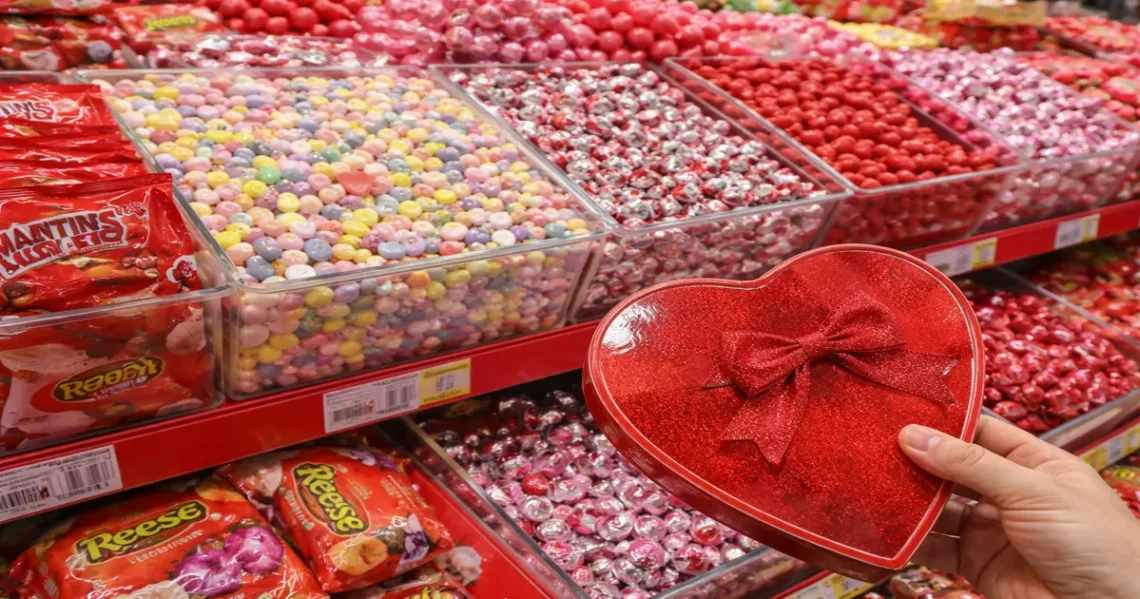
Every February, we’re surrounded by sweetness. Red boxes. Pink wrappers. Candy hearts stamped with words like love, kiss, forever. We give it to our children, our partners, our friends. We put it in bowls at work and classrooms and call it celebration.
And most of the time, we don’t stop to ask what’s actually in our hands.
Valentine’s candy has become so normal that questioning it feels almost rude. But sometimes the most loving thing you can do is slow down and really look at what you’re being asked to accept as “just fine.”
Candy is the end of a very long story
That chocolate bar didn’t begin in a factory. It began in soil — or what passes for soil now. It began in fields fed by synthetic fertilizers designed to force growth, sprayed with herbicides to kill anything that competes, and treated with pesticides to manage the damage those choices create.
By the time sugar is refined, colored, flavored, stabilized, and shaped into something festive, it has traveled through a system built on chemistry at every step. Not nourishment. Chemistry.
And if you’ve read my piece on how modern chemicals can interfere with hormones and the body’s signals, you already know this isn’t a small issue — it’s a whole-body issue: https://avoiceforchange.com/breaking-the-hormone-hijack/
The quiet chemical layer beneath our food
When people hear “chemicals in the food system,” they’re often told not to worry — the amounts are small, the exposure is minimal, the science says it’s safe. But that conversation skips something important.
These chemicals don’t just leave traces behind. They change how food is grown in the first place.
Synthetic fertilizers push growth fast, but they also change soil mineral balance over time. Herbicides don’t just “handle weeds,” they can disrupt the living microbial world in soil that plants depend on to take up nutrients. Pesticides don’t politely vanish once they’ve done their job. They can linger in soil and water, and the system becomes dependent on more inputs to keep production high.
This is why I keep coming back to the soil. Because when the soil breaks down, the food breaks down — and we feel it. If you want the deeper thread on that, it’s here: https://avoiceforchange.com/the-soil-blueprint-of-human-health/
Why our bodies are pushing back
Our bodies are not chemistry sets. They’re living systems that rely on balance — hormones, digestion, immunity, detox pathways, gut bacteria. When synthetic compounds enter that system consistently, even in small amounts, they can interfere in ways that don’t show up overnight.
Instead, they show up as chronic inflammation. Hormonal confusion. Digestive problems that don’t respond to “doing everything right.” Fatigue that becomes normal. Kids with sensitivities no one remembers seeing before.
This isn’t fear-based. It’s pattern-based.
Valentine’s Day as a mirror, not a villain
Valentine’s candy isn’t the enemy. It’s the mirror. It reflects how far we’ve drifted from food as nourishment and how comfortable we’ve become celebrating with substances that quietly stress the bodies we’re trying to love.
No one did this because they don’t care. It happened because the food system changed faster than the conversation around it. Chemistry became convenient. And convenience became normal.
How we start reversing this
Fixing this doesn’t require perfection. It doesn’t require never buying candy again. It starts with awareness — and with reclaiming choice.
It looks like reading ingredient lists without shame and noticing how long they’ve gotten. It looks like choosing simpler treats when you can — fewer dyes, fewer mystery additives, fewer “flavors” that don’t come from real food. It looks like making Valentine’s Day a little less about the candy bowl and a little more about real care: a meal at home, a homemade treat, fruit and dark chocolate, or a thoughtful gift that isn’t edible at all.
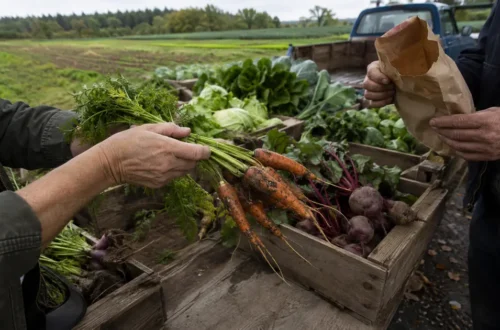
It also looks like supporting farmers who aren’t trapped in chemical dependence — the ones rebuilding soil instead of stripping it. And it looks like cooking more meals at home, even imperfect ones, using ingredients that resemble food.
Most of all, it looks like remembering this: love should not come with a hidden cost to your health. If we can connect celebration back to care — for our bodies and for the land — we can start repairing what’s been broken, one choice at a time.
With love and truth,
—Donna 💚
Sources & Further Reading
Pesticide exposure and long-term human health impacts (2024)
https://pmc.ncbi.nlm.nih.gov/articles/PMC11664077/
FDA FY 2023 Pesticide Residue Monitoring Report
https://www.fda.gov/food/hfp-constituent-updates/fda-releases-fy-2023-pesticide-residue-monitoring-report
Glyphosate impacts on microbial communities (2021)
https://www.frontiersin.org/journals/environmental-science/articles/10.3389/fenvs.2021.763917/full
How pesticides impact human health and ecosystems (2023)
https://www.eea.europa.eu/en/analysis/publications/how-pesticides-impact-human-health
Fertilizer overuse and drinking water health risks (2025)
https://blog.ucs.org/stacy-woods/from-fields-to-faucets-fertilizer-overuse-threatens-drinking-water-and-health/