I’ll be honest with you — every time I hear someone talking about gut health these days, part of me nods along… and another part of me wants to ask a completely different question. We talk about probiotics and fermented foods and fixing the microbiome inside the human body, but almost no one seems to ask where that microbial life came from to begin with. Because for most of human history, the answer was simple. The microbes that live inside us came from the land that fed us.
And the more I think about that, the more convinced I become that we’ve started the conversation about the microbiome halfway through the story. We talk about the bacteria living inside our digestive system, but we rarely talk about the ecosystems that originally supplied them. For most of human history, the soil our food grew in wasn’t just dirt. It was a living biological system, unbelievably rich with life. Billions of organisms working together underground — bacteria, fungi, microorganisms constantly breaking down organic matter, cycling nutrients, feeding plants, and quietly supporting the entire food web.
Every time people ate food grown in that living soil, a little piece of that ecosystem entered their bodies.
I cannot ignore how important that connection is.
The gut microbiome inside us and the soil microbiome beneath our crops were never separate systems. They were always part of the same biological chain.
What Happened to the Life in Our Soil?
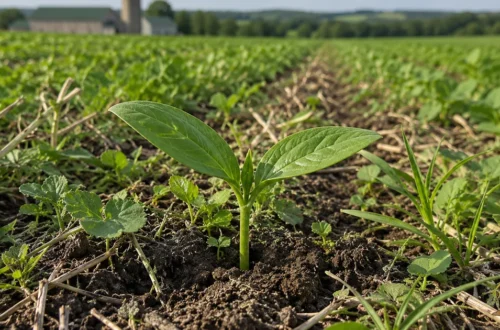
The more I read about soil biology, the more amazed I become at how complex it really is. Scientists will tell you that a single teaspoon of healthy soil can contain billions of microorganisms. Entire microscopic communities living together — bacteria, fungi, protozoa, organisms that interact with plant roots in ways we are still trying to fully understand. Plants actually exchange nutrients with these organisms through their roots. They release sugars into the soil to feed microbial partners, and those microbes help the plant absorb minerals and defend against disease.
It’s an extraordinary system when you stop and really think about it.
But I also cannot ignore the fact that modern agriculture was never built around protecting that system. It was built around controlling it. Heavy tilling tears apart soil structure and disrupts microbial communities. Monocropping removes the plant diversity those microbes depend on. Synthetic fertilizers feed plants directly while bypassing the biological nutrient cycles that normally sustain soil life. Herbicides and pesticides eliminate entire layers of soil biology along with the pests they’re meant to target.
Over time, the land slowly stops behaving like a living ecosystem and starts behaving more like a growing medium.
And I am continually surprised by how rarely that loss is part of the conversation.
Because I believe something important disappears when the life disappears from the soil.
Why Soil Microbes and Gut Microbes Mirror Each Other
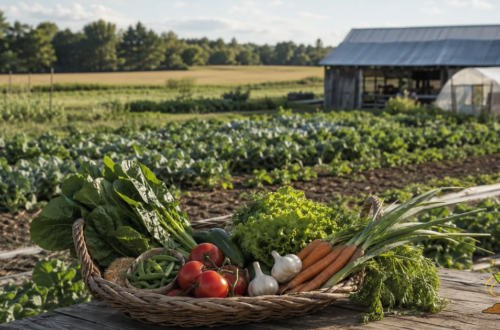
When I look at the history of human food, I see a pattern that feels impossible to ignore. For thousands of years, people ate food that came directly out of living ecosystems. Vegetables carried microbial life from the soil they grew in. Fruits came from orchards filled with microbial diversity. Roots and leaves were constantly interacting with organisms underground. Every meal people ate contained small exposures to the living world that produced it.
Those exposures helped shape the human microbiome.
Today, that relationship looks very different. Much of our food now moves through long industrial supply chains designed for sanitation, packaging, and transportation. Produce is washed, sterilized, processed, and shipped across enormous distances. Many crops are grown in soils that contain far fewer microorganisms than they once did. By the time food reaches our kitchens, much of the biological richness that once came with it has been removed.
I cannot say that this explains every modern health problem we see. But I also cannot ignore the timing.
Over the past several decades, we’ve watched the human microbiome lose diversity at the same time our agricultural ecosystems have been losing diversity. Autoimmune diseases have climbed. Chronic inflammation has increased. Digestive disorders that were once rare are now common.
I believe those parallel trends deserve far more attention than they’re currently receiving.
Industrial Agriculture Changed the Entire System
I want to be fair here, because I understand why the modern food system developed the way it did. Industrial agriculture was designed with a clear goal: produce as much food as possible as efficiently as possible. In many ways it succeeded. Crop yields increased dramatically. Food became cheaper and more widely available. Supermarkets filled with options that previous generations could never have imagined.
But I refuse to pretend there were no consequences.
When diverse landscapes are replaced with massive monocrop fields, ecological complexity disappears. When synthetic fertilizers replace natural soil processes, the microbial life that once supported those systems begins to decline. Plants may still grow, but the biological relationships that once nourished them become thinner and weaker.
And when those relationships disappear, the ripple effects move far beyond the farm.
Plants grown in biologically depleted soil cannot interact with microbial partners the same way they once did. Soil structure deteriorates. Nutrient cycling changes. Over time the food system begins producing crops that support calories but not the same level of ecological resilience.
I believe we are only beginning to understand how deeply those changes affect human health.
Rebuilding Microbial Diversity Starts With the Soil
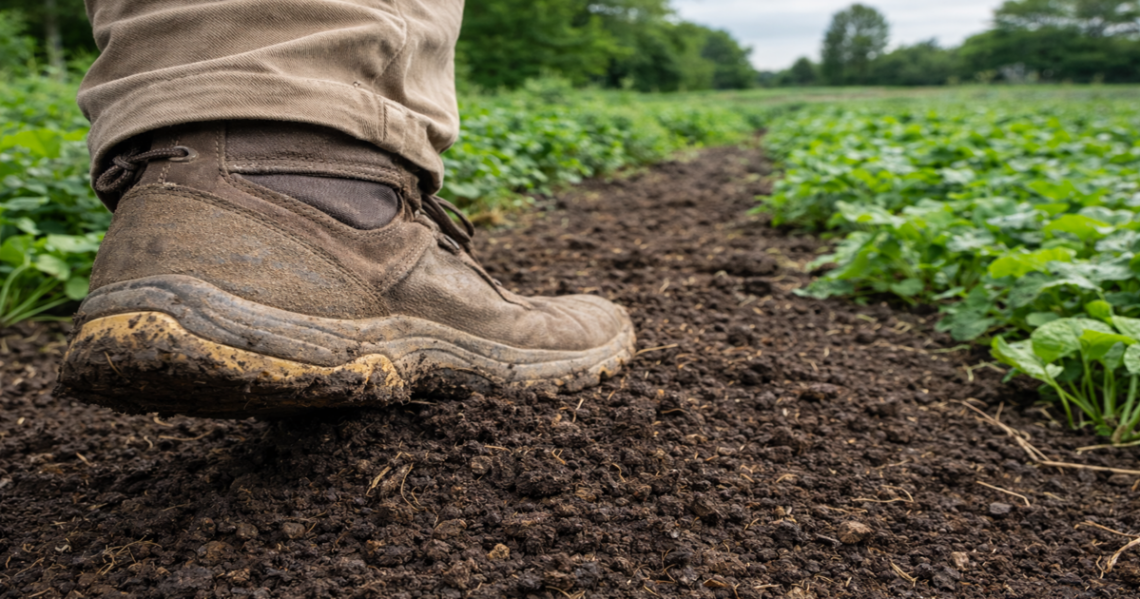
The hopeful part of this story is that soil ecosystems are incredibly resilient when we stop working against them. I have seen farmers around the world proving this through regenerative agriculture — farming practices that rebuild soil biology instead of suppressing it. When land is managed with cover crops, compost, reduced tillage, rotational grazing, and diverse plant systems, microbial life begins returning to the soil. The land becomes softer, richer, more capable of holding water and nutrients. The ecosystem begins repairing itself.
And I believe consumers have more influence over this process than they often realize.
Choosing food grown by farmers who care about soil health supports agricultural systems that rebuild microbial life. Eating a wide diversity of plant foods feeds beneficial bacteria inside the gut. Fermented foods introduce additional microbial communities that support digestive balance. Reducing reliance on highly processed foods helps protect the internal ecosystem those microbes depend on.
None of these steps are trendy health hacks.
They are simply ways of reconnecting with the biological systems that humans depended on for thousands of years.
The more I study this, the more convinced I become of something that older cultures already understood.
The health of the land and the health of the human body rise and fall together.
If you want to explore how modern food systems reshaped what we eat, you may also want to read The War on Real Food. And if you’ve ever wondered why modern diets often leave people constantly hungry despite eating enough calories, How Ultra-Processed Foods Hijack Hunger explores how highly processed foods disrupt the body’s natural signals.
I cannot ignore the pattern anymore.
If we want healthier people, we are going to have to start with healthier soil.
With love and truth,
—Donna 💚
Sources & Further Reading
1. Microbiomes and the Soil–Human Health Continuum
https://www.ncbi.nlm.nih.gov/books/NBK609362/
2. The Soil-Plant-Human Gut Microbiome Axis Into Perspective
https://www.nature.com/articles/s41467-025-62989-z
3. Soil Microbiome and Human Health: A Scoping Review
https://besjournals.onlinelibrary.wiley.com/doi/full/10.1002/pan3.10638
4. From Soil to Stomach: The Journey of Microbes in Food
https://kids.frontiersin.org/articles/10.3389/frym.2025.1636068
5. Exploring the Linkages Between Soil Health and Human Health
https://www.nationalacademies.org/read/27459/chapter/2