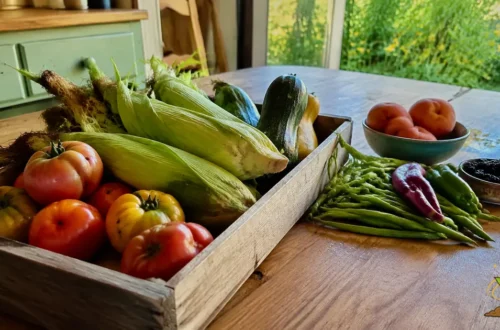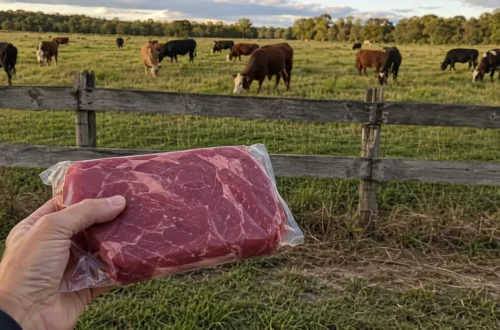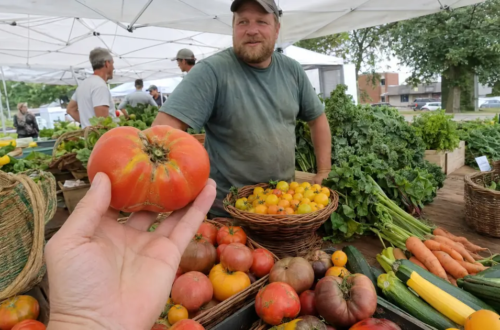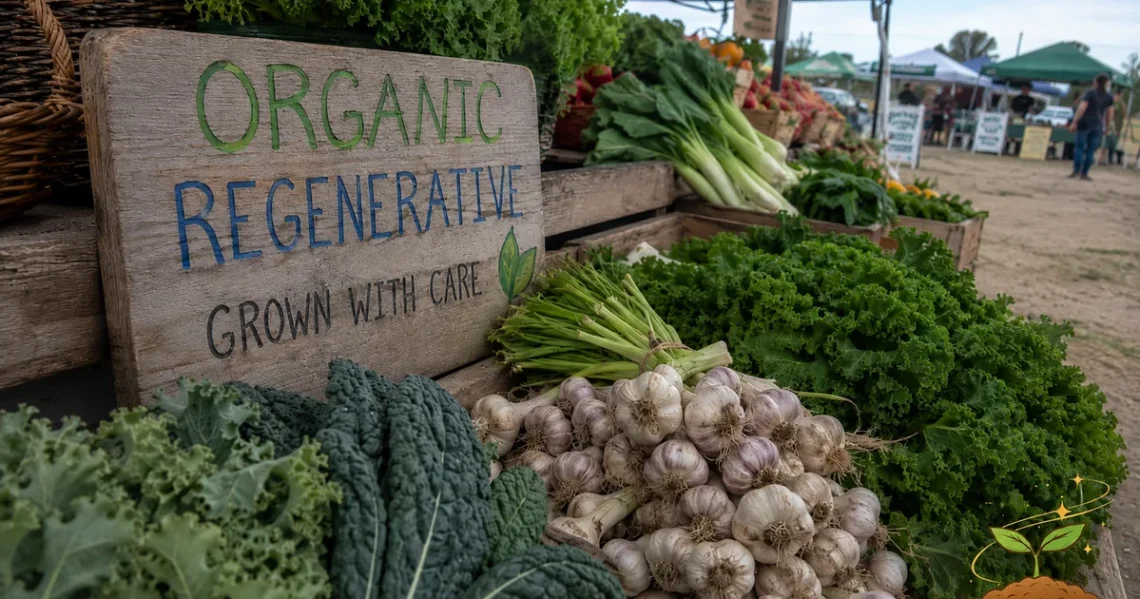
I think a lot of people are trying to do the right thing when they stand in the grocery store and look at all these labels. Organic. Regenerative. Natural. Sustainable. Pasture-raised. Climate-friendly. It can feel like you need a degree just to buy a tomato anymore. And I understand why people get tired, because the words are everywhere, but the meaning behind them is not always clear.
What I want to talk about today is not which label wins. That is where people can get stuck. They want one simple answer, one perfect stamp, one word that tells them the food is clean, nourishing, and grown the way it should be grown. But the truth is, a label can give you information, but it cannot replace discernment. We still have to ask better questions about how that food was actually grown, what happened to the soil, what chemicals were used, how animals were treated, and whether the whole system is supporting life or just selling us a prettier story.
Why Labels Can Help — But They Can Also Mislead
Labels are not useless. I want to be very clear about that. A good label can give you a starting point, especially when you are standing in a store and you do not know the farmer, the soil, or the practices behind the product. Certified labels can create accountability, and that matters in a food system where most of us are several steps removed from where our food begins.
But labels can also become a comfort blanket. We see one word and assume we understand the whole story. We see “regenerative” and imagine rich soil, happy animals, clean practices, and food grown in harmony with nature. We see “organic” and assume everything about the farm must be healthy, balanced, and deeply nourishing. Sometimes those assumptions are close to the truth. Sometimes they are not.
That is why I believe we have to slow down and look past the front of the package. The most important question is not “What does the label say?” The deeper question is, “What practices does this label actually require?” Because food is not made healthy by marketing. Food becomes nourishing through the life of the soil, the quality of the water, the choices made on the farm, and the integrity of the people growing it.
What Organic Actually Tells You
Organic is probably the label most people recognize first, and for good reason. It is regulated. It has standards. It tells you that certain synthetic substances and prohibited methods are not supposed to be part of that production system. That matters, especially in a world where chemical exposure has become so normalized that many people barely think about it anymore.
But organic does not automatically mean perfect. It does not always tell you whether the farm is building deep soil health, rotating crops wisely, increasing biodiversity, or treating the land like a living ecosystem. Some organic farms do those things beautifully. Others may meet the requirements but still operate in ways that are more industrial than restorative. That is not me dismissing organic. Not at all. I still believe organic can be an important step away from chemical-heavy agriculture.
What I am saying is that organic tells you something important, but it does not tell you everything. It can reduce certain concerns, but it does not answer every question about the life of the land. And if we care about the long-term health of our food supply, we have to care about more than what was avoided. We also have to care about what was restored.
What Regenerative Is Supposed to Mean
Regenerative agriculture, at its best, is about healing the land instead of just using it. It points us back to the idea that soil is alive, that farms are ecosystems, and that the goal should not be to force production out of exhausted land year after year. The goal should be to rebuild life. Cover crops, crop rotation, compost, managed grazing, reduced tillage, biodiversity, living roots in the ground — these are the kinds of practices that can help land recover.
This is the part that gives me hope, because regenerative farming is not just about avoiding harm. It is about repair. It asks, “How do we make the soil stronger than it was before? How do we bring microbial life back? How do we help the land hold water, support plants, feed animals, and produce food with more integrity?” That is a very different mindset than simply extracting as much as possible and then wondering why everything is breaking down.
But here is where we have to be careful. The word “regenerative” is not always used consistently. Sometimes it is backed by meaningful practices and strong verification. Sometimes it is more of a marketing word placed on a package because people are starting to care about soil. Regenerative should mean restoration, but unless we know what practices are behind it, the word alone is not enough.
Why Practices Matter More Than Pretty Words
This is where I keep coming back to common sense. A farm can use a beautiful word and still rely on practices that weaken the land. Another farm may not have the most impressive label, but the farmer may be building soil, rotating animals properly, composting, avoiding harmful chemicals, protecting pollinators, and growing food with deep respect for the ecosystem. Which one do you trust more?
That is why practices matter more than labels. Labels can point us in the right direction, but practices tell the real story. Healthy soil is built by what farmers do season after season, not by what companies print on packaging. If the soil is being covered, fed, protected, and allowed to stay biologically active, that matters. If chemicals are being reduced or eliminated, that matters. If animals are moved in ways that support the land instead of destroying it, that matters.
We talked about this connection in The Farming Practices That Heal, because the land does not heal through slogans. It heals through repeated choices that support life. And I believe this is where consumers have more power than they realize. When we start asking about practices, we stop being passive shoppers and start becoming more awake participants in the food system.
How This Connects Back to Your Body
Now, this is Farmland Friday, so I do not want to leave this conversation out in the field somewhere as if it has nothing to do with you. It has everything to do with you. The health of the soil shapes the health of the plant, and the health of the plant shapes what your body has to work with. If food is grown in depleted soil, pushed along with synthetic inputs, sprayed repeatedly, shipped long distances, and stripped from its natural context, your body receives that story.
I believe the body knows the difference between food grown in a living system and food produced by an exhausted one. Maybe not in a dramatic way after one meal. Maybe not in a way you can measure instantly. But over time, the body is always reading what we give it. It is reading minerals, residues, freshness, diversity, fiber, phytonutrients, and the burden placed on the liver, gut, immune system, and nervous system.
This is why where your food comes from matters. It is not about being fancy. It is not about food snobbery. It is about recognizing that your internal environment is shaped by the external environment your food came from. When the land is overburdened, the food supply reflects that. And when your body is already trying to handle stress, inflammation, chemicals, poor sleep, and daily overload, the quality of your food can either add to that burden or help reduce it.
What to Look for When You’re Choosing Food
I know this can feel overwhelming at first, and I do not want anyone walking away from this feeling like they have to become perfect. That is not the point. The point is to become more aware, one decision at a time. Start by looking for organic when chemical exposure is a concern, especially with foods you eat often. Then, when you see regenerative language, look closer. Is there a real certification? Are the practices explained? Does the farm talk about soil health, biodiversity, reduced chemical use, compost, cover crops, crop rotation, or animal movement?
If you shop locally, ask questions. Farmers who are doing good work are often willing to talk about it. They may not have every expensive certification, but they may be using practices that are deeply aligned with the kind of food you want to support. That is why local relationships can be so powerful. You can move beyond a label and begin understanding the actual life behind the food.
And if you are shopping in a regular grocery store, do not give up. Choose the best option available to you. Upgrade one thing at a time. Maybe it is your eggs. Maybe it is your greens. Maybe it is meat from a farm with better standards. Maybe it is simply learning which labels are regulated and which ones require more questions. You do not have to fix the whole food system in one grocery trip. But you can stop letting marketing make every decision for you.
I believe this is where real food freedom begins. Not in fear. Not in perfection. Not in being fooled by every shiny label that comes along. It begins when we become awake enough to ask, “What is behind this?” Because once you start looking at the practices, not just the promises, you begin to see food differently. And when you see food differently, you begin to choose differently.
With love and truth,
—Donna 💚
Sources & Further Reading
- Regenerative Food Labels: What’s Behind the Claim?
https://foe.org/resources/label-guide/ - Food Labels Guide
https://kisstheground.com/education/resources/food-labels-guide/ - What Is Organic and What Is Regenerative?
https://rodaleinstitute.org/science/articles/what-is-organic-and-what-is-regenerative/ - Regenerative Agriculture: An Introduction and Overview
https://extension.okstate.edu/fact-sheets/regenerative-agriculture-an-introduction-and-overview - Labeling Organic Products
https://www.ams.usda.gov/rules-regulations/organic/labeling