Most people think about food safety in terms of bacteria on a cutting board or something that might happen in their kitchen.
But the real story begins much earlier.
It begins long before the food ever reaches your plate.
One of the hardest truths to face about our modern food system is this: a huge portion of what we eat today comes from environments where sickness is not the exception — it’s built into the system.
I keep coming back to this question: What happens when food is produced in an environment where animals, soil, and microbes are already out of balance?
Because when we grow food in systems built on stress, confinement, and biological breakdown, that imbalance doesn’t stay on the farm.
It moves through the entire food chain — and eventually, into us.
What Factory Farming Actually Means for Animals
Factory farming didn’t start as a moral failure.
It started as a production model.
The goal was simple: produce more meat, eggs, and dairy faster and cheaper.
But efficiency came with trade-offs that most people never see.
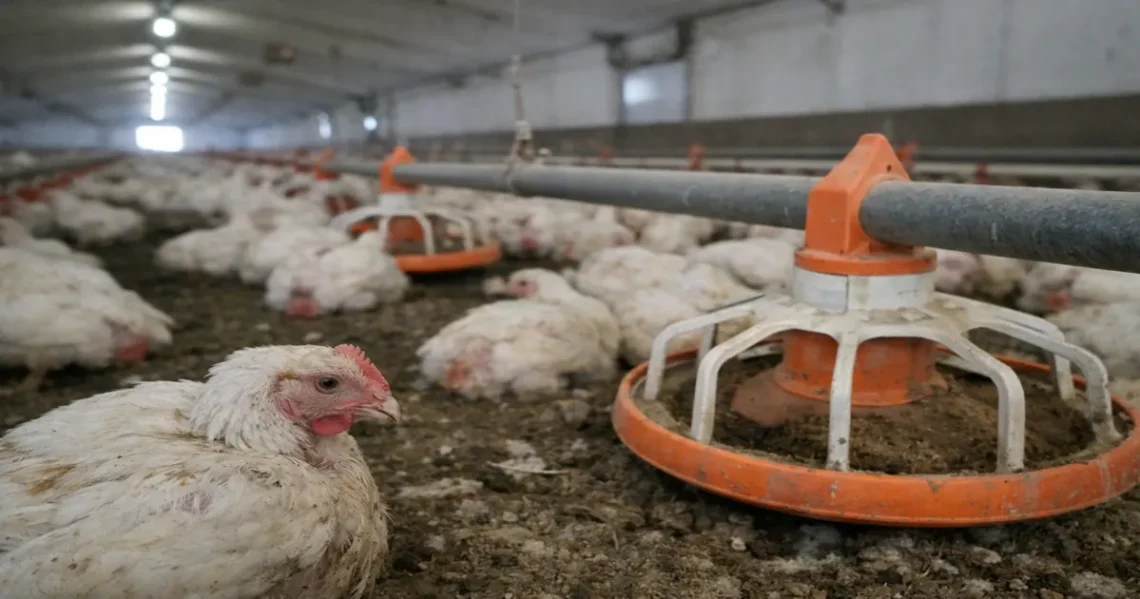
Animals in industrial systems are often raised in high-density confinement environments where thousands of animals live in close quarters. Under these conditions, disease spreads easily and stress becomes constant.
Stress weakens immune systems — not just in humans, but in animals too.
The pattern is impossible to overlook. When animals are crowded together, their bodies struggle to maintain health. Infection risk rises. Illness spreads more easily. And systems begin relying on pharmaceutical tools just to maintain basic production.
In other words, the system isn’t built around thriving animals.
It’s built around keeping fragile animals functioning long enough to reach the supply chain.
When Sick Animals Produce Our Food
Here’s where things get uncomfortable.
When animals live in environments where illness spreads easily, antibiotics often become part of routine management.
The uncomfortable reality is this:
Industrial animal agriculture doesn’t just produce meat.
It produces microbial ecosystems.
And those ecosystems do not stay contained.
The Soil and Microbiome Connection We Rarely Talk About
There is another layer to this story that most conversations about factory farming completely miss.
Soil.
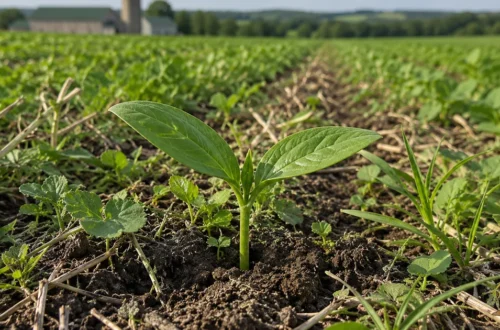
Healthy soil is not dirt. It’s a living microbial ecosystem filled with bacteria, fungi, and complex biological networks.
These organisms drive nutrient cycles, support plant health, and ultimately shape the nutritional profile of the food we eat.
But industrial agriculture often treats soil as a production medium instead of a living system.
Heavy chemical inputs, monocropping, and large-scale waste concentration from livestock systems can disrupt soil biology and contaminate surrounding ecosystems.
The health of animals, soil, and people are not separate systems.
They are deeply connected.
Scientists increasingly refer to this concept as “One Health” — the idea that environmental health, animal health, and human health are interdependent.
And once you begin looking through that lens, something becomes very clear:
When we damage the biological systems that grow our food, we eventually damage the biological systems inside our own bodies.
What This Means for Your Own Internal Ecosystem
This is the part that many people overlook.
Your body is also a microbial ecosystem.
Your gut alone contains trillions of microbes that help regulate digestion, immune response, inflammation, and metabolic health.
So when the food system becomes disconnected from natural biological balance, the ripple effects reach far beyond agriculture.
Lower nutrient density, antibiotic exposure, environmental contamination, and disrupted microbial ecosystems all shape the environment inside the human body.
We often talk about “gut health” as if it exists in isolation.
But the truth is simpler.
Our internal microbiome reflects the food environment we live in.
Food grown in biological balance tends to support biological balance.
Food grown in systems built around sickness tends to carry a different story.
If you want a deeper look at how modern food production disrupts the body’s natural signals, you may also find this helpful: Ultra-Processed Foods Hijack Hunger.
And if you want to understand how soil biology connects directly to human microbial health, this piece explores that relationship in more detail: The Microbiome We Share With the Land.
These connections matter more than most people realize.
Practical Ways to Step Out of the Industrial Food Cycle
The goal here isn’t perfection.
Most of us are navigating the same food system.
But there are ways to shift your personal relationship with food in meaningful directions.
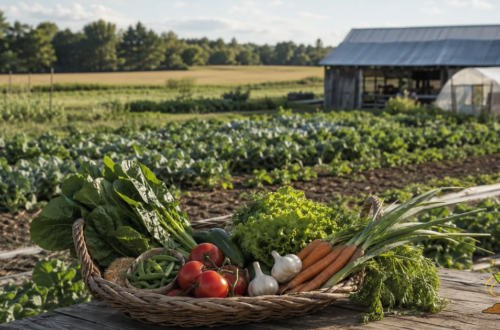
Prioritize food raised closer to natural systems when possible.
Local farms, pasture-raised meat, regenerative producers, and small-scale growers often operate with healthier ecological models.
Choose whole foods over industrially processed ones.
Even small shifts toward less processed foods can improve microbial diversity in the gut.
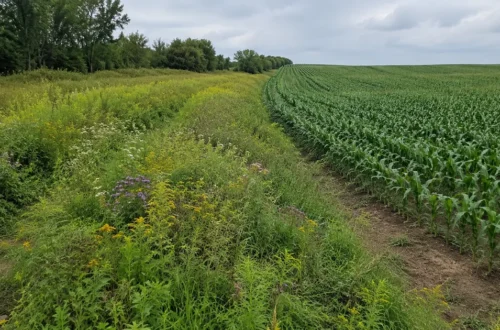
Support farming practices that rebuild soil.
Regenerative agriculture, rotational grazing, and biologically focused farming rebuild the ecosystems that support healthy food.
Stay curious about where your food comes from.
The more people ask questions, the more pressure the system feels to evolve.
What concerns me most is not that our food system has problems.
All systems do.
What concerns me most is how disconnected most people have become from the biological reality behind the food we eat every day.
Once you begin to see the connections between animals, soil, microbes, and human health…
It becomes much harder to pretend those systems are separate.
They never were.
With love and truth,
—Donna 💚
Sources & Further Reading
1. Antibiotic Use in Livestock and Environmental Antibiotic Resistance
https://pmc.ncbi.nlm.nih.gov/articles/PMC12304651/
2. Use of Antibiotics in Animal Agriculture and Human Health
https://journalofethics.ama-assn.org/article/what-should-health-professions-students-know-about-industrial-agriculture-and-disease/2023-04
3. Antibiotic Resistance in Food Animal Production
https://pmc.ncbi.nlm.nih.gov/articles/PMC6017557/
4. One Health Impacts of Animal Agriculture
https://www.sciencedirect.com/science/article/pii/S2352771424000740
5. Factory Farming Environmental Impact Overview
https://www.aspca.org/protecting-farm-animals/factory-farming-environment