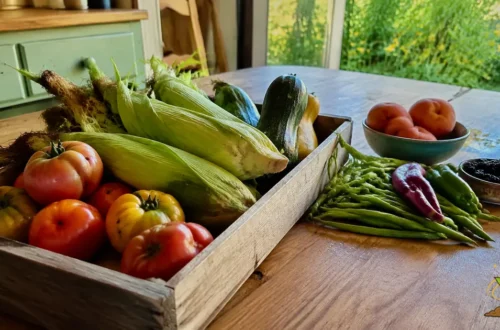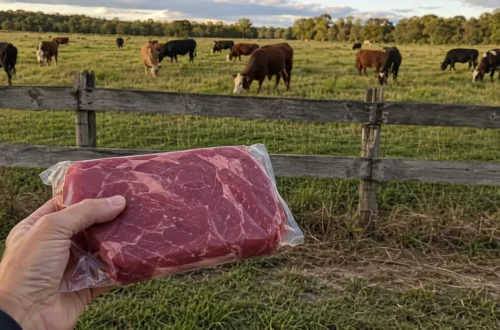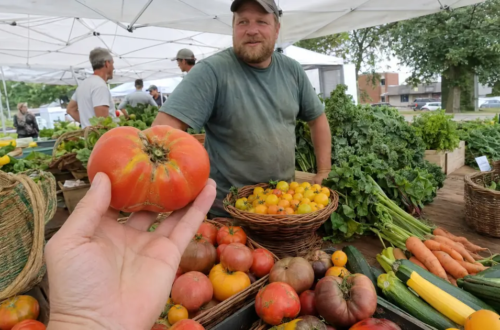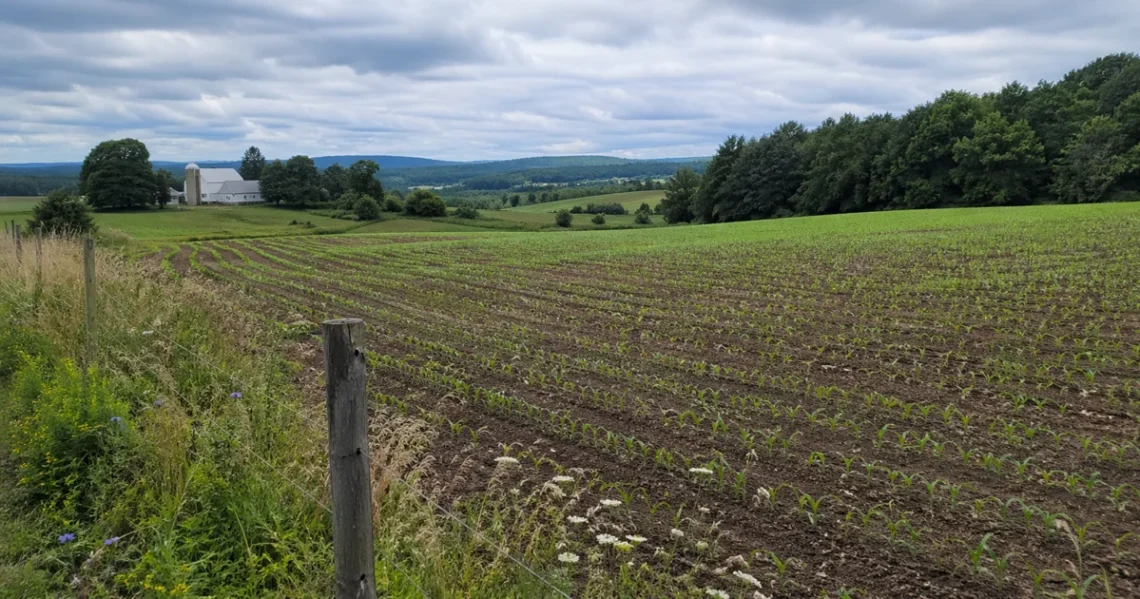
There’s something I don’t think we talk about enough, and once you see it, you can’t unsee it. We like to believe that the food on our plate is separate from everything else… that it somehow exists in its own clean little world. But I believe that’s one of the biggest misunderstandings we’re living with right now. What you are eating is not just food — you are eating the environment it came from. The soil, the water, the chemicals, the practices… it all comes with it. Whether we realize it or not, every bite is carrying a story.
What You Eat Starts Long Before Your Plate
When you look at a piece of fruit or a vegetable, it’s easy to focus on what it is — an apple, a carrot, a handful of greens. But I believe the more important question is where it came from and how it was grown. Because food doesn’t begin at the grocery store, and it doesn’t begin in the kitchen. It begins in the soil. And if that soil is depleted, chemically treated, or biologically damaged, then the food grown in it reflects that reality.
I have seen how modern agriculture has shifted away from nourishing the soil to simply producing yield. Crops are grown faster, bigger, and more uniform, but at a cost we don’t always see. The nutrients that should be present in that food are often reduced, while residues from pesticides and synthetic inputs can remain. So what looks like food on the outside may not be delivering what your body actually needs on the inside. And that gap matters more than most people realize.
What Happens to the Soil Eventually Happens to You
Soil is not just dirt. It’s a living ecosystem — full of microbes, minerals, and life that directly influences the quality of what grows in it. When that system is disrupted, everything downstream is affected. And I cannot ignore the fact that we’ve spent decades disrupting it in ways that are now showing up in human health.
Chemical fertilizers may help plants grow, but they don’t rebuild the living structure of the soil. Pesticides may control pests, but they also impact beneficial organisms that are part of a balanced system. Over time, this creates food that is less nutrient-dense and more chemically burdened. And when you consume that food, your body has to process all of it — not just the calories, but the chemical load as well.
This is where the connection becomes personal. Because your gut, your immune system, your energy levels… they are all influenced by what you take in. If the soil is struggling, I believe your body eventually starts struggling too. It may not happen overnight, but it shows up over time in ways that feel confusing and frustrating.
If you’ve ever read about how your internal health environment is shaped by what you consume, this idea becomes even clearer. You might recognize this connection from how your body signals imbalance — it rarely happens without a deeper input issue.
Why This Shows Up as Fatigue, Cravings, and Chronic Issues
This is the part that often gets overlooked. People start feeling off — tired, foggy, craving things they don’t even want to crave — and they assume it’s just stress or aging or something they’re doing wrong. But I believe there’s a deeper layer to it.
When your body isn’t getting the nutrients it needs, it doesn’t just quietly accept that. It adapts. It compensates. It starts sending signals. Cravings can increase because your body is trying to find missing nutrients. Energy can drop because the fuel you’re taking in isn’t actually supporting your cells. And over time, this can turn into patterns that feel like they came out of nowhere.
I have seen how people can be eating what looks like a “healthy” diet on the surface, but still feel depleted. And when you trace it back, it often leads to the quality of the food itself — not just the category of food. This is where understanding the bigger picture becomes so important.
If this idea feels familiar, it ties closely into the patterns we talked about in why progress can feel stalled despite effort. Sometimes it’s not about trying harder — it’s about changing what’s underneath.
How to Support Your Body in a Damaged Food System
Now here’s the part that matters most, because I don’t believe this conversation is meant to leave you feeling stuck or overwhelmed. There are things you can do, even in a system that isn’t perfect.
First, I believe awareness changes everything. Once you understand that food quality matters beyond labels, you can start making more intentional choices. That might mean seeking out locally grown food when possible, supporting farms that prioritize soil health, or simply paying closer attention to how your body responds to what you eat.
Second, supporting your body becomes just as important as avoiding harm. Nutrient-dense foods, hydration, and reducing chemical exposure where you can all help your body process what it’s dealing with. You don’t have to do everything at once. Small, consistent shifts matter.
And maybe most importantly, I believe it’s about reconnecting. Reconnecting to where food comes from. Reconnecting to how your body feels. Reconnecting to the understanding that you are not separate from the environment — you are part of it.
Because once you really let that sink in, the choices you make start to feel less like rules… and more like alignment.
With love and truth,
—Donna 💚
Sources & Further Reading
1. Unlocking the Secrets of Soil: Exploring the Microbiome and Its Applications
https://www.sciencesocieties.org/publications/csa-news/2024/april/unlocking-the-secrets-of-soil-exploring-the-microbiome-and-its
2. Food and Pesticides
https://www.epa.gov/safepestcontrol/food-and-pesticides
3. Exploring Linkages Between Soil Health and Human Health
https://www.ncbi.nlm.nih.gov/books/NBK609356/
4. Microbiomes and the Soil–Human Health Continuum
https://www.ncbi.nlm.nih.gov/books/NBK609362/
5. From Soil to Health: Advancing Regenerative Agriculture for Improved Food Quality and Nutrition Security
https://www.frontiersin.org/journals/nutrition/articles/10.3389/fnut.2025.1638507/full