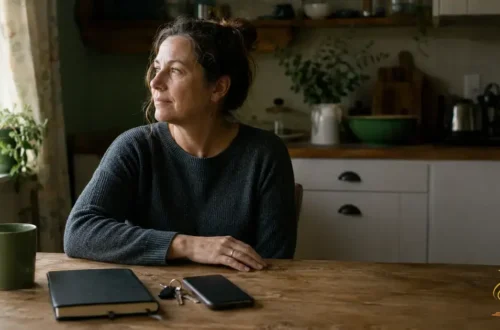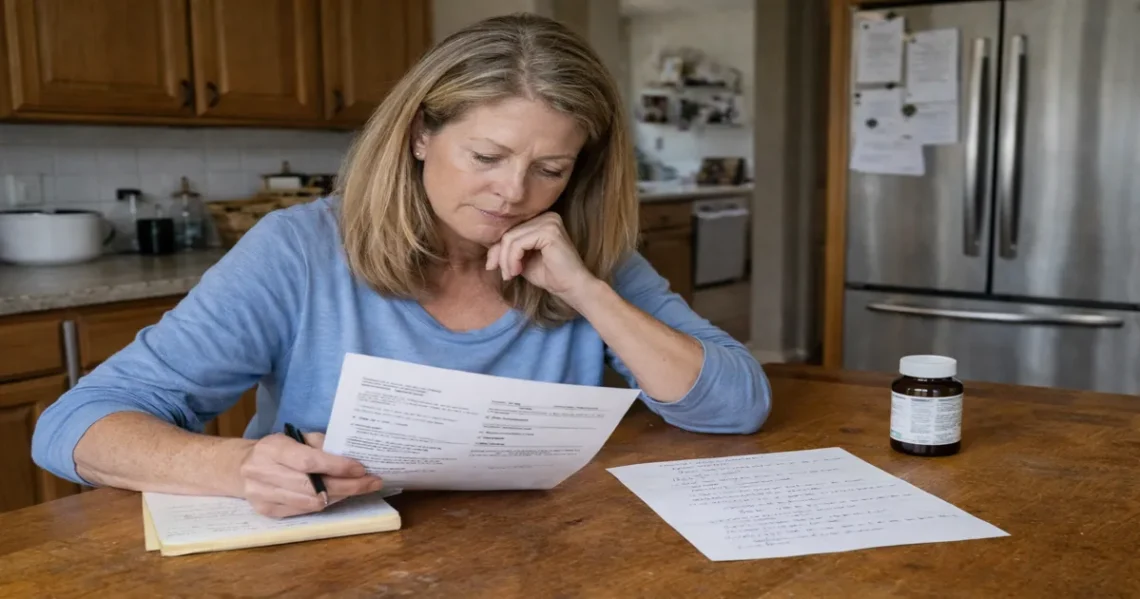
I believe one of the most damaging things that has happened to people over time is that they have been trained to step back from their own bodies and hand over the deepest decisions to someone else. It rarely feels dramatic when it begins. It feels normal. It feels responsible. It feels like being a “good patient,” a cooperative person, someone willing to follow directions and do what they are told. But somewhere along the way, many people stopped seeing themselves as participants in their own health and started seeing themselves as passive recipients of instructions, opinions, and protocols. That shift has not made people more grounded. It has made them more confused, more dependent, and often more disconnected from the signals their own body has been trying to send.
Why So Many People No Longer Trust Themselves
There comes a point where people can feel something is off, but instead of slowing down and paying attention, they immediately start looking outward for someone else to name it, explain it, and tell them exactly what to do. I have seen how quickly that pattern can become a way of life. When you stop trusting your own observations, you start assuming that every answer must come from outside of you. You second-guess what you feel. You dismiss patterns. You override your own instincts because you’ve been taught that your job is to comply, not to discern. That doesn’t make people healthier. It makes them uncertain, even when their own body has been giving them information all along.
And once that uncertainty takes root, it spreads into everything. People begin to assume they are not capable of understanding what is happening in their own life. They become more vulnerable to fear, more vulnerable to pressure, and more vulnerable to the constant stream of changing advice that never seems to fully settle into anything trustworthy.
How Modern Health Culture Encourages Dependence
I cannot ignore how much of modern health culture quietly reinforces this dynamic. People are often taught to chase instructions before they understand context, to chase treatment before they understand cause, and to chase authority before they develop discernment. The message underneath it all is that someone else is the expert on your body, your choices, your timing, and your next move. That can create a very dangerous kind of distance between you and your own lived reality.
This is part of why so many people feel overwhelmed now. They are trying to follow too many voices at once, and those voices do not always agree. One expert says one thing. Another says the opposite. One protocol is praised one month and questioned the next. It is no wonder people feel like they are spinning. That same pattern connects closely with You Don’t Need Another Protocol, because the more outside noise people absorb, the harder it becomes to hear what their own body is actually asking for.
Reclaiming Authority Does Not Mean Rejecting Help
Taking your health back does not mean rejecting every doctor, dismissing every professional, or pretending you never need guidance. That is not wisdom either. Reclaiming authority means remembering your proper role. It means understanding that support can be valuable, but you are still the one who has to live in your body, feel your symptoms, notice your patterns, and make decisions that fit your actual life. Someone else may bring information. Someone else may bring perspective. But they should not replace your awareness, your questions, or your responsibility.
I believe this is where real health sovereignty begins. It begins when people stop seeing themselves as helpless and start seeing themselves as responsible. Not blamed. Not shamed. Responsible. There is a huge difference between those things. Responsibility is not punishment. Responsibility is power. It is the moment you begin to understand that your role is not to blindly obey but to thoughtfully engage.
And once people start doing that, things begin to change. They ask better questions. They notice what consistently makes them feel worse. They stop being so easily pushed around by urgency, fear, and hype. They begin rebuilding trust with themselves, and that trust matters more than most people realize.
What It Looks Like To Start Taking Your Health Back
This shift does not have to begin with some massive overhaul. In fact, it usually begins with quieter changes than people expect. Start by paying attention to what repeats. Notice how you feel after certain foods, after certain routines, after certain conversations, after certain environments. Notice what drains you and what steadies you. Notice what your body has been trying to say before things escalate into something harder to ignore. Awareness is often the first act of reclaiming authority.
Then begin slowing down the way you make decisions. You do not have to react to every headline, every trend, every recommendation, or every new fear-based message that comes your way. Give yourself room to ask, “Does this make sense for me? Does this fit what I’m actually experiencing? Does this support understanding, or does it just increase panic?” That kind of pause is powerful. It creates space for wisdom.
If you are trying to reconnect with your own internal signals, I would start with something very simple: listen more closely to what your body has already been saying. That’s why Your Body Is Talking. Are You Listening? matters here too, because the issue is often not that the body is silent. The issue is that people have been conditioned not to trust what they hear. You are not meant to be a spectator in your own health. You are meant to be awake, involved, and willing to think. And the more you return to that role, the more solid and grounded your decisions can become.
With love and truth,
—Donna 💚
New here? You can explore more MAHA Monday posts on health sovereignty, body awareness, and everyday wellness choices here.
Sources & Further Reading
Patient Engagement | Health Literacy
https://www.cdc.gov/health-literacy/php/research-summaries/patient-engagement.html
What Is Health Literacy? | Health Literacy
https://www.cdc.gov/health-literacy/php/about/index.html
The SHARE Approach | Agency for Healthcare Research and Quality
https://www.ahrq.gov/sdm/share-approach/index.html
About Shared Decision Making | Agency for Healthcare Research and Quality
https://www.ahrq.gov/sdm/about/index.html
Self-care for Health and Well-being | World Health Organization
https://www.who.int/health-topics/self-care
The Evolution of Patient Empowerment and Its Impact on the Patient-Physician Relationship
https://pmc.ncbi.nlm.nih.gov/articles/PMC12082052/