Food freedom starts with soil.
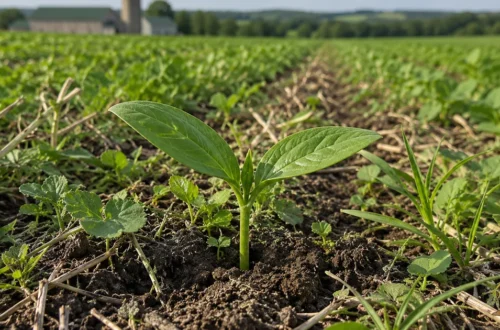
That may sound simple, but it is one of the most important truths we can come back to. Before food becomes a package, a label, a brand, a grocery store choice, or a meal on the table, it begins somewhere real. It begins in the ground. It begins with seed, water, weather, roots, microbes, farmers, animals, and living soil.
And if we are going to talk about independence this week, then we need to talk about food independence too.
Because real independence is not only about flags, fireworks, and national memory. It is also about whether families can still find real food close to home. It is about whether small farms can survive. It is about whether communities still have access to farmers, gardens, markets, pasture, seed, and soil that has not been stripped, poisoned, exhausted, or handed over entirely to distant systems we rarely get to question.
Food freedom is not just the freedom to choose between brands. It is the freedom to stay connected to the source of nourishment itself.
That is why this conversation always brings me back to the land. I wrote more about this foundation in Why Healthy Soil Grows Better Food, because soil is not just dirt under our feet. It is the beginning of the food chain. When soil is weak, the food grown from it cannot be as strong as it should be.
Food Independence Is More Than a Slogan
It is easy to talk about freedom in big language. It is harder to look at the everyday systems that decide how much freedom we actually have.
If most of our food has to travel through long supply chains, centralized warehouses, corporate contracts, industrial processors, and stores stocked by systems far away from our own communities, then our choices may feel bigger than they really are. The shelves may look full, but the system behind them can still be fragile.
We got a glimpse of that fragility when supply chains were disrupted and people suddenly realized how dependent they had become on food systems they could not see, touch, or understand. That was uncomfortable, but it was also clarifying.
A strong community is not one that depends entirely on distant food systems. A strong community has local roots.
That does not mean everyone has to grow all their own food or stop shopping at grocery stores. Most people are doing the best they can with the time, money, access, and energy they have. But it does mean we need to rebuild our awareness. We need to remember that food comes from somewhere, and the way it is grown matters.
Soil Is Where Food Freedom Begins
When soil is alive, land has options. It can hold water better. It can support roots. It can feed microbial life. It can grow stronger plants. It can recover after stress. It can participate in a living cycle instead of being forced to produce until it is depleted.
When soil is damaged, compacted, exposed, or dependent on endless outside inputs, the whole system becomes more fragile. Farmers face more pressure. Food becomes more dependent on chemicals, corporations, transportation, financing, and policies that may not serve ordinary families or local communities.
This is why soil health is not just an environmental issue.
Soil health is a food freedom issue.
Healthy soil gives farmers more room to work with nature instead of fighting against it. It gives communities more room to source food closer to home. It gives families more room to ask better questions. It gives all of us a path back toward food that is connected to land instead of only connected to commerce.
Local Food Systems Help Restore Relationship
Local food is not automatically perfect just because it is local. I want to be honest about that. A local farm can still use practices you may not agree with, and a larger farm can still be trying to do many things responsibly.
But local food systems do something important. They shorten the gap between the eater and the source.
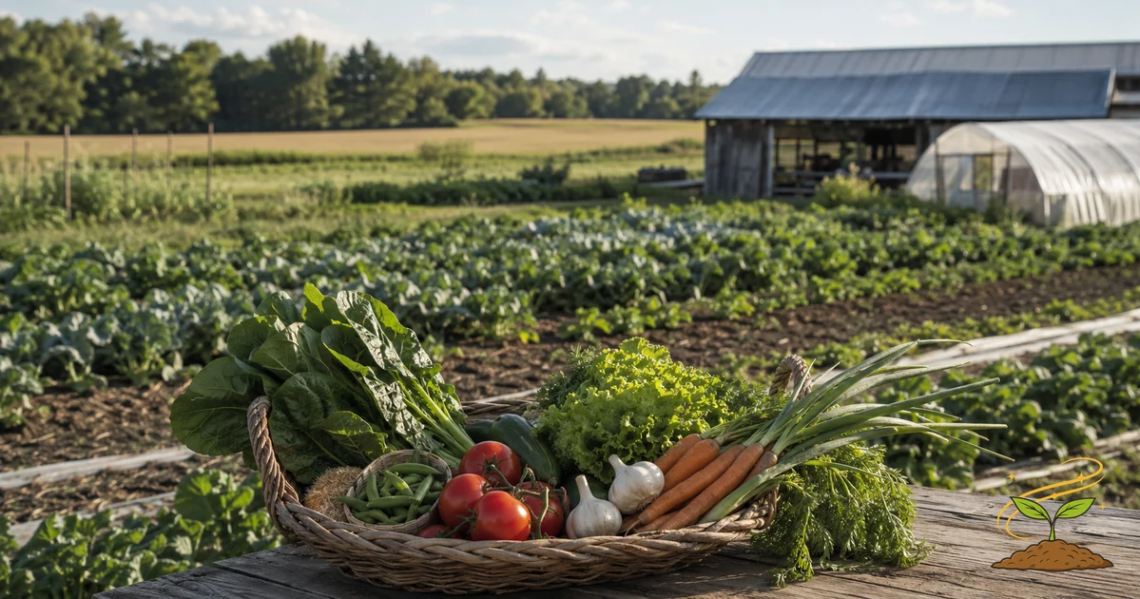
When you buy from a local farmer, a farmers market, a CSA, a farm stand, a local food hub, or even a nearby grower selling through a store, you have a chance to ask questions you cannot ask a barcode.
How was this grown? What do you spray? Do you use cover crops? Are the animals on pasture? How do you care for your soil? What is in season right now?
Those questions matter.
They help restore something industrial food has taken from us: relationship. Relationship with farmers. Relationship with seasons. Relationship with the land around us. Relationship with the truth that food is not just a product. It is a living chain of decisions.
That is also why I wrote about Regenerative Grazing: Why Animals Heal the Land, because food systems are not only about output. They are about rhythm, restoration, balance, and stewardship.
Small Choices Still Matter
Most families are not going to overhaul everything overnight. I do not believe that is how real change usually happens anyway.
Real change often begins with one honest question:
Where did this food come from?
That one question can lead to the next one. Was it grown nearby? Was it grown in healthy soil? Was it sprayed heavily? Is there a farmer I can talk to? Is there one food I could buy closer to the source this month?
Maybe you start with local eggs. Maybe you visit a farm stand once this summer. Maybe you grow herbs in a pot. Maybe you buy local honey, meat, greens, tomatoes, apples, or milk when you can. Maybe you ask one farmer one question instead of feeling like you need to understand everything first.
This is not about perfection. It is about reconnection.
Every act of reconnection reminds the system that people are not passive consumers. We are participants.
We are allowed to care where our food comes from. We are allowed to care how the soil was treated. We are allowed to care whether small farms survive. We are allowed to care whether our children and grandchildren inherit land that can still grow real nourishment.
Independence Has to Be Practiced
It is easier to assume the shelves will always be full, the labels will always be honest, the land will always recover, and someone somewhere is making sure the system is safe, fair, and healthy.
But that kind of blind trust has not served us very well.
We have watched food become more processed, farms become fewer, soil become more depleted, and people become more confused about what actually nourishes them. We have watched marketing replace common sense. We have watched convenience become the highest value, even when it costs us our connection to the source.
Food freedom is not something we can outsource.
It means learning again. Asking again. Noticing again. Choosing again. It means remembering that independence is not only declared. It is practiced.
And sometimes it is practiced in very ordinary ways.
It is practiced when you buy from a farmer whose name you know. It is practiced when you choose food grown in living soil. It is practiced when you teach a child that carrots come from the ground, not from a plastic bag. It is practiced when you plant something small. It is practiced when you stop letting distant systems be the only voice in your food decisions.
This Independence Day weekend, maybe the invitation is simple.
Look at your plate and remember the ground.
Remember the farmer. Remember the roots. Remember the rain. Remember the seed. Remember the soil life you cannot see.
Food freedom starts with soil.
And the more we remember that, the harder it becomes to give our power away.
New here? You can explore more of my Farmland Friday reflections here: Farmland Friday: Where Food, Soil, and Health Finally Meet
With love and truth,
—Donna 💚
Sources & Further Reading
- Soil Health — USDA Natural Resources Conservation Service
https://www.nrcs.usda.gov/conservation-basics/soil/soil-health - Local Foods — USDA Economic Research Service
https://www.ers.usda.gov/topics/food-markets-prices/local-foods - Local Food Directories — USDA Agricultural Marketing Service
https://www.ams.usda.gov/services/local-regional/food-directories - Local Food Sales Continue to Grow Through a Variety of Marketing Channels — USDA Economic Research Service
https://www.ers.usda.gov/amber-waves/2021/october/local-food-sales-continue-to-grow-through-a-variety-of-marketing-channels - Shopping at Farmers’ Markets and Roadside Stands Increases Fruit and Vegetable Demand — USDA Economic Research Service
https://www.ers.usda.gov/amber-waves/2018/march/shopping-at-farmers-markets-and-roadside-stands-increases-fruit-and-vegetable-demand