We hear the words health sovereignty, and they can sound like another big idea that belongs in a speech or a debate. But to me, health sovereignty is much closer to home than that. It is found in the quiet, everyday decisions we make about our bodies, our families, and the way we want to live.
It is reading the label before buying the product. It is asking why a test, medication, or procedure is being recommended instead of automatically saying yes. It is paying attention when your body keeps telling you that something is not right. It is being willing to learn, question, and make changes even when the people around you do not understand.
In Health Independence Starts Here, I wrote about reclaiming our role in our own well-being. That is where this begins, but it cannot end with a belief. Eventually, it has to become part of the way we live.
Health sovereignty becomes real when it begins showing up in our daily choices.
Your Body Still Belongs to You
Many people have slowly been taught to believe that someone else knows their body better than they do. We are told to follow instructions, accept the diagnosis, take the prescription, and not ask too many questions. If we do question something, we may be treated as though we are difficult, fearful, or uninformed.
After enough years of that, people can stop trusting themselves. They may notice a symptom but dismiss it. They may feel uncomfortable with a recommendation but stay quiet. They may leave an appointment with more questions than answers and blame themselves for not understanding.
That does not mean they are weak. It means they have been living inside a system that does not always make room for real conversation.
I believe healthcare professionals can offer valuable knowledge, testing, treatment, and support. There are times when that care is absolutely necessary. But receiving help should never require you to surrender your right to understand what is happening or to participate in the decisions being made.
Your body does not become someone else’s property when you enter a doctor’s office. You are still allowed to ask questions, request clearer answers, consider your options, and seek another opinion.
Paying Attention Is Not Being Afraid
Your body is communicating with you every day. Changes in sleep, energy, digestion, pain, appetite, mood, focus, and strength may all tell you something about how you are doing.
That does not mean every small change should send us into panic. Fear is not the goal. Awareness is.
If a symptom keeps returning, write it down. Notice when it happens and what was going on around the time it began. Consider whether you started a new medication or supplement, changed your eating habits, stopped sleeping well, or went through a period of unusual stress. Those details may help you see a pattern, and they may also help a healthcare professional understand what you are experiencing.
We have become so used to pushing through discomfort that many people do not stop until their bodies force them to stop. They keep working, caring for everyone else, and telling themselves they will deal with it later.
I understand why that happens. Life does not pause simply because we are tired or hurting. But ignoring the body does not make the message disappear. Sometimes it only makes the message louder.
Listening to your body is not an act of fear. It is an act of respect.
Health Is Built Between Appointments
We have been trained to connect healthcare with doctors, hospitals, prescriptions, and insurance. Those things are part of healthcare, but they are not the whole picture.
Much of our health is supported in the ordinary hours between appointments. It is influenced by the food we eat, the water we drink, the sleep we get, the movement we make time for, and the amount of stress and noise we allow into our lives.
That can sound overwhelming when we are already tired. The answer is not to create another impossible list of things we must do perfectly. No one eats perfectly, sleeps perfectly, or makes the best decision every single day. Health sovereignty is not about becoming obsessed with every bite of food or frightened by every product in the house.
It is about becoming more aware and making better choices when we are able.
Maybe that means cooking one more meal at home each week. Maybe it means replacing one product after you finish the one you already have. It may mean going to bed earlier, taking a walk, drinking more water, or finally making an appointment about something you have been putting off.
These choices may seem small, but they are not meaningless. What we do regularly matters far more than what we do perfectly once in a while.
Asking Questions Is Part of Taking Responsibility
There is no shortage of health information today. The harder part is knowing what to trust.
A website can look professional and still offer poor information. A person can sound confident and still be wrong. A personal story may be sincere, but it does not prove that the same product or treatment is right for everyone.
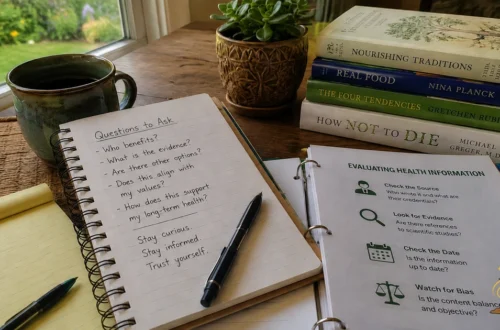
This is where we have to slow down. Who is providing the information? Are they trying to educate us, frighten us, or sell us something? Is the information current? Are risks and limitations being discussed, or are we only hearing promises?
The same care should be used with every source. Blindly following a doctor is not health sovereignty, but blindly following an online personality is not health sovereignty either. Both choices place our authority in someone else’s hands.
As I shared in Why Health Freedom Feels Radical, freedom requires discernment. It requires us to listen, learn, ask questions, and then decide what makes sense for our own lives.
There is nothing wrong with saying, “I need time to look into this.” There is nothing wrong with asking about possible side effects, interactions, alternatives, or the consequences of waiting. Those are responsible questions.
Boundaries Protect What Matters
Sometimes we know what we need to do, but we are afraid of how other people will react.
You may need to decline a food that makes you feel unwell, leave an event earlier so you can rest, or say no to a commitment because your body needs time to recover. You may want another medical opinion or decide that a particular treatment is not right for you after carefully considering the information.
Not everyone will understand those choices. Some people may take your boundaries personally, especially if they were comfortable with the version of you who always said yes.
But you do not have to argue with everyone or convince them to live as you do. A boundary is not an attack. It is simply a clear decision about what you will accept or participate in.
Taking care of your health is not selfish. Your health affects your ability to work, care for your family, enjoy your life, and remain present for the people you love. Protecting it is not something you should have to apologize for.
Start With What Is in Front of You
Health sovereignty will look different for every person because our bodies, needs, resources, and circumstances are different. There is no single perfect routine that everyone must follow.
Start with what is in front of you. Read one label. Write down the symptoms you keep dismissing. Make a list of your medications and supplements. Ask one more question at your next appointment. Prepare one nourishing meal. Turn off the noise and give yourself permission to rest.
You do not have to change everything today. In fact, trying to change everything at once is often what leaves people exhausted and ready to give up.
Choose one area where you have been handing your authority away and begin there. Learn what you need to learn. Make the next reasonable choice. Then continue building from it.
Your health may be affected by many systems and circumstances that you cannot completely control. I will never pretend otherwise. But that does not mean you have no power at all.
Your body still belongs to you. Your questions still matter. Your choices still matter. And you are allowed to take an active role in protecting your own well-being.
With love and truth,
—Donna 💚
Sources & Further Reading
- How to Advocate for Yourself in the Healthcare System — Mallory Walsh, Teal
https://www.getteal.com/post/how-to-advocate-for-yourself-in-the-healthcare-system - Uninformed Comment in the ER Highlights Need for Self-Advocacy — U.S. Pain Foundation
https://uspainfoundation.org/news/uninformed-comment-in-the-er-highlights-need-for-self-advocacy-2/ - Self-Advocacy: What I Need to Know — Greater National Advocates
https://gnanow.org/blogs/self-advocacy-what-i-need-to-know.html - Your Health, Your Voice: A Guide to Self-Advocacy During Chronic Illness — Folia Health
https://www.foliahealth.com/blog/2024/12/27/guide-to-self-advocacy-during-chronic-illness - Evaluating Health Information — MedlinePlus
https://medlineplus.gov/evaluatinghealthinformation.html