We have been taught to expect every food, in every season, whenever we decide we want it. Strawberries in January. Tomatoes long after the local vines have stopped producing. Apples months away from harvest. Grocery-store shelves stay full, so we rarely question how far that food traveled, how early it was picked, or what was required to keep it looking fresh.
That may feel like abundance, but it has also separated us from the truth about our food.
Seasonal eating matters because real food comes from living land, and living land does not produce everything on demand. There is a natural time for planting, growing, ripening, and harvesting. When we lose all awareness of that rhythm, we do not simply lose flavor. We lose our connection to the farmers, soil, weather, and hard work that make food possible.
The Food System Wants Us to Forget the Seasons
The industrial food system works best when we stop asking where food came from. It wants every tomato to look the same, every apple to remain available, and every produce department to appear untouched by drought, frost, distance, labor shortages, or the realities of farming.
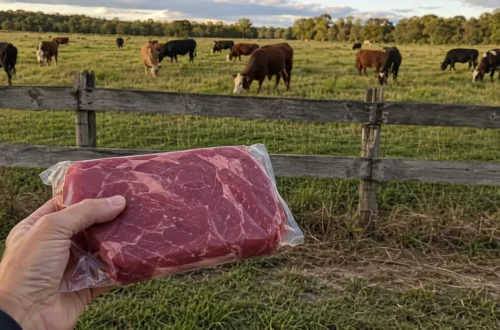
Food is moved across states, countries, and oceans so we never have to notice that a growing season ended. Produce may be harvested before it has fully ripened because it must survive packing, transportation, storage, and days beneath grocery-store lights. It can look beautiful while having very little connection left to the day it was picked.
We have been conditioned to call this progress. I call it disconnection.
I am not saying we should never eat a banana in Wisconsin or enjoy food grown outside our region. That is neither practical nor necessary. But we should understand the difference between having choices and being kept so disconnected that we no longer know what naturally grows near us—or when.
That is one reason it matters to learn what to look for at a farmers market. Local food changes as the season changes. The selection may be smaller one week and overflowing the next. That is not a weakness. It is proof that the food is following the land instead of a corporate stocking schedule.
Freshness Is More Than a Marketing Word
We see words such as “fresh,” “farm grown,” and “harvested with care” used on packages every day. Those words create a comforting image, but they do not tell us when the food was harvested, how far it traveled, or how long it sat in storage.
Fruits and vegetables begin changing after harvest. Time, temperature, transportation, and storage can affect their flavor, texture, and nutritional quality. Food grown closer to home and purchased during its natural season may be allowed to ripen longer before it is picked. It can reach us with less time between the field and our plate.
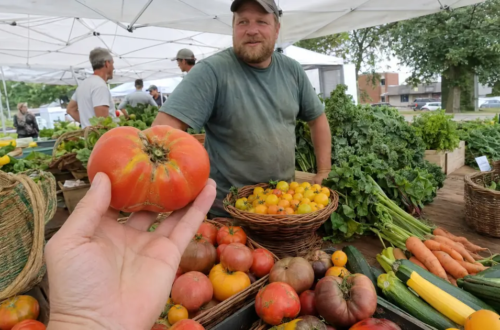
You can often taste that difference. An in-season tomato does not need a marketing department to convince us it is good. A peach picked near ripeness does not need a glossy label. Real flavor tells its own story.
I would rather eat an imperfect tomato that tastes alive than a flawless one designed primarily to survive a long trip. Food should nourish our bodies, not merely satisfy an industrial standard of appearance.
Our Bodies Were Never Meant to Eat the Same Foods Every Week
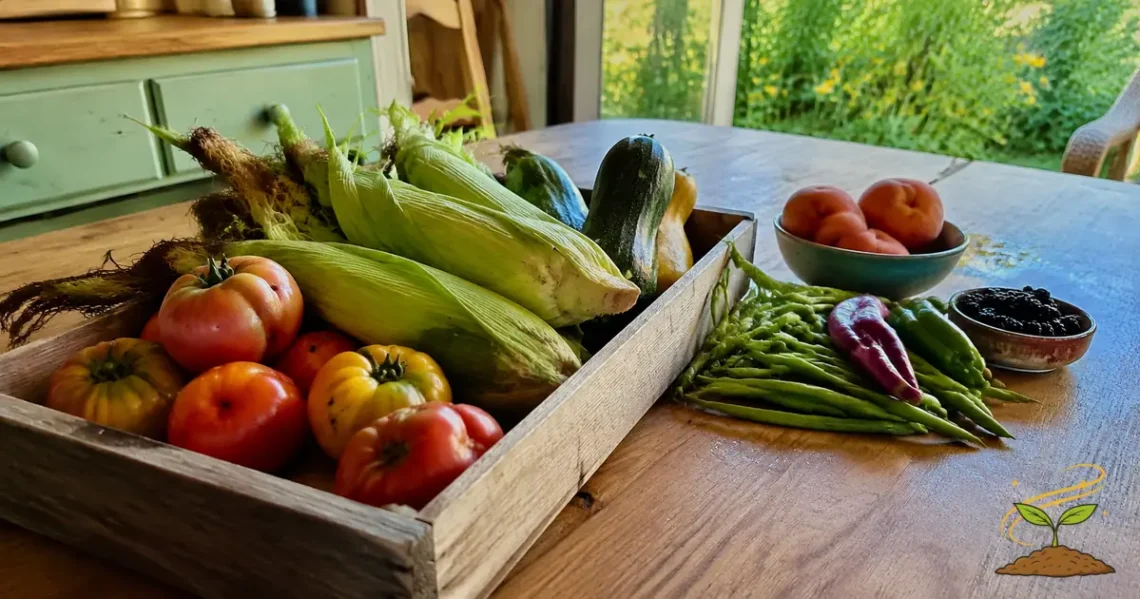
Seasonal eating naturally creates variety. Summer may bring berries, tomatoes, cucumbers, peppers, green beans, zucchini, melons, and sweet corn. Fall brings apples, pumpkins, squash, cabbage, and root vegetables. Colder months shift us toward foods that store well, along with foods we froze, canned, dried, or preserved while they were plentiful.
When the seasons guide at least some of our choices, we rotate through different colors, fibers, vitamins, minerals, and natural plant compounds. We stop filling the cart with the same five fruits and vegetables every week simply because they are familiar.
This does not mean there is one perfect seasonal menu for every person. Our climate, location, health needs, tolerances, budget, and access all matter. It means there is value in noticing what the land is offering instead of allowing corporations to determine our entire diet through year-round availability and advertising.
Variety strengthens our food choices, and a diverse food system is stronger than one built around a handful of crops controlled by a handful of companies.
A Harvest Cannot Wait for Our Convenience
A farmer cannot tell ripe tomatoes to wait until next month. Berries will not remain on the plant until shoppers decide they are ready to buy them. When a crop is ready, there is a limited window to harvest, sell, preserve, or use it.
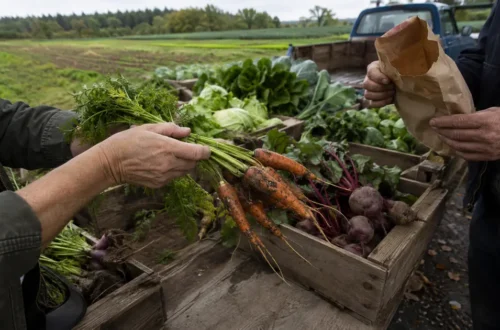
This is where seasonal eating becomes about something much larger than personal nutrition. When we buy what local farmers are harvesting now, we meet them where the real work of farming happens. We help create demand during the short period when they have that crop to sell.
We say we want family farms to survive. We say we want more local food and fewer chemicals. We say we are tired of corporations controlling the food supply. But small farmers cannot remain on the land through our approval alone. They need customers who show up when the harvest is ready.
As I have shared before, our food choices shape farming. Every purchase helps decide which foods will be planted again, which practices can continue, and which farmers have a fighting chance to remain independent.
Year-Round Convenience Comes With a Cost
We have been encouraged to believe that food appearing on demand is simply convenient. What we are not encouraged to examine is the distance, fuel, refrigeration, storage, packaging, and corporate infrastructure behind that convenience.
The price on the grocery-store shelf does not always show the full cost. It does not show us the smaller farms that were pushed out, the local varieties that disappeared, the soil treated as nothing more than a production machine, or the communities that became dependent on food traveling thousands of miles to reach them.
A food supply controlled through long and complicated chains may look powerful, but distance creates vulnerability. When processing plants close, transportation is interrupted, fuel prices rise, or another crisis strikes, families discover how little control they have over the systems feeding them.
Food freedom requires more than stocked shelves. It requires healthy land, independent farmers, regional food systems, and people who understand that local food is worth protecting.
Seasonal Eating Is Not Another Standard for Shaming Families
I know food budgets are stretched. I know many families are buying what they can afford from the stores available to them. Some communities have wonderful farmers markets, farm stands, and community-supported agriculture programs. Others have very few local options.
This is not about judging anyone for buying frozen vegetables, canned food, or produce grown somewhere else. Frozen fruits and vegetables can be practical, nutritious options, especially when fresh food is unavailable or too expensive. Preserving seasonal food is also one of the oldest ways people have carried a harvest into another season.
Start with what is possible. Notice which foods are plentiful and reasonably priced. Ask a farmer what is at its peak. Look for genuinely local items at the grocery store. Buy a little extra when the price is good and freeze what your family will actually use.
You do not have to change everything. Choose one seasonal food and pay attention to the difference. Learn when it grows, where it came from, and who produced it. Small, steady choices rebuild awareness without demanding perfection.
It Is Time to Pay Attention to the Land Again
Real food does not begin in a warehouse, a supermarket, or a package. It begins with soil, seed, water, sunlight, weather, time, and someone willing to do the work.
Seasonal eating helps us remember that truth. It teaches us to recognize abundance when it arrives, preserve what we can, accept that some foods will disappear for a while, and appreciate them when they return.
WE THE PEOPLE should know where our food comes from. We should know what grows in our own communities. We should have the freedom to buy from farmers we trust and the wisdom to protect the land that feeds us.
Seasonal eating will not repair the food system by itself. But it is one way we can stop behaving like passive consumers and begin acting like people who understand what is at stake.
Our choices can help keep a farmer on the land. They can keep local food in our communities. They can teach our children that food has a source, a season, and a value far beyond the price printed on a shelf.
If you believe families need a stronger connection to their food, farmers, and land, please share this message. The more we understand the real food system, the harder it becomes for anyone to take that connection—and our choices—away from us.
With love and truth,
—Donna 💚
Sources & Further Reading
- 5 Benefits of Eating Seasonal Produce — Bland Family Farm
https://blandfamilyfarm.com/5-benefits-of-eating-seasonal-produce/ - Benefits of Eating Local Produce — Taylor Boys Produce
https://www.taylorboysproduce.com/blog/benefits-of-eating-local-produce/ - Eating Seasonal Produce: The Benefits of Eating Seasonally — SLO Food Bank
https://slofoodbank.org/en/the-joys-of-seasonal-eating/ - Eating with the Seasons: Why It Matters for Your Health — UNC Nutrition Research Institute
https://uncnri.org/2025/06/06/eating-with-the-seasons-why-it-matters-for-your-health/ - The Ripe Stuff: Why Seasonal Eating Can Be a Healthy Delight — American Heart Association
https://www.heart.org/en/news/2024/07/12/why-seasonal-eating-can-be-a-healthy-delight