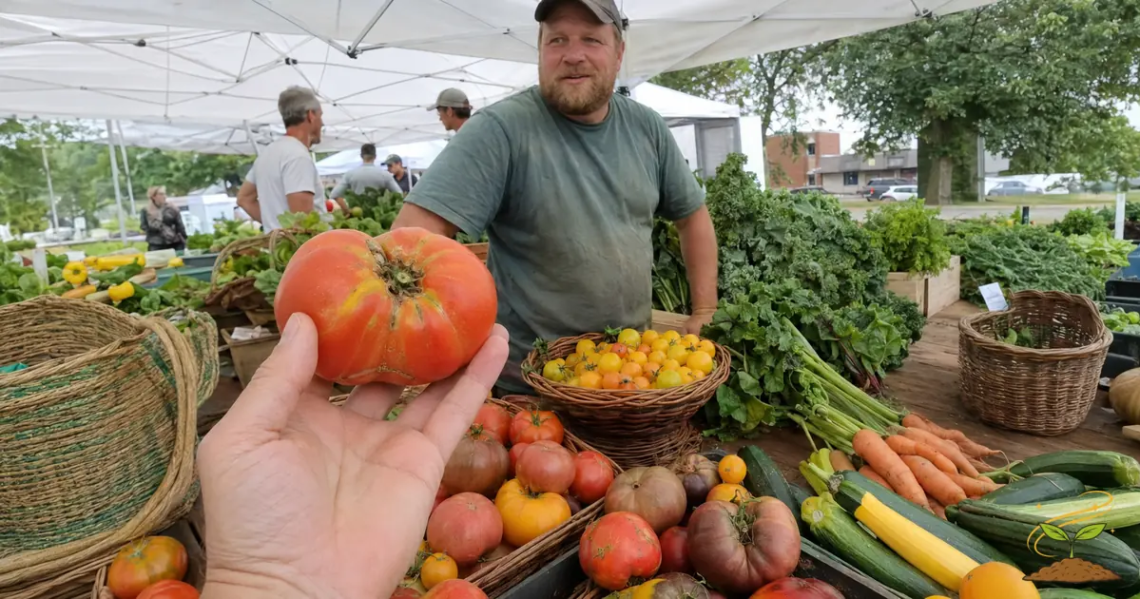
A farmers market should be one of the safest and most honest places to buy food. It should bring us face-to-face with the people who grow what we eat and give us a real alternative to the industrial food system. But we need to understand something before we walk between those tables: a farmers market is not an automatic guarantee that the food is local, naturally grown, or raised with care.
The baskets may be beautiful. The signs may say “farm fresh,” “local,” or “natural.” The entire setting may feel wholesome and trustworthy. But appearances and carefully chosen words do not tell us who produced the food, what was sprayed on it, how the animals were raised, or whether the person selling it had anything to do with growing it.
We have been trained to see the right words and stop asking questions. I believe it is time to change that. We have the right to know where our food came from and what was done to it before it reached our families.
A farmers market gives us an opportunity most grocery stores do not: we can look someone in the eye and ask.
Did You Grow or Raise This Yourself?
This is the first question I would ask because the answer changes everything.
Most people assume the person standing behind a farmers market table is the farmer. Sometimes that is exactly who we are meeting. Other times, the vendor is an employee or family member who knows the farm well. But some markets allow vendors to resell food purchased from wholesalers, auctions, or other farms.
That food may still be perfectly edible, but we should never be led to believe we are buying directly from a local farmer when we are not.
Ask whether the food was grown or raised by that farm. Ask where the farm is located. If some products came from somewhere else, ask which ones and where they came from. These are not rude questions. They are reasonable questions from people who care about what they are feeding their families.
As I shared in

The Food You Eat Has a Story, every piece of food began somewhere. If we do not know that story, we are trusting someone else to decide how much truth we are allowed to have.
Do Not Let a Label Do Your Thinking
“Natural,” “farm fresh,” “local,” “pasture-raised,” and “spray-free” may sound reassuring, but reassuring words are not the same as real answers.
We have seen how the industrial food system uses labels to create an image in our minds. A green field, a red barn, or a happy-looking animal can make a product feel clean and wholesome even when the package tells us very little about how that food was produced.
The same caution belongs at a farmers market. I am not saying we should walk in suspicious of every farmer. I am saying trust should be built on honesty—not scenery, signs, or assumptions.
Instead of stopping at a label, ask what it means. If a sign says “spray-free,” ask whether nothing was sprayed or whether only certain products were avoided. If meat is called pasture-raised, ask how much time the animals actually spent on pasture. If produce is described as organic but is not certified, ask which growing practices the farmer uses.
Real answers matter more than marketing words.
Ask How the Food Was Grown
Organic certification can be expensive and burdensome for a small farmer. Some farmers use responsible growing methods without paying for an official label. That is why a conversation may tell us more than a sticker ever could.
Ask how the farmer manages weeds, insects, and plant diseases. Are herbicides, pesticides, or fungicides used? What kind of fertilizer or compost goes into the soil? Are crops rotated? Are cover crops planted? What is being done to protect the health of the land?
You do not have to ask every question during one visit. Start with what matters most to you. If avoiding herbicides is your priority, begin there. If you are concerned about soil health, ask about that. If your family eats a great deal of one particular food, learn how that crop is grown.
Farming is not perfect, and an honest farmer will not pretend it is. Crops face insects, drought, flooding, disease, and unpredictable weather. I would rather hear the truth about how a difficult problem was handled than receive a polished answer meant to make me feel good.
Honesty does not require perfection. It requires respect for the person buying the food.
Look at What Is Actually in Season
Real local food follows the land and the seasons. It does not appear simply because we want it.
Strawberries have a season. Tomatoes have a season. Greens thrive under certain conditions and struggle under others. There are legitimate ways to extend a growing season, including greenhouses, hoop houses, and cold storage. But when a vendor offers a grocery-store-sized selection of flawless produce that does not fit the local season, we should ask where it came from.
We have become accustomed to finding almost every food at every time of year. That convenience has disconnected us from the reality of growing food. The land was never meant to function like a fully stocked warehouse.
Seasonal food changes. Some favorites disappear. Others finally arrive. That is not a failure of the food system. That is how a living food system works.
Ask More About Meat, Milk, and Eggs
When buying animal products, we need more than a picture of a pasture or a comforting phrase on a sign.
Ask what the animals were fed and how they lived. Did the chickens regularly spend time outdoors? Did they have access to grass and insects, or was “outdoor access” only a small opening beside a crowded building? Were cattle grass-fed for their entire lives, or were they grain-finished? Were antibiotics used routinely, or only when an animal truly needed treatment?
An animal should never be allowed to suffer simply to protect a marketing claim. Responsible care includes treating a sick animal when necessary. What matters is whether the farmer will tell us the truth about how the animals are raised, fed, treated, and handled.
The quality of animal food begins long before it reaches the market table. It begins with the animal’s daily life and the health of the land supporting it.
Perfect-Looking Food Is Not Always Better Food
We have been conditioned to expect produce that looks almost manufactured. Every apple should be the same size. Every carrot should be straight. Every tomato should be perfectly round and completely unmarked.
Real food does not always cooperate with those expectations.
A crooked carrot is still a carrot. A small mark on an apple does not erase its value. A hole in a leaf may tell us that another living creature found it appealing too. Cosmetic differences do not automatically mean the food is damaged, unsafe, or poor quality.
Of course, we should still look for signs of improper handling, bruising, decay, or spoilage. But we cannot allow industrial standards of beauty to become our definition of good food. A flawless appearance tells us nothing about nutrition, flavor, chemical use, or soil health.
Ask when the food was harvested. Notice whether greens are protected from extreme heat. Smell the herbs and tomatoes. If you do not know how to select, prepare, or store something, ask the person who grew it.
Build a Relationship With a Real Farmer
One of the greatest things we can do for our health and our food freedom is get to know someone who actually produces food.
Return to the same farmers. Pay attention to whether their answers remain honest and consistent. Ask what will be ready next week. Learn what they are planting, what challenges they are facing, and what they need from the people who say they want local food.
Small farmers cannot survive on our approval alone. They need our business.
Every purchase is a message. When we choose farmers who protect their soil, treat animals with care, avoid unnecessary chemicals, and tell us the truth, we are helping those practices continue. How Your Food Choices Shape Farming explains why the decisions we make at the market can determine which farms—and which farming methods—survive.
If we want a more honest food system, we have to support the people building one.
Asking Questions Is Part of Taking Back Control
You do not have to become a farming expert before visiting a farmers market. You do not have to memorize every certification or interrogate every person standing behind a table.
Begin with one farmer and one food your family eats regularly. Ask where it came from. Ask how it was grown or raised. Listen carefully to the answer. Buy what you feel good about, try it, and continue learning.
What matters is that we stop surrendering our responsibility to labels and appearances. The distance between the people and their food has grown far too wide, and that distance has made it easier for large corporations and industrial systems to control what we know, what choices we have, and what ends up on our plates.
WE THE PEOPLE have every right to ask questions about our food. We have every right to expect honest answers.
Knowing who grows our food is not a trendy lifestyle choice. It is part of protecting our families, our farmers, our land, and our freedom to choose what enters our own bodies.
If you know someone who wants to shop at a farmers market but does not know what to ask, please share this with them. The more questions we ask, the harder it becomes for any part of the food system to hide behind a comforting label.
With love and truth,
—Donna 💚
Sources & Further Reading
- Important Questions to Ask at the Farmers Market — The Cook’s Cook
- Questions to Ask Your Farmer at the Farmers Market — Branch Basics
https://branchbasics.com/blogs/food/questions-to-ask-your-farmer-at-the-farmers-market
- Farmers Market 101: A Beginner’s Guide to Purchasing Local Foods — Alabama Farm to ECE Coalition
https://alabamafarmtoece.org/farmers-market-101-a-beginners-guide-to-purchasing-local-foods/
- Farmers’ Markets — LocalHarvest
- Eating Local and In Season: A Farmers’ Market Guide — Institute for Integrative Nutrition
https://www.integrativenutrition.com/blog/eating-local-and-in-season-a-farmer-s-market-guide