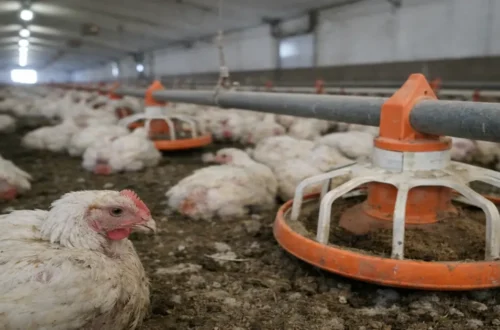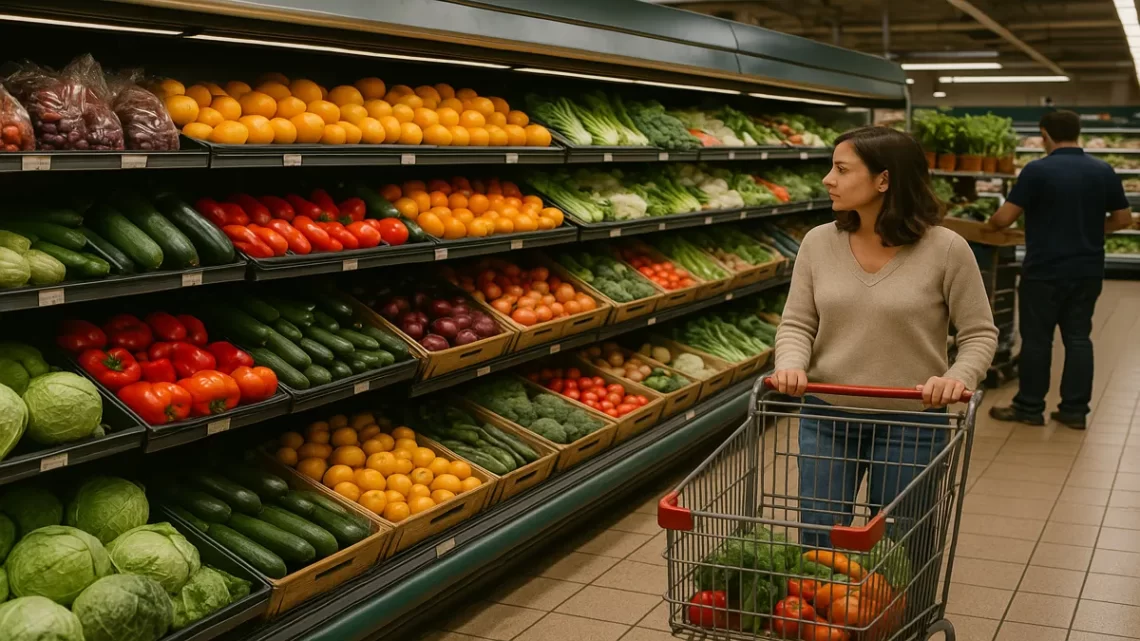
We think we are surrounded by abundance. Grocery stores look prosperous — colorful produce stacked high, salad greens in plastic shells, food from all over the world under bright lights. But there is a quiet truth just beneath the surface: chemical farming is weakening us by damaging soil health, the very foundation of nutrition and vitality.
For more than seventy years, we were promised a miracle. Industrial agriculture would give us more yield, faster growth, fewer pests, and endless food. We got abundance in volume. What we didn’t see was that this came with a cost we could not afford. Soil health was sacrificed. The ground beneath our feet, once rich with biological life, became a factory floor for chemicals, not nourishment.
The Illusion of Prosperity
Chemical farming looks successful on paper. Crops do grow. Fields look green. But beneath that illusion, the soil is depleted. When we trade soil biology for synthetic fertilizer and pesticides, we get plants that grow fast — but food with less nutrition. This is how nutrient loss in food happens without anyone noticing.
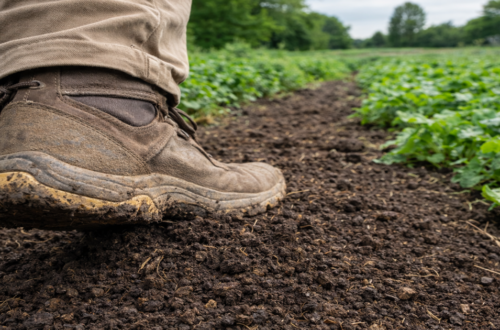
Healthy soil is a living community. Billions of microbes move minerals, break down organic matter, and create the conditions for nutrient-dense food. Chemical inputs interrupt this cycle. Herbicides, fungicides, and pesticides destroy microbial life. Tillage disrupts the fungal networks that hold soil together. Nutrient cycling collapses. We lose minerals, vitamins, and resilience.
The land still produces, but the food is not feeding us.
Soil Depletion Becomes Human Depletion
People feel it, even if they don’t know why.
We blame our fatigue, brain fog, anxiety, chronic inflammation, and immune problems on age, stress, genetics — anything except the truth on our plates. But when soil health declines, human health declines. The connection is not complicated:
Healthy soil → Healthy plants → Nourishing food → Strong people
Depleted soil → Weak plants → Empty calories → Weakened people
This is not a theory. It is biology.
Chemical farming grows food that looks abundant but is missing what our cells require. You can be full and still be undernourished. Our bodies are quietly starving for minerals and micronutrients.
A Nation Built on Weak Soil Becomes a Tired Nation
We see the results everywhere.
Children struggle to focus. Adults drag themselves through the day. Immune systems falter. People are anxious, exhausted, and dependent on medication. A country that is fed, but not nourished, becomes easy to manage and profitable for someone else.
This is not accidental. It is a predictable outcome of a system that values yield over soil quality and human immunity.
Where Regenerative Farming Offers Real Strength
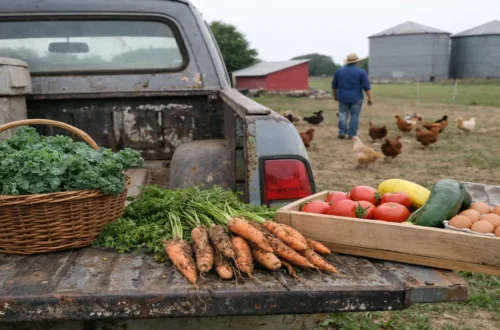
There is another way. Regenerative farming rebuilds soil instead of stripping it. No-till methods, cover crops, composting, and livestock rotation restore the microbial life and structure that chemical farming destroys. This is true regenerative farming health — beginning in the soil and ending with resilient people.
You do not need to farm to participate. Awareness is the first act of sovereignty. Support local growers who care for the land. Buy from markets, not systems. Grow something — herbs on a windowsill count. Every act that restores soil is an act of healing.
Soil is not dirt. Soil is life.
When soil is alive, we are stronger. When soil is depleted, we are weak. Chemical farming quietly weakens us. Regenerative farming quietly strengthens us.
Next Week on Farmland Friday
The Hidden Life Beneath Your Feet
Soil microbes as the original healers — and what they teach us about immunity.
With love and truth,
—Donna 💚
Sources & Further Reading
From soil to health: advancing regenerative agriculture for improved food quality and nutrition security (2025)
Meta-analysis showing regenerative agriculture increases soil organic matter, microbial diversity, and nutrient quality.
https://www.frontiersin.org/journals/nutrition/articles/10.3389/fnut.2025.1638507/full
Lekberg, Y. et al. (2024) — “Substantial and Rapid Increase in Soil Health across Crops with Conversion from Conventional to Regenerative Practices”
Shows that conversion to regenerative methods rapidly restores soil structure and microbial biomass.
https://www.mdpi.com/2071-1050/16/13/5509
Sher, A. (2024) — “Importance of Regenerative Agriculture: Climate, Soil Health, and Nutrient Cycling”
Overview of how regenerative agriculture rebuilds soil health, nutrient cycling, and resilience.
https://link.springer.com/article/10.1007/s43621-024-00662-z
Study shows UW Farm practices restore soil health — University of Washington, 2023
Demonstrates real-world soil restoration through regenerative practices.
https://environment.uw.edu/news/2023/11/study-shows-uw-farm-practices-restore-soil-health/
Xing, Y. (2025) — “Exploring the link between soil health and crop productivity”
Review linking soil chemistry, biology, and structure to improved crop performance and nutrient uptake.
https://www.sciencedirect.com/science/article/pii/S0147651325000399
Feliziani, G. (2025) — “Regenerative Organic Agriculture and Human Health”
Examines how regenerative practices improve soil fertility, crop quality, and human health outcomes.
https://www.mdpi.com/2076-3921/14/5/530