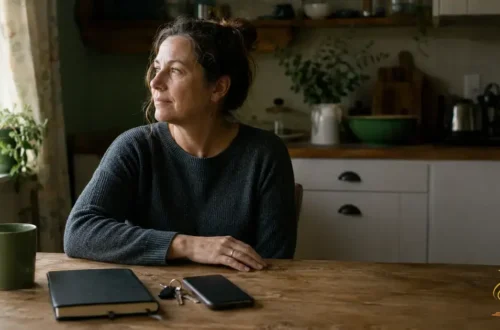
We have been taught to treat health like a private test of discipline. If we are tired, stressed, gaining weight, sleeping poorly, or struggling to feel well, we are told to try harder. Eat better. Exercise more. Control the cravings. Put down the phone. Get organized. Make better choices.
But no one seems nearly as eager to talk about the surroundings in which we are expected to make those choices.
We are living in homes filled with products we have been assured are safe. We are surrounded by synthetic fragrances, processed foods, constant noise, artificial light, screens designed to hold our attention, and advertising designed to influence what we buy. Then, when our bodies begin reacting to the burden, the finger is pointed back at us.
That is not the whole truth. Your environment shapes your health every single day, and we need to understand just how powerful that influence can be.
This Is Not All Your Fault
I believe in personal responsibility. I believe we have to become active participants in our own health instead of handing every decision over to someone else. But personal responsibility does not mean accepting blame for a world that has been intentionally designed to make unhealthy choices easy, convenient, normal, and profitable.
Food companies know that what sits at eye level is more likely to be purchased. Technology companies know that notifications keep us checking our phones. Manufacturers know people associate strong fragrance with cleanliness. Advertisers know that repeated exposure can turn a product into something we reach for without even questioning it.
They understand the power of environment very well.
Yet when we struggle to resist what has been placed in front of us all day, every day, we are told we lack willpower. I do not accept that explanation. We are not weak because our surroundings influence us. We are human. The answer is not to shame ourselves. The answer is to become aware of what has been influencing us and begin changing what we can.
A Clean-Looking Home Is Not Always a Healthy Home
Most of us were raised to believe that a house smelling like flowers, pine, citrus, or “fresh linen” meant it was clean. So we brought home sprays, plug-ins, candles, scented laundry products, disinfectants, and cleaners that promised to make our homes smell fresh.
But clean air does not come with a manufactured scent.
The air inside our homes can be affected by smoke, mold, cooking fumes, gas appliances, dust, furnishings, paint, flooring, cleaning products, personal-care products, candles, and artificial fragrance. Many of these exposures are so common that we barely notice them anymore. Common does not automatically mean harmless, and familiar does not mean our bodies are not being affected.
I addressed this more deeply in why “healthy” homes can still make us sick, because this is one of the most important truths families need to hear. A home can look beautiful, smell “clean,” and still contain things that irritate the lungs, disrupt the body, or add to the total chemical burden we carry.
This is not a reason to become afraid of your own home. Fear leaves people frozen, and that helps no one. Awareness gives us somewhere to begin.
Your Home Is Training Your Habits
Your environment shapes more than the air you breathe. It also shapes the choices you repeat.
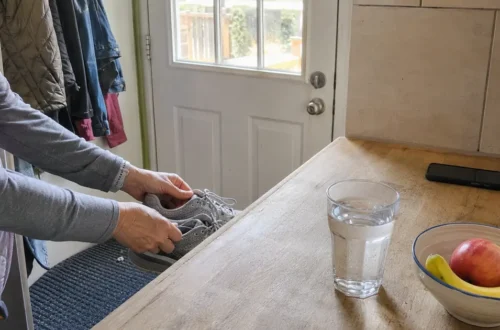
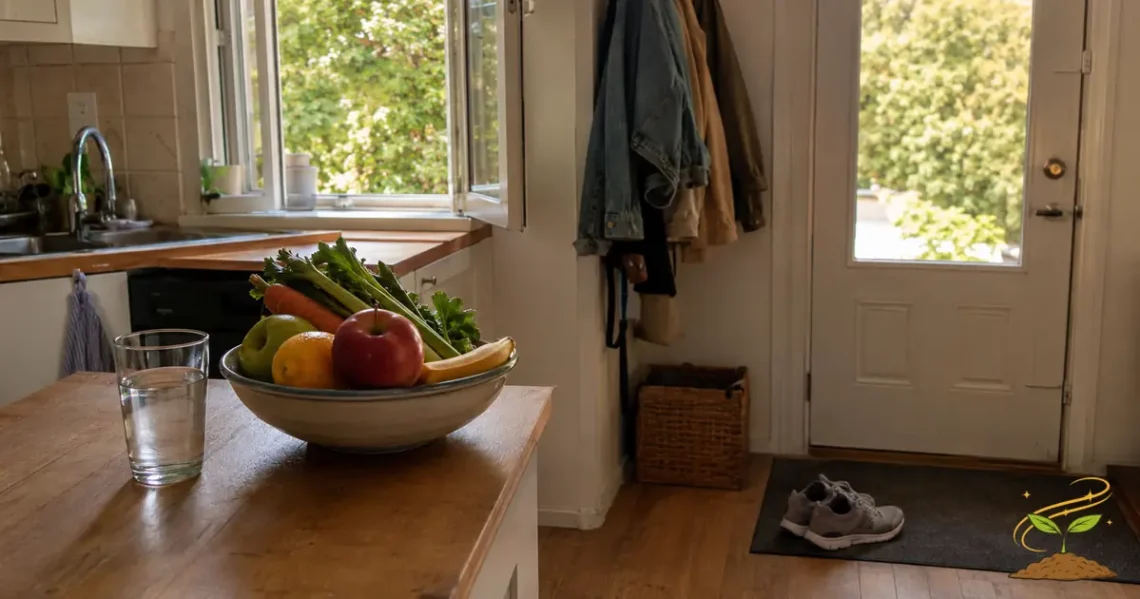
Look around your kitchen. Which foods are easiest to see and grab? Is fresh food washed and ready, or is it hidden in a drawer while packaged food sits at eye level? Is water within reach? Do you have something simple available for the days when you are too tired to cook?
Now look at the rest of your home. Is the phone beside the bed? Does the television remain on even when no one is watching it? Are your walking shoes buried in a closet? Do you wake up and immediately begin absorbing messages, news, emails, and other people’s opinions before you have had a moment to hear your own thoughts?
These details may seem small, but they are repeated day after day. Repeated cues become repeated choices, and repeated choices become habits.
This connects directly to the habits that quietly hold us back. Sometimes we are trying to change a habit without recognizing that our surroundings are triggering it over and over again. We keep asking willpower to defeat an environment that never stops pushing in the opposite direction.
We need to stop making the healthy choice fight for our attention while every unhealthy choice is displayed, packaged, scented, advertised, and placed within easy reach.
Your Nervous System Is Paying Attention
Our bodies are also responding to the noise, light, clutter, conflict, information, and constant stimulation around us.
A television running in the background, a phone that never stops lighting up, piles that make us feel behind, and a steady stream of alarming headlines can keep the body from fully settling. We can become so accustomed to being overstimulated that we forget what calm feels like.
This does not mean a healthy home must be silent, spotless, or perfectly organized. Real people live in real homes. There are dishes, laundry, projects, pets, children, work, and days when everything does not get done.
But there is a difference between a home that is lived in and a home that constantly leaves your body feeling tense. If one crowded counter overwhelms you every time you walk past it, clearing that counter matters. If the evening news leaves you angry and unable to sleep, turning it off matters. If notifications keep pulling you away from your family, silencing them matters.
Protecting your peace is not laziness, weakness, or avoidance. It is a boundary. Not every company, headline, message, and manufactured emergency deserves immediate access to your nervous system.
Take Back What Enters Your Home
You do not need to throw away everything you own or spend thousands of dollars creating a so-called perfect healthy home. That kind of pressure only keeps people overwhelmed and gives another industry the opportunity to sell us a complete lifestyle makeover.
Start with one area and pay attention.
Open a window when the outdoor air is suitable. Use an exhaust fan when cooking or showering. Check for moisture and mold. Replace filters when needed. Remove one artificial fragrance. Read the ingredients before buying another cleaner or personal-care product. Wash and prepare a few foods so they are easier to reach. Put water where you will see it. Move your walking shoes near the door. Charge the phone outside the bedroom. Turn off notifications that do nothing but interrupt your life.
None of these choices will control every exposure or solve every health problem. That is not the promise. The purpose is to lower what you can, support what you can, and stop bringing products and influences into your home without questioning whether they deserve to be there.
Every label you read, every unnecessary chemical you refuse, every real food you make easier to reach, and every boundary you place around your attention is an act of health sovereignty.
We Have More Power Than We Have Been Led to Believe
We cannot control everything happening in our communities, workplaces, schools, food supply, air, or water. We cannot remove every chemical, eliminate every stressor, or build a wall around our families.
But we are not powerless.
We can decide what receives a place in our homes. We can question what has been normalized. We can stop confusing fragrance with cleanliness and convenience with nourishment. We can make supportive choices more visible and make harmful habits a little less convenient. We can protect periods of quiet. We can teach our children to read labels, ask questions, and understand that the world around them is always trying to influence what they consume.
To me, this is about far more than organizing a kitchen or opening a window. It is about refusing to surrender our health, our homes, and our families to companies that do not have to live with the consequences of what they sell us.
Your environment shapes your health, but that does not mean your environment gets the final word. Once we see what has been working against us, we can begin creating surroundings that work with us instead.
We do not need perfection. We need awareness, courage, and the willingness to take back one choice at a time.
If this message made you look at your surroundings differently, please share it. Families deserve to know that struggling inside an unhealthy environment is not a personal failure—and that even one conscious change can be the beginning of taking their power back.
With love and truth,
—Donna 💚
Sources & Further Reading
https://www.niehs.nih.gov/health/topics/agents/indoor-air
Improving Indoor Air Quality — U.S. Environmental Protection Agency
https://www.epa.gov/indoor-air-quality-iaq/improving-indoor-air-quality
7 Ways to Detox Your Home and Keep It Clean Year-Round — Environmental Working Group
https://www.ewg.org/news-insights/news/2024/01/7-ways-detox-your-home-and-keep-it-clean-year-round
Tips for Cleaning — Silent Spring Institute
https://silentspring.org/resources/tips-healthier-living/tips-cleaning
Motivation Is Overvalued. Environment Often Matters More — James Clear
https://jamesclear.com/power-of-environment