I think the phrase “regenerative farming” has become one of those phrases people hear often, but do not always get to see clearly. It can sound beautiful, and it can sound hopeful, but if we are not careful, it can also become just another label sitting on top of the same old system.
That is why I want to slow it down today.
Because regenerative farming is not just a marketing word. It is not just a pretty farm photo, a rustic label, or a promise that something is “natural.” Real regenerative farming practices show up in the daily decisions made on the land. They show up in how the soil is covered, how animals are moved, how plants are rotated, how water is protected, how chemicals are reduced, and how carefully the farmer watches what the land is saying.
And that matters to you, even if you have never stepped foot on a farm.
Because the health of the land does not stay on the land. It travels into the food. It travels into the water. It travels into the body. What happens in the soil eventually becomes part of us.
Regenerative Farming Starts by Treating Soil Like It Is Alive
Modern agriculture has trained many people to see soil as a surface. Something to plow, plant, spray, fertilize, and harvest from. But soil is not just a place where plants sit while they grow. Soil is a living environment full of microbes, fungi, roots, minerals, worms, insects, moisture, air, and quiet relationships most of us never see.
When that life is damaged, the whole system starts needing more help from the outside. More fertilizer. More pesticides. More irrigation. More correction. More rescue. That is what happens when we treat the land like a machine instead of a living system.
Regenerative farming begins by asking a different question: how do we help the soil function again?
That may mean reducing tillage so the underground structure is not constantly being broken apart. It may mean keeping roots in the ground longer so soil life has something to feed on. It may mean adding compost, rotating crops, planting cover crops, or bringing animals back into balance with the land.
I talked more about this foundation in why healthy soil grows better food, because I believe we have to stop pretending food quality begins at the grocery store. It begins long before that. It begins in the ground that fed the plant, the animal, and eventually the person eating it.
It Looks Like Covered Ground, Not Bare Dirt
One of the simplest ways to understand regenerative farming is to look at whether the soil is protected.
Bare soil may look tidy to people who are used to seeing clean rows and empty fields, but nature does not leave soil bare for long. Bare ground dries out faster, erodes more easily, loses microbial life, and struggles to hold water. When rain hits exposed soil, it can run across the surface instead of soaking in. When wind blows across it, the topsoil can leave with it.
Healthy land wants cover.
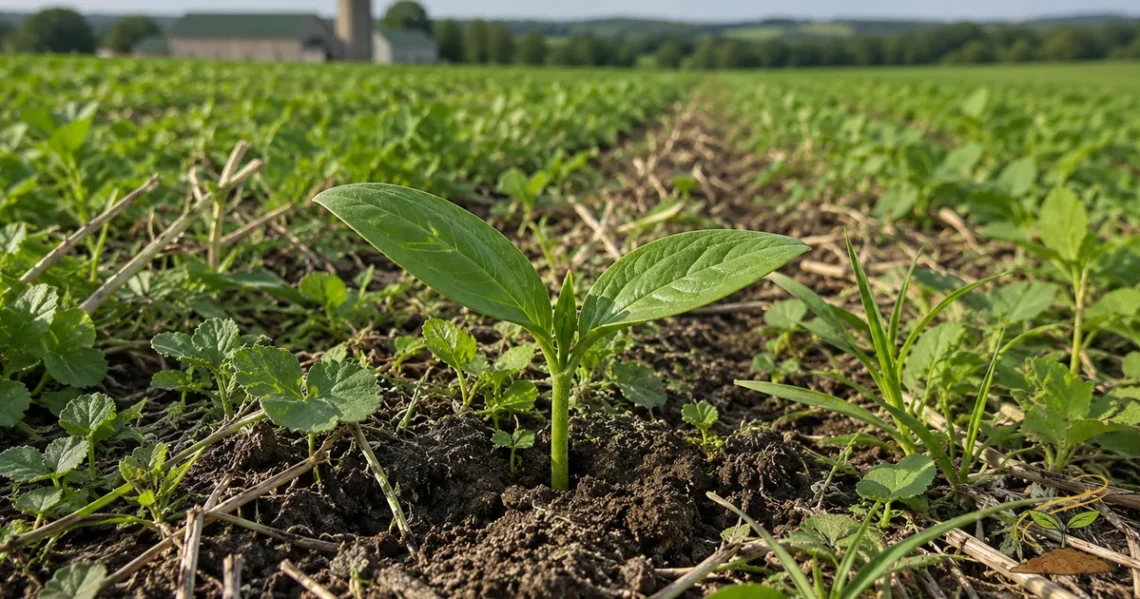
That cover may come from grasses, clover, cover crops, crop residue, mulch, or living roots. The point is not that every farm looks the same. The point is that regenerative farmers understand soil needs protection, just like your skin protects what is underneath.
This is where I see such a clear parallel to human health. When the body is constantly stripped down, pushed, depleted, and forced to perform without recovery, we should not be surprised when it becomes reactive. The land is similar. It can only be exposed and extracted from for so long before it starts showing signs of stress.
Regenerative farming does not ask, “How much can we take?” It asks, “What does this living system need so it can keep giving without being destroyed?”
It Looks Like Diversity Instead of Repetition
A field planted with the same crop over and over again may be efficient on paper, but nature does not build resilience through sameness. Repetition without diversity weakens systems. It invites pest pressure, drains the same nutrients, and often creates the need for more chemical control.
Regenerative farming works in the opposite direction. It brings diversity back.
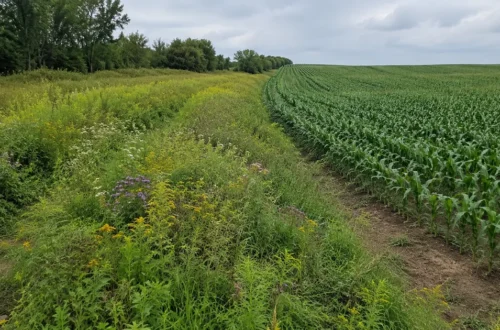
That can look like crop rotation. It can look like cover crops between cash crops. It can look like pollinator strips, hedgerows, pasture, perennials, mixed species grazing, or native plants along field edges. It can look messy to someone expecting everything to be uniform, but that “mess” may actually be life returning.
I believe this is one of the hardest things for modern people to relearn. We have been taught to trust uniformity. Perfect shelves. Perfect rows. Perfect packaging. Perfect produce that looks the same every time. But living systems are not sterile. They are layered. They are varied. They are full of relationship.
That same truth applies inside the body. A resilient gut is not built from sameness. A strong immune system is not built from constant depletion. The body needs diversity, minerals, microbes, fiber, rest, sunlight, clean water, and real food. The internal environment matters, just like the farm environment matters.
It Looks Like Animals in the Right Relationship With the Land
Not every farm uses animals, and not every regenerative system looks the same. But when animals are part of the picture, the difference is in the management.
Animals can damage land when they are confined, overcrowded, or left too long in one place. We should be honest about that. But animals can also help heal land when they are moved with care, given access to pasture, and allowed to participate in a natural cycle of grazing, fertilizing, resting, and regrowth.
That is why I wrote about regenerative grazing and how animals can help heal the land. The point is not to romanticize livestock. The point is to understand that animals were never meant to be separated from the land, stacked into unnatural systems, and then blamed for the mess created by that separation.
In a healthier system, manure is not just waste. It is fertility returning to the soil. Hooves can press plant matter into the ground. Grazing can stimulate new growth when the land is given time to recover. Birds, insects, grasses, roots, and microbes all become part of the rhythm again.
Regeneration is not about isolating every piece. It is about putting the pieces back into relationship.
It Looks Like Fewer Shortcuts and More Observation
One of the things I respect most about true regenerative farming is that it requires attention. It is not a push-button system. It is not simply replacing one product with another and calling the job done.
The farmer has to observe. Is the soil holding water better? Are earthworms returning? Are insects showing up? Are roots deeper? Are weeds telling a story? Are animals recovering the pasture or stressing it? Is organic matter improving? Is the land becoming more resilient through drought, rain, heat, and pressure?
That kind of farming takes humility. It asks the farmer to work with the land instead of forcing the land to obey.
And I think we need more of that in health too.
So many people are taught to override the body. Silence the symptom. Push past exhaustion. Medicate the signal. Ignore the pattern. But healing usually requires the same kind of observation regenerative farming requires. What is the body telling us? What has been depleted? What is inflamed? What needs rest? What needs nourishment? What needs to be removed so the body can begin functioning again?
You cannot regenerate what you refuse to listen to.
How You Can Support Regeneration Without Owning a Farm
Most of us are not out planting cover crops, moving cattle, testing soil, or building compost systems. But that does not mean we are powerless.
You can begin by asking better questions about your food. Where did it come from? Was it grown in soil that is being cared for? Was it raised on pasture? Does the farmer talk about soil health, crop rotation, cover crops, compost, reduced chemicals, water protection, biodiversity, or animal movement? Is there a local farm, farmers market, or food co-op you can learn from?
You do not have to change everything at once. I never want this conversation to become another burden placed on people who are already trying to do the best they can. But I do believe awareness matters. Every better question helps loosen the grip of a food system that depends on our not asking.
Inside your own body, you can think regeneratively too. Choose food that is closer to its source when possible. Add more real plants. Support your gut with fiber and fermented foods if they work for you. Drink clean water. Reduce chemical exposure where you can. Rest more honestly. Get sunlight. Build rhythms that help your body recover instead of constantly asking it to compensate.
That is the connection I do not want us to miss.
Regenerative farming is not just about farms. It is about remembering that health is built through living systems. The land needs cover, diversity, rest, nourishment, and relationship. So do we.
New here? You can explore more of my Farmland Friday reflections here: Farmland Friday
With love and truth,
—Donna 💚
Sources & Further Reading
- What is regenerative agriculture? — University of Illinois Extension
https://extension.illinois.edu/blogs/field-notes/2024-06-05-what-regenerative-agriculture - Long-term regenerative practices enhance in-field biodiversity and soil health for sustainable crop yields — Frontiers in Sustainable Food Systems
https://www.frontiersin.org/journals/sustainable-food-systems/articles/10.3389/fsufs.2025.1651686/full - Regenerative Agriculture—A Literature Review on the Practices and Mechanisms Used to Improve Soil Health — Sustainability
https://www.mdpi.com/2071-1050/15/3/2338 - Regenerative Agriculture 101 — NRDC
https://www.nrdc.org/stories/regenerative-agriculture-101 - From pilots to practice: a new bid to scale regenerative agriculture — Reuters
https://www.reuters.com/sustainability/land-use-biodiversity/pilots-practice-new-bid-scale-regenerative-agriculture–ecmii-2026-05-18/