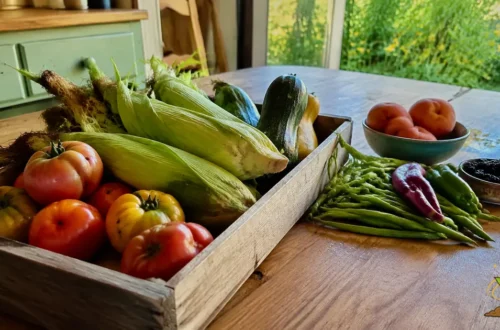
Every day, something is influencing the way we feel, the way we think, and the choices we make. The food within reach, the news playing in the background, the people surrounding us, the products in our homes, and the messages filling our screens are all having an effect. We may not notice it happening in the moment, but our daily choices and the influences we repeatedly allow into our lives are shaping our outcomes.
I want to be very clear about something from the beginning. Not every health struggle, emotional burden, or difficult circumstance is the result of a bad choice. People are already carrying enough guilt, and I will not add to it. We are living inside systems that deliberately make unhealthy food convenient, fear profitable, distraction constant, and harmful products nearly impossible to avoid.
But I also refuse to tell people they are powerless. Once we begin recognizing what is influencing us, we can make different decisions about what continues to have access to our bodies, minds, homes, and families. That awareness is not about blame. It is about taking back authority over parts of our lives that too many companies and systems have been quietly controlling for us.
We Are Consuming Far More Than Food
When we talk about what we consume, food is usually the first thing that comes to mind. Food is certainly one of our most important inputs, but it is only one. We also consume information, advertising, entertainment, opinions, fear, anger, noise, and other people’s expectations.
All of it affects us. A steady diet of frightening headlines can keep us anxious long after we turn off the screen. Constant exposure to arguments and outrage can make the entire world appear more hostile than it is. Spending time with people who criticize every healthier choice can slowly weaken our confidence. Living in a home filled with products that work against our goals can make change feel much harder than it needs to be.
These influences rarely announce themselves. They become part of the background, and that is why they are so easy to underestimate. We begin accepting them as normal even when they are leaving us exhausted, unsettled, discouraged, or disconnected from our own common sense.
I recently wrote about how our environment shapes our health. Our surroundings are not passive. They can either support the life we are trying to build or keep pulling us back toward the very things we are working to change.
The Food Industry Wants Our Choices to Feel Automatic
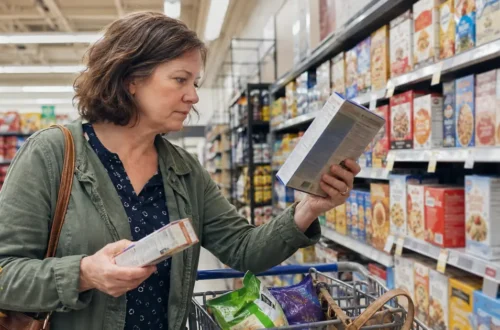
Look at how food is marketed to us. Products are placed at eye level, packaged in bright colors, connected to comfort and convenience, and covered with words designed to make them sound healthier than they are. Companies spend enormous amounts of money studying what makes us reach, click, crave, and buy. They are not leaving our choices to chance.
Then, when people struggle with their weight, energy, cravings, blood sugar, or overall health, the blame is placed entirely on the individual. We are told to have more discipline while walking through an environment designed to wear that discipline down.
That does not mean we surrender. It means we stop confusing manipulation with personal failure. We turn the package over. We read the ingredients. We ask who made the product, what is in it, and whether it truly deserves a regular place in our bodies.
I am not asking anyone to eat perfectly. Real families have budgets, busy schedules, limited choices, and days when they are simply doing the best they can. What I am asking is that we stop allowing companies to define nourishment for us. Food is not just a calorie count or a number on a label. What we eat repeatedly becomes part of the internal environment in which our bodies are trying to function.
Someone Is Always Competing for Our Attention
Our attention has become a product, too. News outlets, social media platforms, advertisers, political organizations, influencers, and corporations all benefit when they can keep us watching. Fear holds attention. Anger creates engagement. Confusion sends us searching for one more explanation. None of this is accidental.
I believe people deserve honest information, including information that may be uncomfortable. There are serious problems in our food supply, healthcare system, government, environment, and communities. Ignoring those problems will not protect us. But there is a difference between learning the truth so we can respond and being kept in a constant state of fear that leaves us too overwhelmed to act.
We need to ask what the information we consume is producing in us. Is it helping us understand something important? Is it giving us a meaningful action we can take? Is it strengthening our ability to protect our families and communities? Or is it keeping us angry, frightened, distracted, and coming back for more?
Being informed should make us more capable, not more helpless. If a source continually takes our peace but never gives us clarity, truth, or direction, we have every right to limit its access to us.
The People Around Us Help Define What Feels Normal
The people in our lives are also powerful influences. Their habits, attitudes, and expectations help establish what feels acceptable. When everyone around us treats exhaustion, stress, poor sleep, processed food, and constant medication as unavoidable parts of life, questioning those things can feel almost rebellious.
That is one reason community matters so much. People need encouragement when they begin reading labels, questioning recommendations, changing what they eat, reducing chemical exposures, or protecting their time and peace. It is difficult to keep choosing differently when every healthier decision is met with ridicule or pressure.
We do not need everyone to agree with us. We do need relationships in which questions are allowed, boundaries are respected, and better choices are not treated like a personal attack. No one should have to make themselves smaller, quieter, or less informed just to keep other people comfortable.
Small Changes Can Shift the Direction of a Life
When we recognize how many influences are surrounding us, it can feel overwhelming. That is not what I want for you. You do not need to clean out every cabinet, change every relationship, abandon every platform, and rebuild your entire life by tomorrow morning.
Start with the input that is affecting you most. Maybe it is the food that becomes the automatic choice when you are tired. Maybe it is the phone notification that breaks your concentration all day. Maybe it is the nightly news that leaves you unable to settle down. Maybe it is a person who makes you doubt every decision you make for your own well-being.
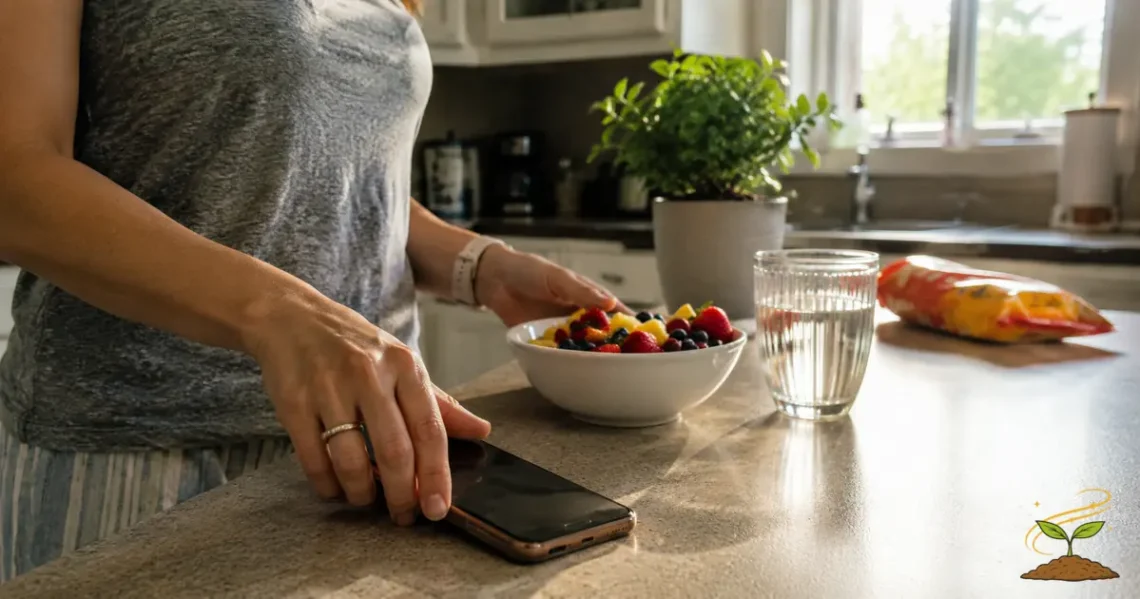
Change one thing that repeatedly works against you. Put better food where you can see it. Turn off an unnecessary notification. Stop following an account that feeds anger without providing anything useful. Create a boundary around a conversation that always leaves you drained. Spend more time with people who respect your desire to live differently.
These choices may look small, but repeated choices do not stay small. As I shared when discussing the habits that quietly hold us back, what we repeat becomes part of the structure of our lives. Our daily choices are either strengthening that old structure or helping us build a new one.
We Must Decide What Deserves Access to Us
I care about people too much to pretend that everything being placed in front of us is harmless. Too many industries profit when we consume without questioning, react without thinking, and accept what is common as though it must also be safe.
They want access to our money, attention, trust, bodies, homes, and children. Yet they will not be the ones living with the consequences of every product, message, and habit they encouraged us to accept. We will. Our families will. Our communities will.
That is why discernment matters. We have every right to ask what deserves access to us. What deserves a place on our plates? What deserves our attention? What deserves to enter our homes? Which voices deserve our trust, and which ones have repeatedly shown that profit, control, or influence matters more to them than our well-being?
This is not fear. It is responsibility. It is what happens when WE THE PEOPLE remember that our participation has value and our choices carry power. We may not be able to control every influence around us, but we can stop granting all of them unquestioned authority.
Your daily choices do not have to be perfect to change your direction. Every time you choose real nourishment over clever marketing, truth over manipulation, peace over manufactured outrage, or courage over social pressure, you reclaim a piece of your life.
That is where change begins—not with guilt, shame, or impossible standards, but with awareness. Look honestly at what has been feeding your body, filling your mind, shaping your home, and influencing your decisions. Then choose one thing that no longer deserves the access you have been giving it.
If this message made you recognize an influence that has been quietly working against you, please share it. Someone you care about may need the reminder that one conscious choice can be the beginning of taking their power back.
With love and truth,
—Donna 💚
Sources & Further Reading
- How Social Media Influences Our Eating Habits
https://www.afpafitness.com/blog/how-social-media-influences-our-eating-habits/ - How Your Environment Shapes Your Habits
https://www.psychologytoday.com/us/blog/parenting-from-a-neuroscience-perspective/202503/how-your-environment-shapes-your-habits - The Impact of Daily Choices on Your Health, Wealth, and Relationships
https://www.thesalesblog.com/blog/the-impact-of-daily-choices-on-your-health-wealth-and-relationships - Healthy Food Environment — Harvard T.H. Chan School of Public Health
https://nutritionsource.hsph.harvard.edu/healthy-food-environment/ - The Impact of Social Media on Health Behaviors: A Systematic Review
https://pmc.ncbi.nlm.nih.gov/articles/PMC12608964/